
Will the Union Budget 2026-27 live up to India’s scientific ambitions and scientists’ expectations? Views vary depending on what specific sectors have received and the initiatives announced, and it is not all rosy. Below are comments from seven eminent scientists from across India, including heads of departments, key institutes and a leading state university, compiled by New Delhi-based independent science journalist TV Padma for Hindu.
To read these comments in article form, click here.
n. Kalaiselvi, Director General of the Council for Scientific and Industrial Research (CSIR)

Director General of CSIR N. Caliselfie. | Image source: special arrangement
I consider the Union Budget 2026-27 to be a strong and reassuring affirmation of the Government of India’s belief in science, technology and innovation as drivers of national growth and self-reliance. The budget reflects continuity and confidence in public research institutions, with continued support for the Department of Scientific and Industrial Research (DSIR) and CSIR, including enhanced allocations for national laboratories, capacity building, and mission-oriented research. This stable funding pathway provides an enabling foundation for long-term scientific capacity and impact.
I am particularly encouraged by the inclusion of several mission- and sector-focused initiatives in this budget. Programs such as Biopharma SHAKTI, India Semiconductor Mission 2.0, Carbon Capture, Utilization and Storage (CCUS) Mission, and expanded support for the manufacturing of electronic components and critical metals are timely and forward-looking. These initiatives align strongly with CSIR’s strengths in indigenous technology development, advanced materials, process innovation and translational research. The focus on improving production systems in areas such as water, energy and critical minerals, coupled with support for MSMEs, design-led innovation and sustainable manufacturing, is closely aligned with the ongoing CSIR reforms and Technology Transfer Commitments – 2030.
The budget also sends a clear signal that science-based solutions will play a central role in addressing national priorities – from health care and clean energy to industrial competitiveness and climate action. CSIR, with its network of national laboratories and deep industry links, is well poised to translate this policy goal into deployable technologies and measurable outcomes. I am confident that the Union Budget 2026-27 will further strengthen India’s innovation ecosystem and accelerate progress towards Fixit Bharat.
LS Shahisdara, Director, National Center for Biological Sciences (NCBS), Bengaluru
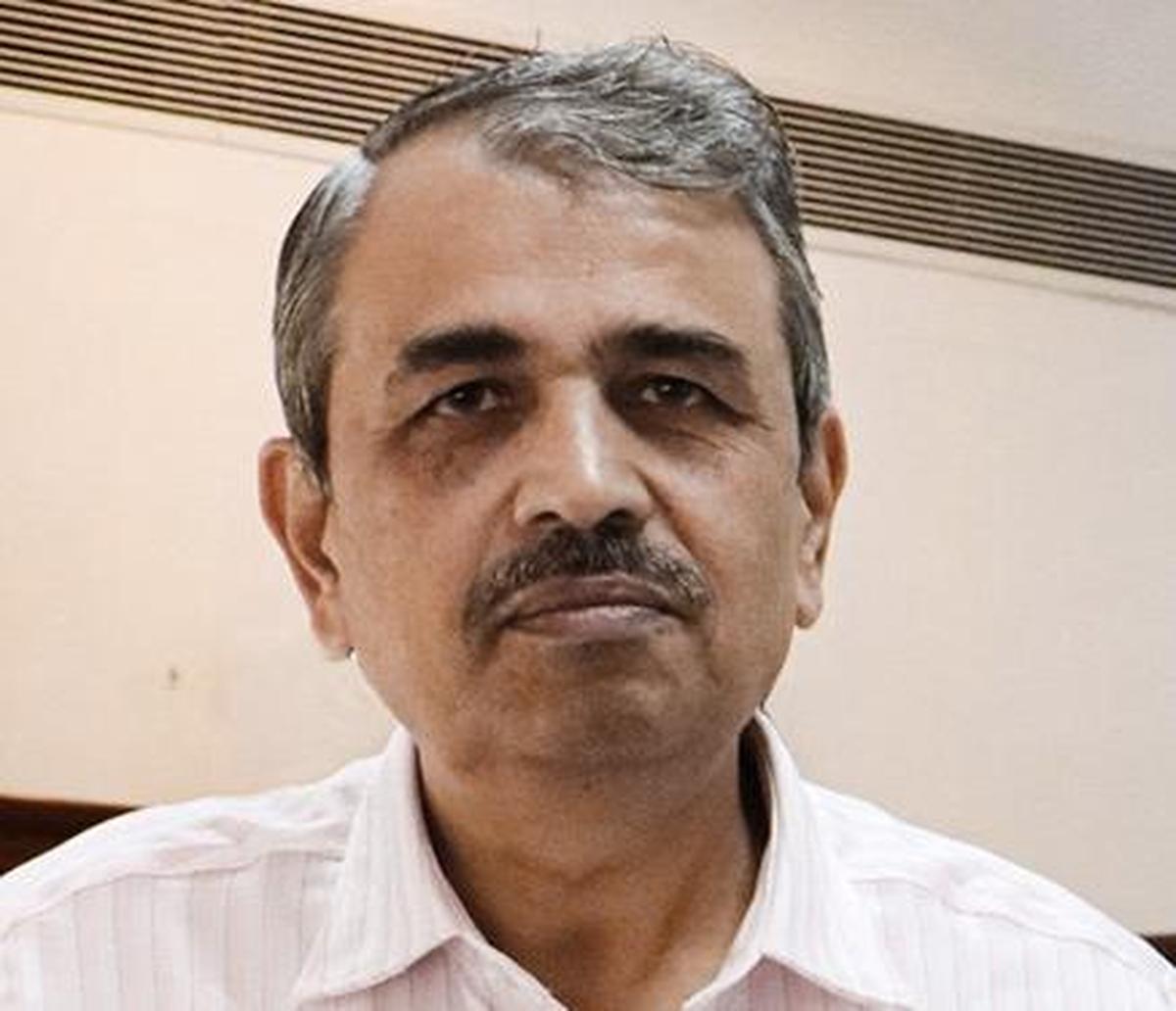
L. S. Shashidhara | Image source: Email Bulletin/The Hindu
We welcome the announcements of an allocation of Rs 10,000 crore over five years for the biopharma sector and Rs 20,000 crore as part of this year’s allocation under the Russian Direct Investment Fund. Indian scientists, especially in biological sciences, have faced significant funding shortfalls following major changes introduced in 2024-25 to the fund flow regime and delays in transition from the erstwhile SERB to the ANRF. These disruptions may have led to reduced spending by DBT and DST/SERB/ANRF during the 2024-25 and 2025-26 fiscal years. But fortunately, this lack of spending did not lead to a decrease in budget allocations, and expenditures on DBT, DST and ANRF remained unchanged from the previous year. ICMR, which showed strong spending performance in FY 2025-26, has received a 25% increase in its budget.
The budget allocation under the new Biopharma SHAKTI scheme appears to have been allocated to the pharmaceutical division. It is important to realize that many of the tools and techniques that underpin biopharmaceuticals come from researchers working in diverse areas of the life sciences, including biomedical and agricultural research. Indian academia and the R&D sector have significant expertise in modern synthetic biology, bioengineering, computational methods and artificial intelligence for protein design and metabolic engineering. Expanding this community through training programs and short-term internship schemes would further strengthen national capacities. We therefore request the Pharmaceuticals Division to actively engage the wider life sciences community in the design and implementation of schemes under Biopharma SHAKTI.
While treating diseases is crucial in the short term, preventive measures to reduce the overall health burden are equally important for India, given its large population and unequal access to healthcare. A portion of the budget allocation under Biopharma SHAKTI, along with enhanced ICMR funding, can be effectively used to initiate and support such long-term preventive health programmes.
Globally, small and medium-sized grants to emerging research groups play a crucial role in the development of basic and applied science. In India, this support is largely provided by DBT, ANRF and ICMR, and we hope that these agencies will increase the number of such grants. Finally, we sincerely request the Expenditure Division of the Ministry of Finance to facilitate a smooth and timely flow of funds, which will greatly enhance our ability to develop local solutions for health, agriculture and the environment.
Rajesh Gokhale, Secretary, Department of Biotechnology (DBT)

Rajesh Gokhale | Image source: file image
The Union Budget 2026-27 reinforces the central role of biotechnology in enhancing India’s self-reliance in the bioeconomy and biopharmaceuticals. The budget estimate for DBT in 2026-27 is Rs. 3,446 crore, which represents an increase of 1.2 times over the revised estimate for 2025-26 (Rs 2,830.45 crore), reflecting sustainable prioritization of biotechnology.
BioPharma Shakti, with an outlay of Rs. Rs 10,000 crore over five years is a major boost to the DBT mandate to address the growing burden of non-communicable diseases such as diabetes and cancer. This initiative will also accelerate the domestic development and manufacturing of biologics and biosimilars, enhancing affordability, access, and global competitiveness.
The DBT-National Biopharmaceutical Mission (NBM), implemented through BIRAC, has already created a strong foundation by supporting R&D across vaccines, biologics, biosimilars, diagnostics and medical devices, along with GCP-compliant clinical trial sites, disease registries, vaccine networks, technology transfer offices, and shared infrastructure. Overall, NBM has provided the foundation for BioPharma Shakti, which will build on and scale this ecosystem.
Looking to the future, DBT is already prioritizing cell and gene therapy (CGT) as a strategic frontier through a proposed national mission focused on developing indigenous technology and reducing costs. DBT will continue to anchor projects and programs related to biologics and biosimilars, leveraging the R&D and innovation strength of iBRIC+ institutions. BIRAC-DBT will expand support for the co-development of biological materials under the RDI Imitative programme.
This year’s budget and initiatives are also in line with the BioE3 policy of the Government of India, which encourages advanced biomanufacturing of biotherapeutics such as monoclonal antibodies, mRNA therapy, CGT, CCUS, smart biomanufacturing, etc.Building on the BioE3 and BioRIDE blueprint, DBT will scale up biomanufacturing hubs, biofoundries and bioartificial intelligence centers under the BioE3 policy, creating “Moolankur” hubs that integrate AI with biology to enable high-performance biomanufacturing.
Renu Vij, Vice Chancellor, Punjab University, Chandigarh

Renault Fig | Image source: RV1811 (CC BY-SA)
The Union Budget 2026-27’s focus on ‘university towns’ is a welcome shift towards industry-integrated learning. As the Vice Chancellor of the fourth oldest state multidisciplinary teaching and research university in the country, I believe that such institutions should lead the “knowledge partnership” in each state’s bid to acquire these townships. Instead of looking at it seriously Separate from new developments, these older universities should be key partners in these new academic industrial zones.
We should envision “thematic clusters” where a well-established public university leads basic sciences, humanities, and regional innovation, while technical institutes provide the necessary toolkits. This kind of interdisciplinarity is at the core of NEP 2020, and is already in the DNA of the old institutions. These universities educate more than 80% of our students and have built the intellectual foundation of the nation over decades; It is a national wealth that must be nurtured to ensure the success of the new educational map in India.
States can involve their universities while preparing proposals for bidding and later use available expertise to establish townships. Heritage universities should be leaders in this initiative.
Tarun Souradeep, Director, Raman Research Institute (RRI), Bengaluru:
Tarun Souradeep | Image source: file image
It is very encouraging to note the explicit encouragement of astronomy and astrophysics by supporting the establishment of major national observing facilities in India in the 2026 Budget. Astronomy and our place in the universe have been the major endeavor of humanity ever since our intelligence was stimulated by the first cycle of missions and conquests. These facilities will provide a unique platform for adoption, development and innovation to achieve new goals at the highest level of technology, allowing Indian scientists to take on more challenging new tasks. While most people may know that the ubiquitous CCD cameras in mobile phones were developed for astronomy, what is less known is that the technology behind the high-speed 4G and 5G series developed in astronomical instrument laboratories two decades ago, moving beyond radio frequencies into the microwave range and beyond. I am excited that this also paves the way for proposals for observatories in the microwave and terahertz bands for astronomy, accessible from the unique dry Himalayan highlands of Ladakh, which will allow India to develop expertise in strategic dual-use technology while promoting India as a major global destination for observatories at these frequencies.
The development of detector technology in the microwave and terahertz bands is tied to 2026 budget support for the Semiconductor Mission, where, at the pinnacle of capability, superconducting semiconductor chips operating near -273 degrees Celsius (milliKelvin) will open new astronomical windows while providing quantum sensing technology capabilities critical to the nation’s goal of achieving global parity in quantum computing, communications, and modern defense infrastructure.
CB Rajendran, Assistant Professor, National Institute of Advanced Studies, Bengaluru

CB Rajendran | Image source: file image
Although India’s total R&D spending has risen nominally, its share of GDP has remained stagnant between 0.64% and 0.7%. For years, it lagged far behind advanced economies. Bud 2026-27 The “Get for Science” program follows a globally trending scenario, prioritizing applied sectors such as space applications, artificial intelligence, semiconductors, and quantum technology.
Allocating funds to these sectors this year only continues established trends. Despite the stated policy model focusing on private sector contributions, public funding still accounts for approximately two-thirds of total R&D spending.. The government has failed to sufficiently stimulate private capital to invest in domestic technological research, revealing a persistent structural preference for importing mature foreign technology over promoting domestic innovation.
The Space Ministry received a 2.16% funding increase, reflecting strong political support for key programs such as the manned Gaganyaan mission – a high-profile project that could provide important political visibility ahead of the election.
The budget also envisions modernizing four major astronomical facilities, including the Large National Solar Telescope and the Large National Infrared Telescope, a move that would boost heliophysics and astrophysics research.
However, this commitment is undermined by a glaring inconsistency in funding. The Indian Institute of Astrophysics (IIA), the lead institution tasked with leading this work, received no additional budgetary support. While the cost of the new telescopes is estimated at Rs 3,500 crore, the IIA – along with 24 other independent research institutions – will collectively get just Rs 1,623 crore.. This disparity reveals the primacy of visible infrastructure at the expense of the basic scientific capacity required to use it effectively.
The challenges faced by research institutions like the Indian Institute of Astrophysics (IIA) reflect a systemic crisis in fundamental research. National priorities have shifted decisively towards short-term, mission-driven programmes, depriving basic science of sustained support.
While overall R&D budgets may show nominal increases, they consistently fail to outpace inflation, resulting in an actual reduction in real research funding on an annual basis. As a result, India’s total R&D spending as a share of GDP has remained stagnant. This chronic underfunding of basic science is exacerbated by an environment of excessive bureaucracy and top-down micromanagement within agencies such as the Department of Science and Technology (DST).
This administrative burden greatly hinders researchers, hindering the timely and effective implementation of even approved projects. The end result is a paradox of underutilization and underachievement of goals, as the governance mechanism stifles the creativity it is supposed to foster.
The case of the Anusandan National Research Foundation is emblematic of a broader pattern: ambitious announcements followed by minimal funding and a shift in priorities away from basic science. The fund, which aimed to revitalize research, suffered from a lack of transparency and over-reliance on private sector partnerships focused on “prototype development,” marginalizing curiosity-driven basic research. Despite the initial promise of five years of Rs 50,000 crore, It received a meager sum of Rs 2,000 croree For the second year in a row.
A similar separation defines the Research, Development and Innovation (RDI) Fund, which was announced last year to support deep tech projects in the private sector with a promised Rs 1 lakh lakh over seven years. So far, only Rs 3,000 crore has been disbursed, which raises the crucial question: “Spent on what?”
The disparity in funding is stark. While public laboratories receive limited funds, the private sector allocates ten times that Public money through such schemes. This philosophy extends to fiscal policy, with major technology companies such as Meta and Google getting a tax break until 2047 for setting up data centers in India. These facilities consume huge amounts of energy, which is the main reason why these companies seek offshore locations. Not only does this incentive represent a major diversion of public resources, it will also place enormous and long-term pressure on India’s power grid for decades.
The 2026-27 budget allocates a revised estimate of Rs 3,200 crore to accelerate implementation of 50,000 school laboratories nationwide. This initiative aims to promote hands-on learning and innovation, arouse students’ interest in emerging technologies such as robotics, artificial intelligence, and the Internet of Things, and create a pipeline for future researchers. However, this promising investment is being made in an educational environment already damaged by the National Education Policy (NEP) 2020 and its subsequent initiatives, which fundamentally undermine the spirit of research and innovation that the laboratories aim to nurture.
Pradeep T., Professor of Chemistry, Indian Institute of Technology, Madras
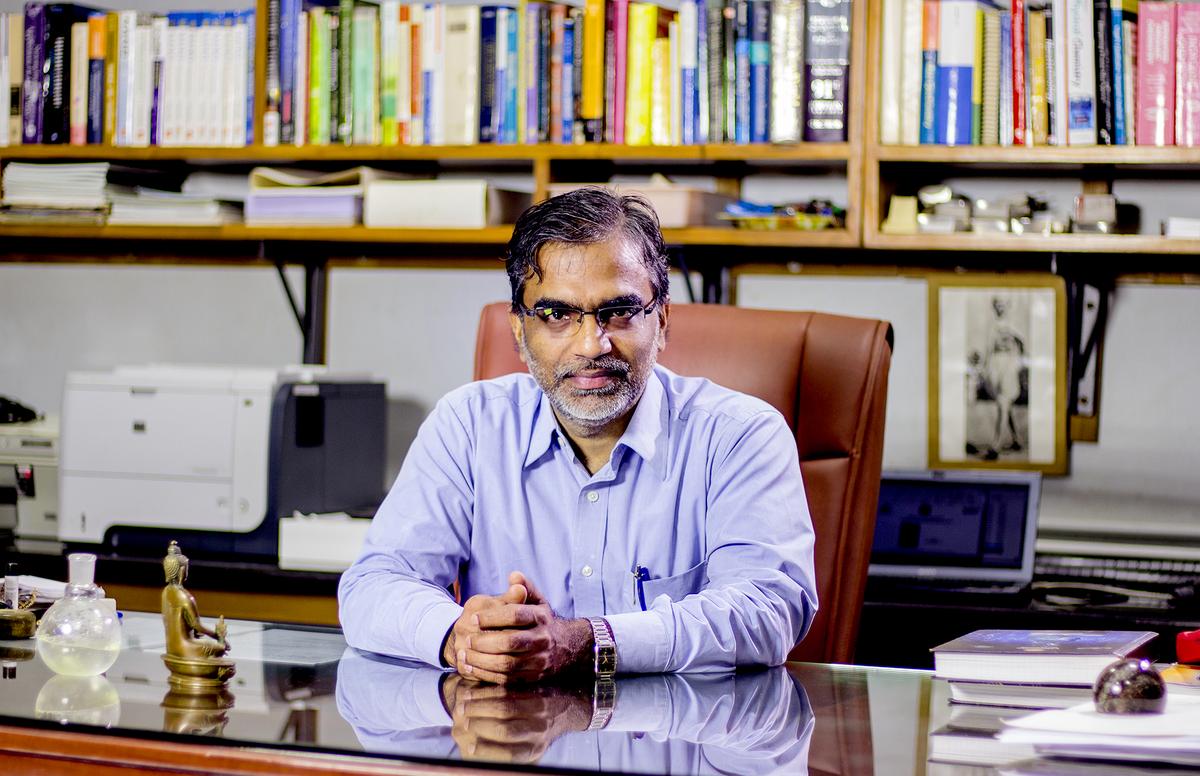
Pradeep T. | M Image source: IIT-Madras
The Union Budget presented today includes science, research, technology and education across multiple mission-setting initiatives and institutional interventions. Instead of presenting research as an independent sector, the budget places it as an enabling foundation for economic growth, strategic independence and workforce readiness under the vision Fixit spices. The discourse reflects the continuity of recent political trends with the expansion of the scope and scope of national science-related programmes. Explicit financing plans for this transformation are presented.
Taken together, the provisions in the Union Budget 2026-27 indicate a clear policy direction towards strengthening India’s research and technology ecosystem at the system level. By explicitly integrating research into missions related to biopharmaceuticals, semiconductors, biomaterials, and advanced manufacturing, the budget moves beyond isolated funding toward sector-wide research platforms. The expansion of specialized institutions (such as NIPERs), national research facilities, clinical trial networks, and industry-linked research and training centers is likely to increase the volume, diversity, and transformative potential of advanced research in India. The focus on full capabilities, regulatory science, and value chain integration indicates an intention to move from technology adoption to technology creation. If this approach moves towards other areas, it will be a great support for Vision 2047.
The proposed university towns and inclusion-focused measures address long-standing structural constraints in higher education and research, potentially enabling sustainable growth in human capital. At the same time, investments in pioneering infrastructure and emerging technology education indicate India’s continued ambition to become a global contributor to advanced science and technology.
The Budget largely presents political views on India’s growth trajectory. Therefore, it is important for the various missions/ministries to allocate sector-specific funding to achieve the scientific and technological achievements necessary to realize the dreams of the various missions. A systematic increase in allocations in the coming years is essential to making a global impact, and specific details towards this vision are expected over time.