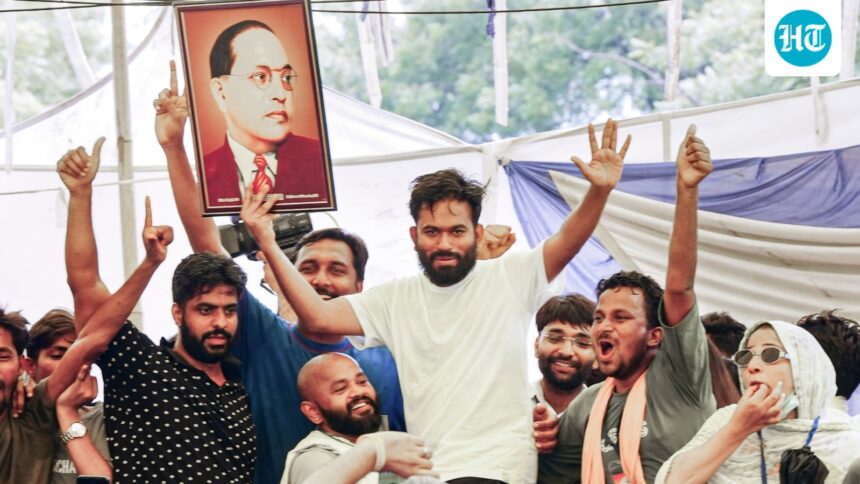
The resignation of Union Education Minister Dharmendra Pradhan may have ended the CJP’s 36-day agitation, but leaders of the organization insist that the movement itself is far from over. From taking his campaign to the grassroots to pushing for education reforms, CJP leaders say the protests were only the first chapter of a much larger mission.
After calling off the nationwide agitation on Saturday after the Center accepted one of its key demands, CJP leaders came to a common note that Pradhan’s resignation was not the destination but the beginning of a longer journey.
CJP leader Debke said ending the protest does not mean the movement is over. “This is just the beginning. The Cockroach Janata Party has a long way to go,” he wrote on X.
He also demanded compensation for the families of students who died by suicide amid the exam controversy.
“Dharmendra Pradhan has resigned. But the families of the children who committed suicide should get Rs 1 crore compensation. They should get Rs 1 lakh compensation for all those families,” Debki said.
However, the center agreed to provide the maximum possible compensation to the families of the deceased.
He also demanded action against police personnel over the clashes that took place during the Chalo Sansad rally on July 20.
Echoing this sentiment, CJP spokesperson Neha Bora said the movement demonstrated the power of collective action by the youth. “Young people united are capable of bringing about change. This is not the end, but a new beginning,” she told India Today.
CJP spokesperson Sourav Das said the organization would continue to raise issues affecting youth while pushing for reforms in education and governance.
“The movement will continue to raise issues related to youth and work on reforms in education and governance,” Das told PTI.
Speaking to NDTV, Das said entering electoral politics was not the group’s immediate priority.
He said: “There are between 750 and 800 political parties and none of them can meet the aspirations of the youth. We want to take this movement to the grassroots so that any political party or political leader in power can work for the youth and achieve their demands. This is our agenda now.”
Read also: From the first sit-in to the final breakout: A detailed account of the CJP’s Jantar Mantar protests
Politics is not excluded
While the organization said its immediate focus remained on expanding the movement, APC leader Ranka did not rule out the possibility of entering politics in the future.
When asked by India Today if the Sarsour Janta Party could eventually become a political party, Ranka replied: “The one thing I have learned in my short career in public life and politics is never to say no. Never say never.”
However, he stressed that the immediate priority remains reforming the country’s education system.
“This is not over. This is just the beginning. We will not stop until the education system in this country is reformed, and that is a promise,” Ranka said.
Also Read: Faces of the CJP movement who led the big change: Boston graduate, IITian, JNU scholar, investigative journalist
(With inputs from agencies)