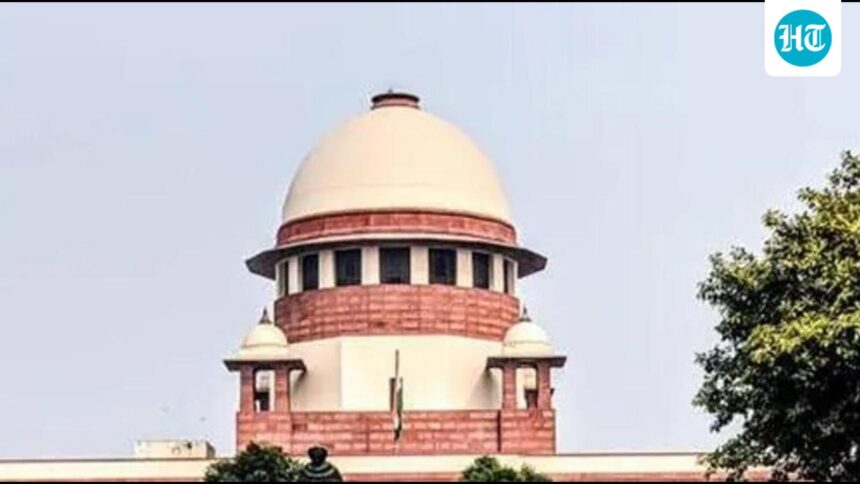
The Supreme Court on Tuesday refused to interfere with the Kerala High Court order restraining the state Waqf Board from bearing any expenditure or taking political decisions in a challenge alleging that the composition of the Waqf Board was not in accordance with the law.
However, the court amended the Supreme Court’s July 15 interim direction appointing a senior state functionary to supervise the work of the council, observing that this was not necessary when it was already barred from taking any major decision.
A bench headed by Chief Justice of India (CJI) Surya Kant said, “In view of the opening line of the Supreme Court’s order in paragraph six (6) whereby the Board is directed not to take any policy decision or incur capital expenditure without the permission of the court, we are satisfied that there is no need to add the last line that the Board of Directors shall function under the supervision of the Joint Secretary. The last line has therefore been deleted.”
The court referred the matter again to the Supreme Court. The matter will then be listed on Wednesday.
The Supreme Court passed the order on an appeal filed by the Kerala State Wakf Board represented by senior advocates Huzaifa Ahmadi and V Chitambareesh. They argued that the Supreme Court passed the order without hearing them and in a public interest litigation which sought the appointment of two non-Muslims to the board in terms of Section 14 of the Unified Endowments Management, Empowerment, Efficiency and Development (UMEED) Act, 1995.
Read also:The speaker’s reference to the merger of MPs Sena (UBT) was challenged in the SC
“The order changes the member to a supervisory role,” the bench, also comprising Justices Joymalia Bagchi and Vipul M Pancholi, said, referring to the officer of the rank of joint secretary who is an ex-officio member of the State Wakf Board.
“He is as good or bad as any other member,” the bench said, clarifying that its order would not hinder the joint secretary or additional secretary to continue serving as a member of the board.
The court also asked the Supreme Court to decide the matter expeditiously after giving a fair opportunity to the parties concerned.
The state, represented by senior advocate Jaydeep Gupta, noted that the state supports the implementation of Section 14 of the Act, and said the council had not disclosed that the petitions submitted to the Supreme Court also sought nomination of a member of the Shia community.
He said that to nominate a Shiite member, the actual representation of different groups among Muslims must first be determined based on their numbers.
Ahmadi told the court that the state supports the petitioners to the Supreme Court because it wants to replace the board members with people of their choice. He said that the work of the Council has become suspended under the current order.
He said a similar situation arose before the Supreme Court in February 2026 when this court stayed a similar order passed by the Madras High Court quashing the Tamil Nadu Waqf Board.
In the Tamil Nadu case, the bench itself had become defunct, the bench said. However, in this case, the Supreme Court allowed the Council to carry on its work but with conditions attached.
Chitambaresh informed the bench that non-appointment of members could not be a reason for disrupting the work of the council as it could be done later.
He said that the state informed the Supreme Court that it was in the process of filling the vacant positions. An amendment to the Umid Law in 2025 stipulates that at least two non-Muslim members, excluding non-official members, of the Waqf Board must be part of the board for it to function.
“The vacant posts in the Waqf Board have been filled with strict adherence to the legal provisions and there are no grounds for suspension of the existing members of the Waqf on the ground of vacancy of two non-Muslim members,” the Board said in its petition filed by advocate Subhash Chandran KR.