The Union government has listed a bill making any insult or obstruction to the singing of the national song ‘Vande Mataram’ a punishable offence, for introduction in the monsoon session of Parliament, starting Monday.

Union Home Minister Amit Shah is set to introduce the Prevention of Insults to National Honor (Amendment) Bill, 2026, in the Rajya Sabha.
Under the provisions of the bill, the national song will enjoy the same legal protection as the national anthem, the national flag and the constitution.
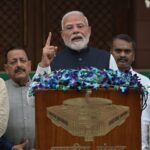
Read also | ‘No need for storm’: PM Modi in big message ahead of monsoon Parliament session
Earlier, the Union Cabinet approved a proposal to amend the Prevention of Insults to National Honor Act, 1971.
Under the provisions of the bill, obstructing or insulting the performance of the song would result in a prison sentence of up to three years, a fine, or both.
The Union Home Ministry had earlier issued a directive to the states to make it mandatory to play or sing the national song on official occasions where the national anthem is played. The national anthem must follow the national song as per protocol.
The Ministry also directed that all six sections of the national song, which are 3.10 minutes long, be sung.
John Brittas of CPI(M) in a letter to Shah expressed deep concern over the proposed bill.
“While the profound contribution made by Vande Mataram to India’s freedom movement is indisputable and commands the highest respect of every Indian, the proposed amendment departs from the carefully developed constitutional settlement that has governed the status of the national anthem and the patriotic song since the birth of our republic. In doing so, it risks upsetting the delicate constitutional balance based on pluralism, freedom of conscience and voluntary patriotism,” he said.
The Statement of Objects and Reasons accompanying the Bill is essentially based on the statement made by Dr. Rajendra Prasad on January 24, 1950, which states that Vande Mataram “shall be equally honored with and should have equal standing with the Jana-Jana-Mana..” However, Britas said, the Bill ignores the constitutional framework and context in which the statement was made.