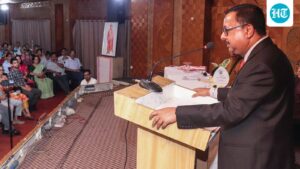
The Madhya Pradesh government on Sunday unanimously approved the Uniform Civil Code (UCC) in a special meeting held at Jagdishpura in Bhopal, with the state government saying the law will ensure equal rights in matters of marriage, inheritance, live-in relationships and religious freedom.
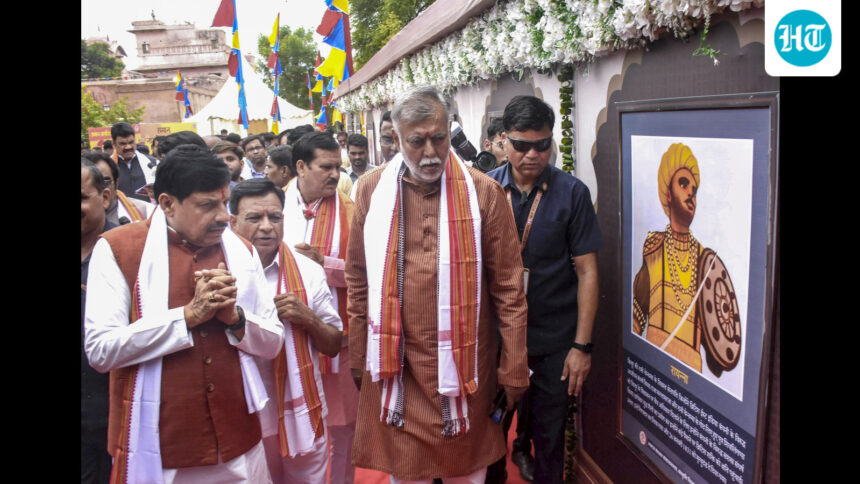
The Scheduled Tribes and Particularly Vulnerable Tribal Groups (PVTGs) living in protected areas will remain outside their ambit.
Under the new provisions, a man who enters into a live-in relationship with another woman after marriage faces a prison sentence of up to five years. “Whether it is Ram or Rahim, UCC has been set up to ensure equal rights for all,” Chief Minister Mohan Yadav said after the meeting.
The new law sets clear rules regarding marriage, property, cohabitation relationships, and religious freedom.
“Under the marriage provisions, only one marriage is permitted during the lifetime of the spouse, and divorce takes effect only through legal process and court decision. The minimum age for marriage has been fixed at 21 years for men and 18 years for women, and registration of marriages is mandatory at all levels, from panchayats to municipal corporations,” the chief minister said.
In matters of property and inheritance, sons and daughters will now have equal rights, replacing previous provisions in which women received half a share.
The Prime Minister added that for direct relationships, couples must register within one month, with the same age limits for marriage.
“If a married person enters into a cohabiting relationship, the law provides for a penalty of up to five years. Religious freedom is safeguarded, with individuals free to follow their rituals, modes of worship and ceremonies without coercion, and no religion is disparaged,” he said, making it clear that UCC would not be imposed on Scheduled Tribes and PVTGs living in the protected areas.
He expressed his satisfaction, noting that 80% of Muslim women and 40% of Muslim men expressed their opinions in favor of implementing a unified law. “Some Muslim brothers faced opposition, and many stressed that just as Hindu daughters deserved security, so too should their sisters and daughters,” the Prime Minister said.
Explaining the purpose of its introduction, the Prime Minister said that the Uniform Civil Code aims to preserve the dignity of women, ensure equal rights, promote social harmony and enhance national unity by ending discriminatory practices.
He added that although the law could have been passed directly in the Legislative Assembly, the Parliament government sought suggestions from the general public at the district and state levels.
He also attacked Congress for not participating in all-party meetings to submit suggestions for the bill.
Meanwhile, Leader of Opposition in the state Assembly Umang Sengar said: “The BJP is trying to divert the most serious issues like unemployment, plight of farmers, inflation etc by introducing this.”