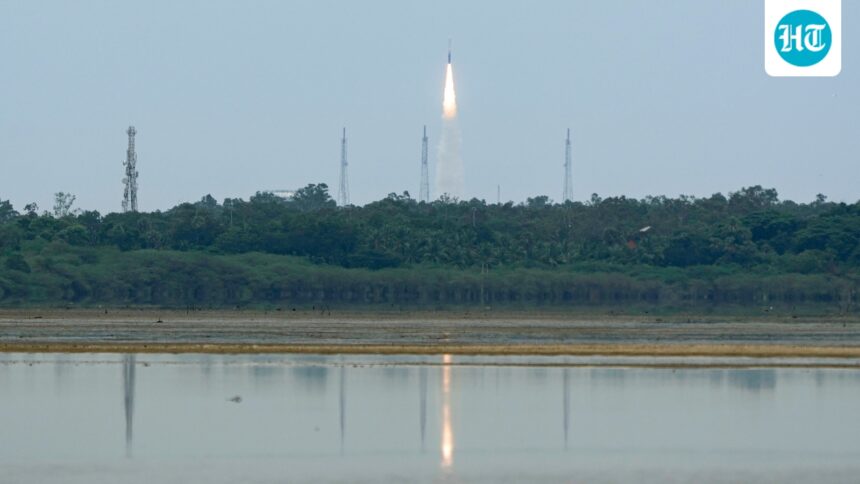
Skyroot Aerospace’s achievement is the most visible milestone yet for the private sector, which has grown from a handful to over 400 startups in India.

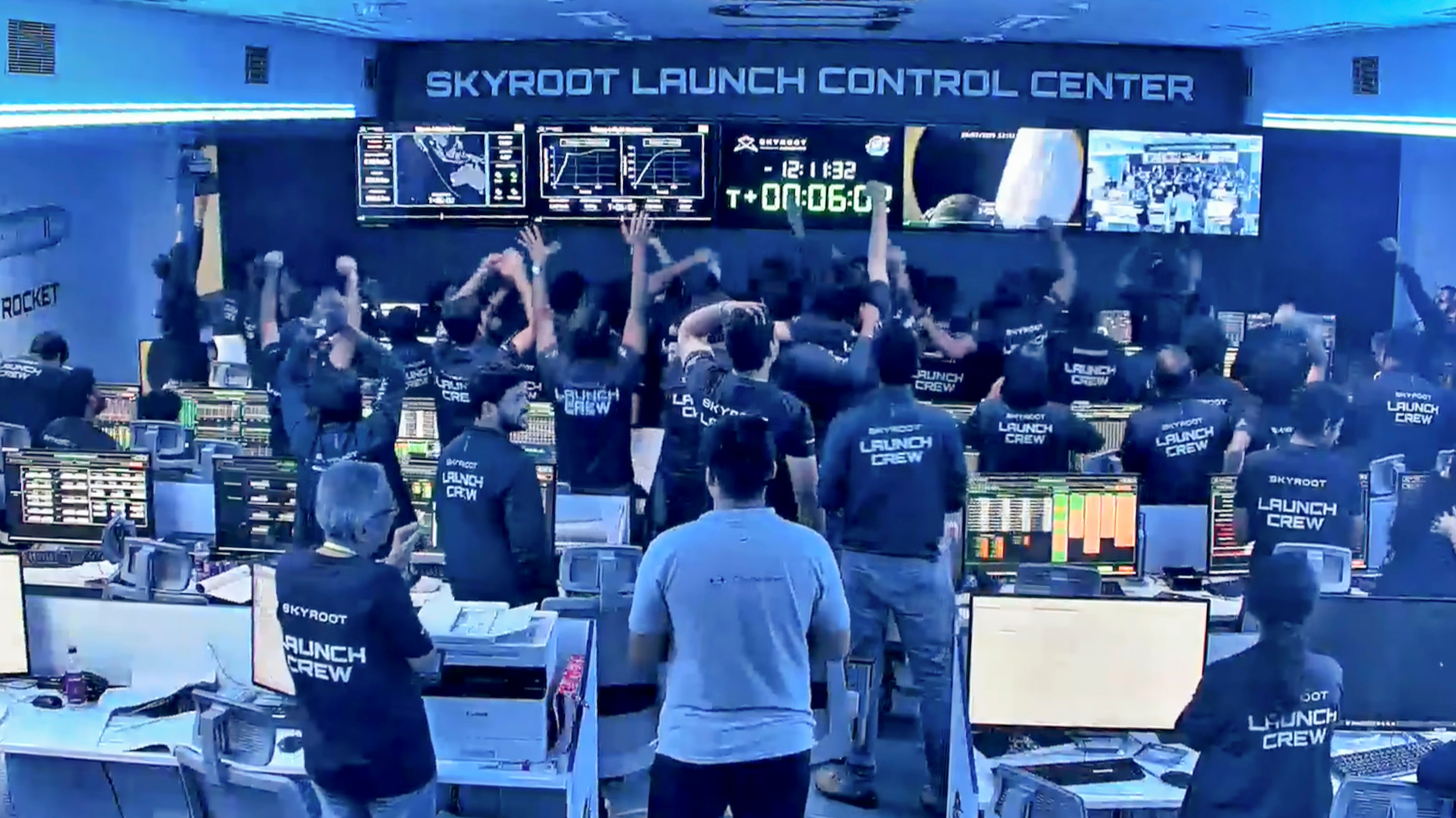
India’s first privately built rocket lifted off from Sriharikota on Saturday, marking the first time a local company has independently reached orbit and joining a small group of private companies globally with such a capability.
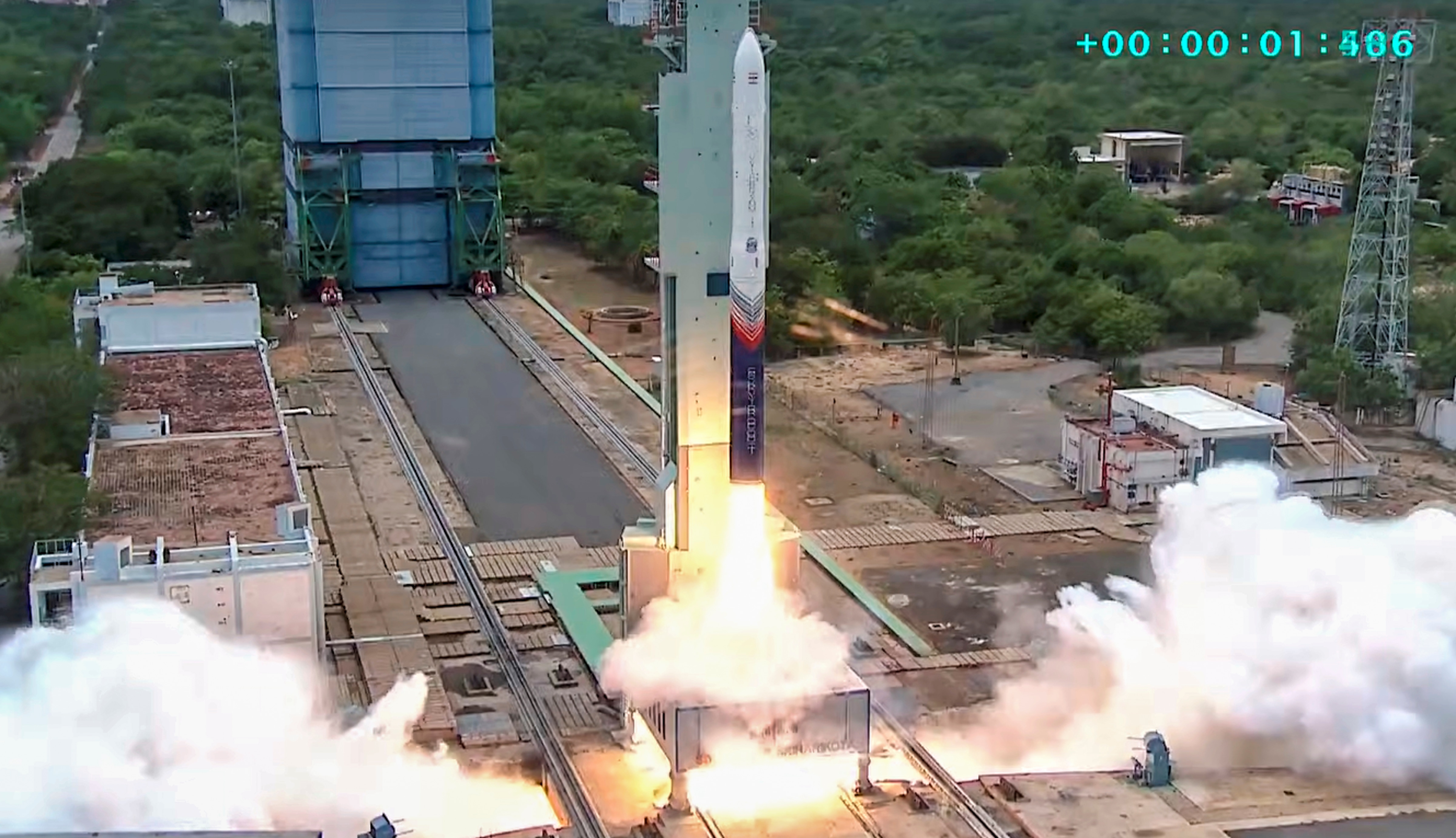
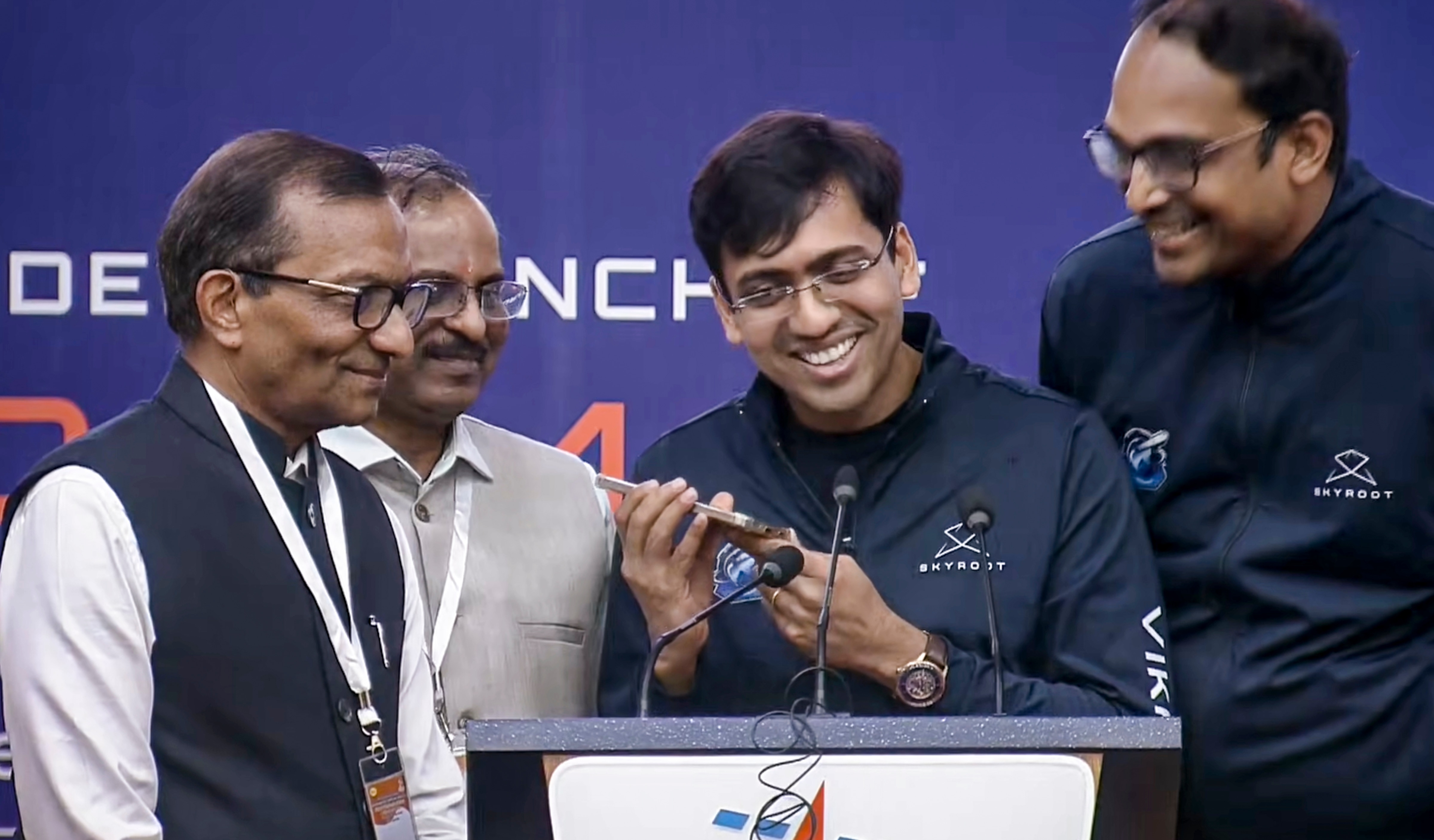
Skyroot Aerospace’s Vikram-1, a seven-story all-carbon launch vehicle, lifted off from the Satish Dhawan Space Center at 12:05 p.m. About an hour later, the Hyderabad-based company said on Channel
She added that this achievement made India “the third country in the world with a special orbital launch capability.”
Prime Minister Narendra Modi, in a post on the
The rocket, payloads and a postcard from PM
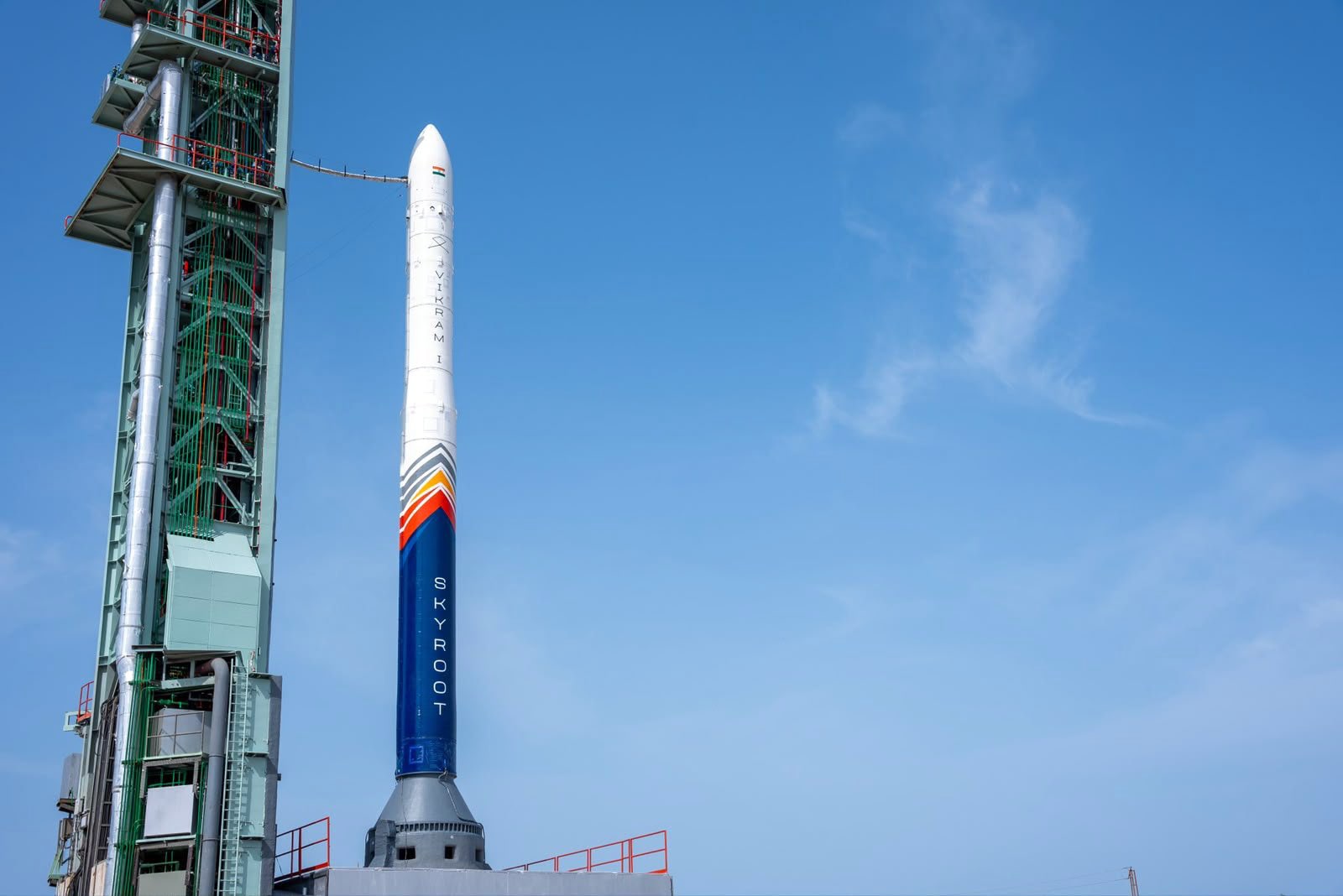
Vikram-1 is a 24-metre-long vehicle consisting of four stages – three stages of solid propulsion topped by a liquid orbital modulator that can launch multiple satellites into orbit. It is designed to place payloads of up to 350 kg in low Earth orbit. The first mission targeted an altitude of 450 kilometers and an inclination of 60 degrees.
“It is 100% designed in India, 100% manufactured in India. We built it from scratch,” Pawan Kumar Chandana, co-founder and CEO of Skyroot, told HT earlier this month.
“This means that hundreds of systems have to be developed and tested. Everything has to work together to a level where we can now assemble it on the launch pad, get it ready to go and fire it.”
The rocket’s structure is made entirely of carbon — a material “five times lighter than the strongest steel” — and its liquid actuators are 3D printed on the metal, Chandana told news agency ANI in a separate interview, a manufacturing route the company says compresses hundreds of components into a single printed part.
The vehicle carried technology payloads from Grahaa Space, Cosmoserve, DCubed and Skyroot’s SCOPE module, along with the lab-grown ‘Diamond Lotus’ developed by Bengaluru-based Cosmos Diamonds, according to news agency PTI.
The rocket carried a work of art – a small golden rocket with delicate carvings of three legendary Indian scholars. Each smaller than a grain of rice, the sculptures pay tribute to Nobel Prize-winning physicist C.V. Raman, aerospace engineer and former president APJ Abdul Kalam, and Vikram Sarabhai, the physicist widely regarded as the father of India’s space program and after whom the rocket is named. Also on board was a handwritten postcard from Prime Minister Modi bearing the words ‘Vande Mataram’, along with postcards from Indian engineers, scientists and astronauts.
Skyroot said Saturday’s flight will serve as a data collection exercise.
“The single most important goal of the Aagaman mission is to capture real-time in-flight performance data from every system on Vikram-1. We want to understand how the vehicle performs from takeoff to each stage of ascent,” Chandana told HT.
“This data cannot be fully replicated through ground testing. It will help us validate our designs and guide subsequent vehicle development as we build a reliable, high-tempo commercial launch program,” he said.
From IIT-Isro pairing to unicorn
Skyroot Aerospace was set up eight years ago by Chandana and co-founder Naga Bharath Daka, both alumni of the Indian Institutes of Technology (IITs) and former scientists at the Indian Space Research Organization (Isro).
The company now employs over 1,000 people, 400 of whom are on Vikram-1, Chandana told HT. Its Infinity campus in Hyderabad, which is spread over 2,000 square feet and was inaugurated by Modi in November 2025, has the capacity to build one orbital rocket per month.
The company’s first mission, the Vikram-S suborbital vehicle, lifted off on November 18, 2022, and is the first private rocket to reach space from Indian soil. Saturday’s flight is only the second.
In May, Skyroot became the first Indian space startup to reach unicorn status, raising $60 million at a $1.1 billion valuation in a round co-led by Sherpalo Ventures — the venture capital firm of early Google investor Ram Shriram — and Singaporean sovereign wealth fund GIC. Singaporean state investor Temasek is also a backer, the country’s high commission in India noted in a social media post ahead of the launch.
The company did not disclose the cost of developing Vikram-1, but Chandana told HT that raising capital was “one of the biggest challenges”.
Describing the vehicle to ANI, Dhaka called it “one of its kind” and said the mission was “the culmination of eight years of efforts to build affordable, reliable and on-demand launch solutions from India for satellite operators around the world”.
The private space sector is still finding its feet
The launch is the most visible sign yet of the transformation that began in 2020, when the Union government opened up the space sector to private sector participation. In 2022, the Indian National Space Promotion and Authorization Center (IN-SPACe), an interface between industry and space industries, also became operational.
Rajesh Jothi, Technical Director, IN-SPACe, said, quoted ANI, said the number of space startups in India has risen from “barely five or six” at the time of reforms to more than 400 today.
The domestic space economy, currently worth $8.4 billion, aims to grow to $44 billion by the early 2030s, the government said.
The pipeline of private activity has been built.
Earlier this month, IN-SPACe approved a Bengaluru-based consortium led by PixxelSpace India — along with Piersight Space, Satsure Analytics India and Dhruva Space — to design, build and operate 12 Earth observation satellites under a public-private partnership. more $Rs 1,200 crore in investments have been committed over five years, HT reported.
The satellite constellation aims to reduce India’s dependence on foreign sources of high-resolution imagery.
Skyroot also pitched Saturday’s flight as the start of a commercial beat rather than a one-time accomplishment. The Vikram series is positioned as a service for satellite operators, both in communications and Earth observation.
Full commercial flights are planned after “one or two successful orbital demonstrations”, Chandana told HT. “From dreaming of building a launch vehicle in India to now attempting an orbital flight, it has been a journey like no other,” Dhaka added.

Follow the latest breaking news, key developments and agenda-setting stories from India and around the world with Hindustan Times Newsdesk. Operating around the clock, the bureau brings together experienced editors, reporters and correspondents to deliver fast, accurate and contextual reporting across topics affecting public policy, governance, business, society and international affairs. The HT Newsdesk covers politics, elections, government policy, economics, business, markets, science and technology, environment, law and order, infrastructure, education, climate issues and geopolitics, while closely tracking developments across countries, institutions and global capitals. The team also leads coverage of major breaking news events, policy announcements, court proceedings, natural disasters, public emergencies and significant international developments. Reports published by the News Desk are based on information gathered from reporters on the ground, official statements, government agencies, court records, regulatory files, recognized institutions and other official sources. Stories undergo editorial review and verification to ensure accuracy, fairness and appropriateness, and are updated as events develop and additional information becomes available. Whether covering a major policy decision in New Delhi, an economic policy shift affecting millions, a landmark court ruling or a major global event, the HT News Desk aims to provide readers with trusted, fact-based journalism that provides not only the latest developments but also the context and analysis needed to understand their wider implications.Read more