

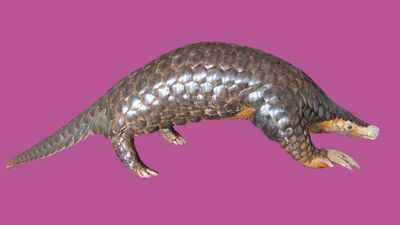
Manos Oreta Museum specimen. Image source: Narayan Kojo.
In 1836, a young British diplomat and naturalist named Brian Houghton Hodgson was stranded in Nepal’s Kathmandu Valley, far from the great museums of Europe but close to the forests and hills where strange animals still lived largely unseen.
One day, he came across a creature that looked almost like a pangolin, but not quite.It was covered in armor-like scales from head to tail, just as the French zoologist Georges Cuvier described the pangolin. But this animal had clearly visible external ears, and far more scales along its trunk than any known species. For Hodgson, then 35 and with a thirst for discovery, this was not just curiosity; The question was: Has he found a new species or is it just an exotic individual?Convinced that he was looking at something nondescript, he named it Manis auritus – “auritus” meaning “big ears” in Latin.
However, he wasn’t quite sure, so he hedged his bet with an alternative: Plurisquamis, “multi-banded”, in case the ear turned out not to be unique at all. He then sent a sample to London, wrote up his findings, and moved on. The world has mostly forgotten about the ear bowl.After nearly two centuries, scientists have finally been able to answer his question, Mongabay reported.
A forgotten name, rediscovered in smuggled scales
Fast forward to 2016-2017, on the China-Myanmar border.
A team of Chinese researchers led by Jiang Yonghu has been sequencing DNA from pangolin scales seized from smugglers. They hypothesized that most of the scales belonged to the Chinese pangolin, Manis pentadactyla, the only species thought to live in that region.But when they analyzed the genes, the scales split into two different lineages. One matches the well-known Chinese pangolin. The other type – called “MPB” – did not match any registered type.The question that had haunted Hodgson in 1836 arose again: Was this something new?At about the same time, in Nepal’s Kathmandu Valley, researcher Narayan Prasad Kojo was independently studying pangolins. He set up camera traps at night, collected droppings, and ran DNA tests. His findings indicate that the pangolins found in Nepal are genetically different from those found in China. He wrote a report in 2018 to Nepal’s Ministry of Education, Science and Technology, but with limited funding and sample size, he did not have enough evidence to make a formal claim.For a while, these two threads—the mysterious MPB lineage in Myanmar and the unusual genetics of the pangolin in Nepal—remained separate stories.
Connecting Nepal with Myanmar: “We realized they were the same”
The link came through Kai He, a biologist who had known Kojo for years. In 2020, there was almost no genetic information on pangolins found in western Myanmar, Nepal and northeastern India. When Kojo sent him gene sequences from Nepal, Kay compared them to MPB sequences from scales smuggled on the Myanmar border.They matched.It was a pivotal moment. The same genetic lineage was present in scales seized from Myanmar and in wild pangolins from Nepal. He and Kojo suspected that they were not looking at a strange type of Chinese pangolin, but rather a different species.To prove this, they turned to museums.They contacted large collections in the United States and Europe, requesting photographs and measurements of pangolin specimens. One of the pictures from the Museum of London came with a label that neither of them recognized: Manis aurita.Until that moment, they had no idea that Hodgson had once described a “new” species of pangolin from Nepal, nearly 200 years ago, Kojo said.
Read Hodgson’s words with fresh eyes
Out of curiosity, they looked up the name online and found the original description of Hodgson in 1836 in the Journal of the Asiatic Society of Bengal. Two features stood out: the presence of distinctive external ears, and an unusually large number of scales.“The outer ear, though small, is quite distinct,” Hodgson wrote, noting that the specimen contained “23 [scales] For neck and body only. “There are also 10 for the head, and 19 for the tail” – more scales than any pangolin known at the time.
On this basis, he named it auritus, and placed Plurisquamis in the same vertebra as a backup.Zoologists later revised the name to aurita to fit the feminine genus Manis. But by 1918, the animal had been demoted to a subspecies. By 1951, it had quietly assimilated into the Chinese pangolin and lost its separate identity. Her name and description remained buried in old magazines and museum drawers, absent from modern databases and preservation lists.For Kay, Kojo and their colleagues, Hodgson’s forgotten remark suddenly seemed very relevant.
Five years of DNA, skulls and skins
But the dusty name was not enough. They needed hard evidence.From 2019 to 2024, the team – which now includes 20 researchers from 12 institutions in seven countries – began collecting them. they:– DNA extracted from museum samples in London, Chicago and Kunming, including the same skin that Hodgson sent to London in the 19th century.Complete genomes were collected from 55 pangolins, as well as mitochondrial DNA (mitogenomes) from 70 other animals.– He focused in particular on samples of the MPB lineage – seven of them, including the Hodgson sample.– Measuring and comparing 44 skulls, 26 skins, seven skulls and six skins belonging to the same breed.They wanted to answer two questions:– Is this breed genetically distinct from the Chinese pangolin and other known species?-Do the animals look different enough to be clearly recognized as a separate species?The answer to both was yes.Genetically, the MPB/Himalayan subspecies has formed its own branch, separate from the Chinese pangolin and the other six species recognized worldwide. Morphologically, it also showed consistent differences, confirming that what Hodgson described was not just an eccentric individual, but represented a distinct species.
Naming race – and conflict
Of course, science rarely moves in a straight line. While Kojo and Kai’s team were still waiting for the full DNA results from Hodgson’s sample — which had been delayed due to the museum’s move to a new facility — another group came to a conclusion of their own.In early 2025, researchers led by Lenrik Kunchuk-Wangmu published a paper describing what they believe to be an entirely new species, Manis endoburmanica, the “Indian-Burmese pangolin,” based on mitochondrial DNA from confiscated scales. They did not refer to Orita. This name was only found in ancient texts and lacks the general DNA sequence to link it to modern specimens.Mukesh Thakur, co-author of that study, later explained that their choice reflected the limits of available information.
Aurita is not present in major databases, is not recognized by the IUCN, and no genetic data has been publicly associated with this name. “When we didn’t know what Aurita looked like, how could we tell that this was Aurita?” Argue.However, naming rules give priority to the oldest valid name. Mammalogist Gilly S. wrote: Zijlstra comments that if it can be shown that Hodgson’s ears refer to the same species, they should take precedence.
Thakur’s team defended their description in a response, and the debate raged.It all hinges on one specimen in a museum drawer.
Proof moment: Hodgson’s animal speaks through its DNA
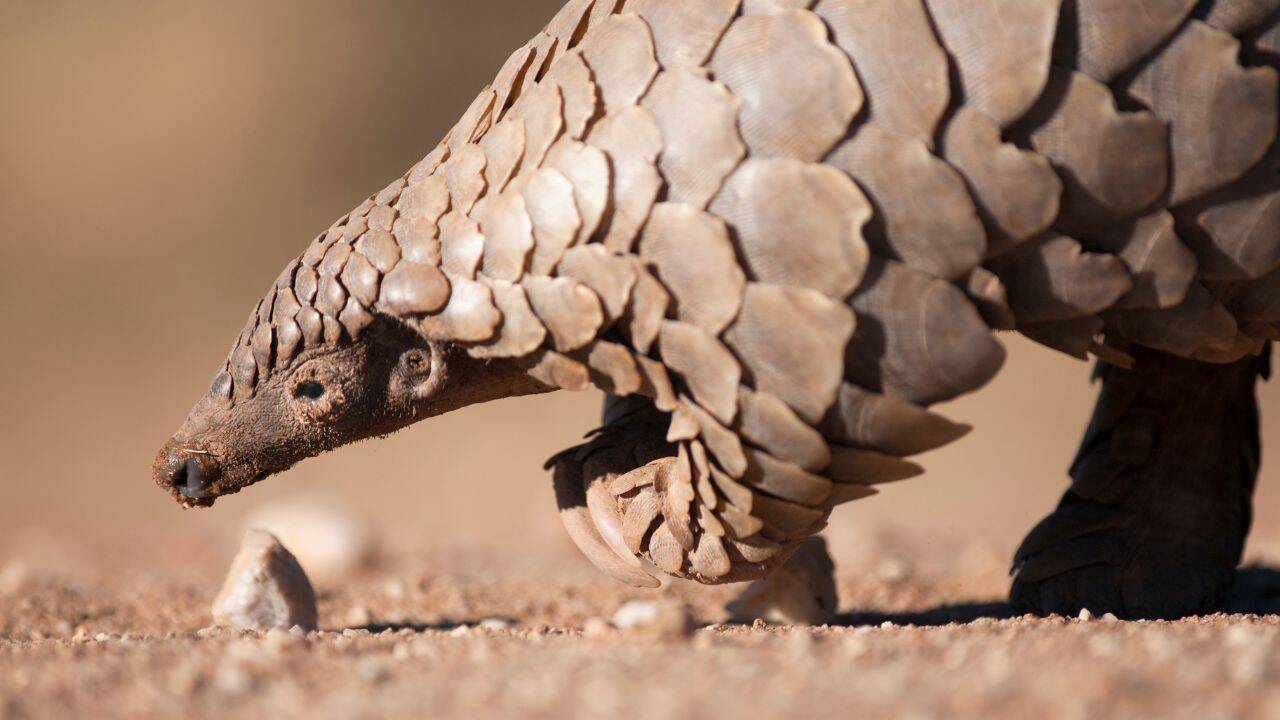
When the transfer of the kits was completed, and DNA was finally extracted from Hodgson’s original skin, the results were conclusive. Its genetic profile matches MPB lineage from Myanmar and Nepal.This means:Hodgson’s animal, described as Manis aurita in 1836, belongs to the same distinct subspecies identified in recent smuggling busts and field surveys.-The subspecies is a separate species, not just a variation of the Chinese pangolin.Under nomenclature rules, Manis aurita – now called the Himalayan pangolin – takes precedence, while Manis endopormanica becomes a junior synonym: a name that remains recorded in literature but is no longer in use.The designation “Himalayan pangolin” reflects more than just Nepal alone. Kojo preferred it; Because the species’ range likely extends along the broader Himalayan foothills – from Nepal to western Myanmar and northeastern India – rather than being restricted to a single country.
What does this mean for conservation, and for pangolins themselves?
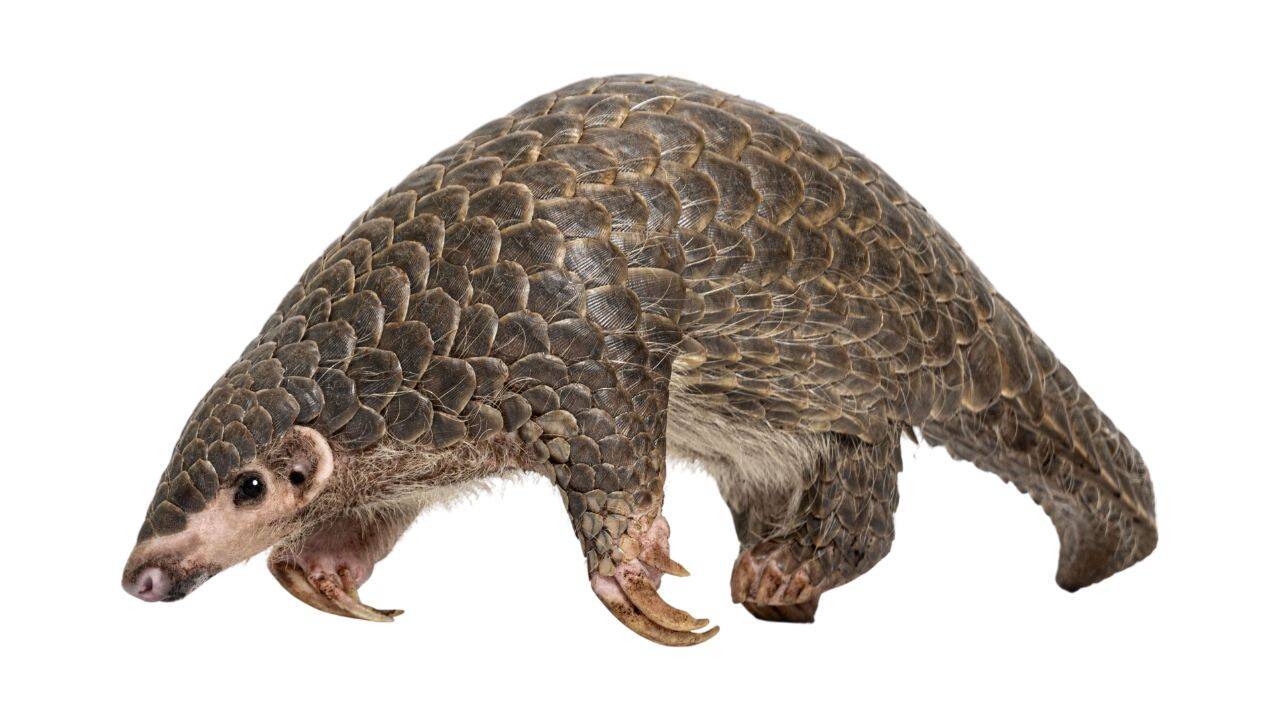
For conservationists, this isn’t just a win for taxonomy. It changes how protection is planned.In South Asia there are officially two species of pangolin: the Chinese and Indian pangolins. Now, there is strong evidence for the existence of a third creature, the Himalayan pangolin. Each has different scopes, threats and genetic traits, so lumping them together can mask the true risks.The Chinese pangolin has already been listed as “critically endangered” by the International Union for Conservation of Nature.
The Himalayan pangolin is likely to qualify for the same status once it is officially assessed, given its limited range and intense pressure from illegal trade.The new study also carries a warning: Himalayan pangolins in the Kathmandu Valley show unusually high levels of inbreeding, signs that individuals are breeding with close relatives. This reduces genetic diversity, making populations more vulnerable to disease, environmental change and stochastic shocks.To combat this, Kojo recommends the following:– Protecting the current population of Kathmandu is a priority.– Where possible, introduce individuals from other parts of the species’ range to increase genetic diversity.– Conduct more field surveys in western Nepal and along the Myanmar border, areas that remain difficult to reach but may contain key populations.The IUCN Pangolin Specialist Group has not yet officially recognized the Himalayan pangolin as a new species; This process will take time.
Meanwhile, other research teams are already working to document at least two other potential pangolin species in Southeast Asia. In other words, the pangolin family tree may still be missing branches.
Orieta, Pleurisquamis, and what Hodgson got right
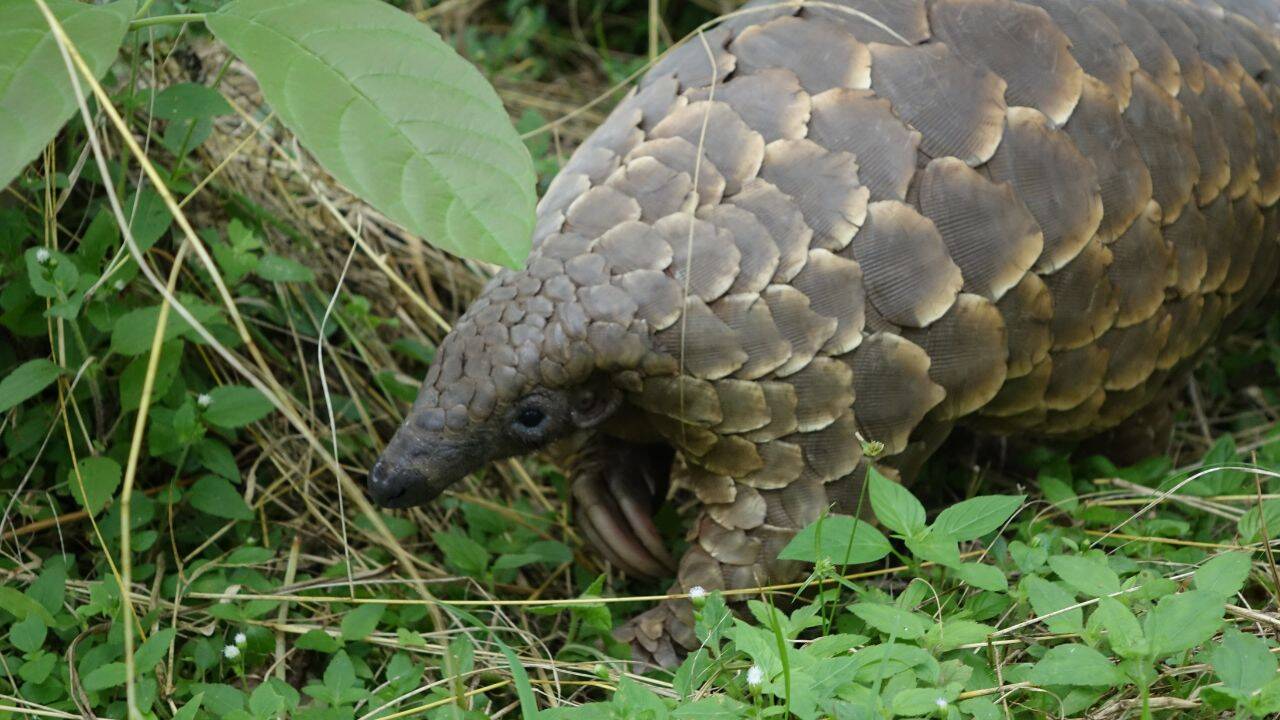
Brian Hodgson died in 1894, never knowing whether his “orita” would stand the test of time, or whether his replacement, the “plurisquamis” (“multiband”), would one day be needed. For nearly 200 years, its chosen name has been quietly buried, assimilated into the Chinese pangolin and forgotten by modern catalogues.As scientists later discovered, Cuvier was wrong about one key detail: that the Asian pangolin had external ears, just not Hodgson’s specimen. The feature that Hodgson considered “remarkable” was not unique. In this sense, his justification of Oreta was flawed.But he noticed something really important: the animal’s scales. The Himalayan pangolin has more scales than other species, and this distinctive “multi-scaled” nature turns out to be one of its distinguishing features.In the end, Plurisquamis remains what Hodgson intended – a quiet enclosure, a special nod to the true uniqueness he felt. Officially, the species now bears its original name: Manis aurita, Himalayan pangolin. Unofficially, his second choice may have been closer to the truth of what made this animal special.A young naturalist’s intuition, a forgotten museum marker, smuggling scales on the modern frontier, and years of patient genetic work converge to restore a species nearly erased from science.When you think about this story, what grabs your attention more – the continued observation of one man in the 19th century, or the way in which illicit trade and modern technology combined to make hidden species re-emerge?