Logo text
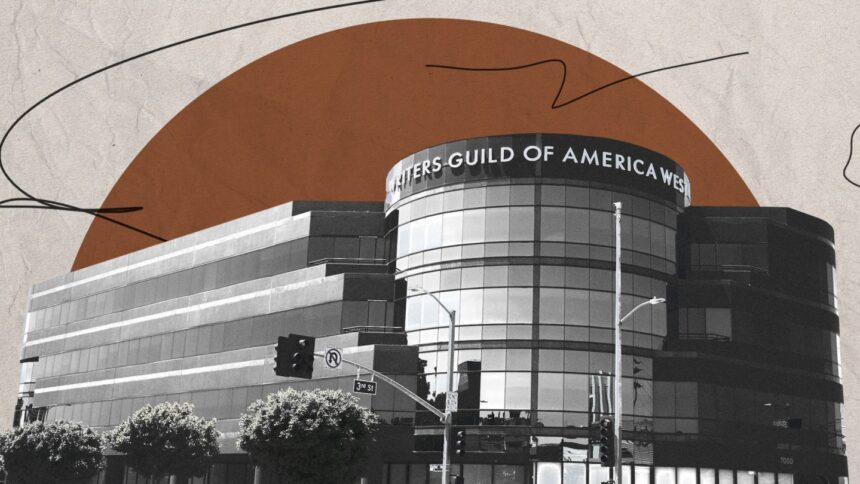
The day after a lawsuit filed by 12 state attorneys general to block the Paramount-Warner Bros. merger Discovery, the Writers Guild of America has filed its own lawsuit to block the massive $111 billion deal.
The labor union representing film and television writers filed a lawsuit in the U.S. District Court for the Northern District of California on Tuesday, alleging that the deal violates antitrust law and would harm wages and working conditions for writers by creating one huge buyer of film and television programming with enormous power.
“If Paramount succeeds in purchasing Warner Bros., the combined company will be the largest buyer of original film and television programming in the United States, eliminating strong competition from a major film and television studio that has been in business for more than a century,” the complaint said.
The lawsuit continues, “The proposed merger between Paramount and Warner Bros. (the ‘Merger’) threatens the economic and creative health of the American entertainment industry. The Merger would eliminate competition for motion picture and television writing buyouts, resulting in prohibited compensation, worse deal terms, and reduced programming volume and diversity. The Merger should be prohibited.”
Hollywood Reporter Paramount Skydance has reached out for comment. Warner Bros. refused. Discovery, also a defendant, commented. Read the full complaint here.
In its complaint, the WGA paints a picture of two major vertically integrated studios that currently compete for scripts and talent, with direct benefits to writers, who can receive multiple bids for their work and pit one studio against another. Indirect benefits include diversity in consumer storytelling as companies seek to differentiate themselves from their competitors and a greater volume of projects as companies compete for consumer interest and take creative risks along with safer bets.
The lawsuit says the combination of Warner Bros. And Paramount would disrupt this fragile harmony. “With fewer competitors, the combined Paramount-Warner Bros. entity will have the incentive and ability to cut costs by suppressing writers’ wages and cutting production. Writers will be paid less and have fewer employment opportunities,” the complaint said. He argues that consumers will have fewer and more homogeneous entertainment options.
According to the union, such a merger would create a company with a market share of more than 30 percent, in violation of Supreme Court precedent that found a market share exceeding that amount to be “presumably anticompetitive.” According to WGA data, Paramount and Warner Bros. have acquired the franchise. Collectively, they will hold 35% of film writing jobs between 2021 and 2024, 36% of TV writing projects between 2022 and 2025, and 38% of total deals between 2021 and 2024.
The WGA also casts doubt on Paramount Skydance CEO David Ellison’s assertions that Paramount and Warner Bros. The combined Discovery will each release 15 films a year theatrically and create new opportunities in entertainment, saying these remarks “do not change the potential effects of the merger and ignore historical precedents and fundamental limitations of the annual release calendar.”
Moreover, the union claims that the combined company’s $79 billion debt will create an incentive to conduct mass layoffs and reduce, rather than increase, the number of projects it produces.
The labor group raises the specter of coordination between major companies to undermine subscribers to their deals. With greater industry consolidation, especially after Paramount’s merger with Warner Bros., studios “will be eager to bid on writers’ work, an anticompetitive practice that becomes easier to maintain and harder to detect in another unified market,” the lawsuit says.
The WGA’s move to file a lawsuit to block the merger is consistent with the union’s well-documented opposition to corporate mergers in entertainment. Since the Paramount-Warner Bros. deal was announced, Discovery, the union has publicly opposed the deal, with its leaders participating in town halls to oppose the deal and speak out about its potential consequences.
The union is known for picking big fights when it feels it needs to, most recently waging a 148-day strike against major studios in 2023 over issues including sustainable wages and working conditions in the age of streaming and artificial intelligence. In 2019, the union flexed its muscles as it successfully pushed members to fire their agents en masse during its battle over talent agency conduct and packaging fees.
In a statement about the lawsuit, Writers Guild West President Michelle Mulroney said: “If Paramount succeeds in purchasing Warner Bros., the combined company will be the largest buyer of original films and television shows in the United States.”
“This would eliminate competition in an already consolidated industry, threatening the livelihoods of entertainment workers and the creative diversity of television and film,” she added. “We applaud the 10 state attorneys general who have stepped up to enforce our antitrust laws and are proud to file suit alongside them.”