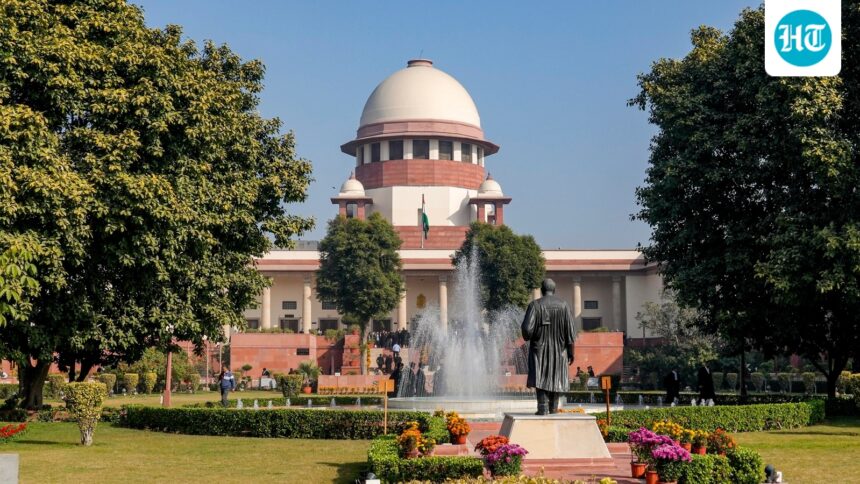
India’s Supreme Court on Monday called for a “fair, legal and reasonable process” to determine citizenship status in the country. While setting aside the Guwahati High Court judgment, which upheld the declaration of 27 appellants as foreigners, the Supreme Court called for a process bearing the significance of this status.
According to a report by L LiveLawThe matter was heard by a bench of Justice Vikram Nath and Justice Sandeep Mehta, who remanded the appeals and the 27 cases to the respective foreign courts for fresh adjudication.
The court noted, according to the daily legal newspaper, that “citizenship and foreigner status occupy an area of high constitutional and legal importance.”
However, the Supreme Court also noted that the determination of citizenship status must be done through a “fair, lawful and reasonable” process.
What is the situation?
The Guwahati High Court dismissed the appeal of the 27 petitioners who challenged an order issued by the Foreigners Court deeming them foreigners.
According to live if, The Supreme Court noted that the court’s opinion was challenged after 23 years, and none of the petitioners appeared before the court, despite receiving notices.
Gauhati HC relied on Section 9 of the Foreigners Act, 1946, which stated that the “burden of proof” of citizenship lay on the individual, not the state or the Centre.
However, the Supreme Court order provided relief to the 27 petitioners, whose appeals would not be heard before the court again, quashing the orders passed by both the court and the high court.
“The relevant courts shall decide the issues afresh without being influenced by any of the observations made by the Supreme Court or by the two courts in the earlier opinions,” the court directed.