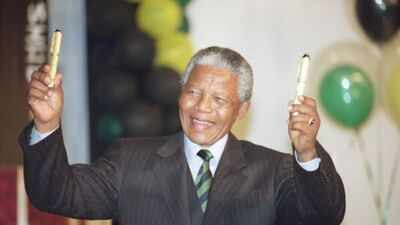
Most people judge a country by what it shows to the world, its skyline, its universities, and its economic growth. Nelson Mandela judged it by something that almost no one would put on a pamphlet.
“It is said that no one truly knows a nation unless he enters its prisons,” he said. “A nation should not be judged by the way it treats its highest citizens, but by its lowest.” This was not a comforting observation coming from a man who spent 27 years in prison before becoming South Africa’s first democratically elected black president. It came from first-hand experience of exactly the kind of treatment he was describing, which is probably why the line persists on so many other political speeches from the same era.
Today’s quote by Nelson Mandela
“A nation should not be judged by how it treats its highest citizens, but by how it treats its lowest citizens.”
What is the meaning behind the quote
Most countries measure their success through economic rankings, famous landmarks, or well-known public figures. Mandela says this only tells part of the story. In his view, the truest test is how the state treats people with less power, those who live in poverty, face discrimination, or are pushed to the margins.Respecting people who already have wealth or status is not a big test.
Almost any society manages this easily. Giving the same dignity to people who have nothing to offer in return is a much harder and more revealing measure of what a state actually values.
Why did Mandela believe equality was real? command
Mandela spent decades opposing apartheid in South Africa before his imprisonment in 1963, and nearly three decades behind bars brought him personal and direct exposure to the kind of institutional injustice described in his quote.
He emerged from prison in 1990 calling for reconciliation rather than revenge, a choice that shaped the rest of his political career.When he became president in 1994, his focus went beyond the political victory of ending apartheid. He has worked to strengthen democratic institutions, expand access to education, and rebuild a country divided by generations of division. His quote reflects the same instinct, treating leadership as something measured by how the less powerful are treated, not by how comfortable life is for those who actually thrive.
Why do the weakest members of society reveal more than others?
In every country there are people who need support more than others, due to poverty, illness, disability or circumstances completely beyond their control. How a society responds to it tends to say more about its actual values than any economic statistic ever could.Societies that invest seriously in education, health care, and equal opportunity tend to build stronger foundations precisely because they do not leave people behind.
Mandela treated justice as one of the building blocks of a functioning society, not an obstacle to its success.
Compassion is a measure of society, not just a government
Civilizations tend to be remembered through architecture and military history, but ordinary everyday empathy rarely reaches this register even though it shapes real life more directly. This occurs when institutions protect basic rights, when societies care for their most vulnerable members, and when individuals choose compassion rather than indifference.This lesson is not limited to national governments. Families, schools, and workplaces are judged in the same way, by how they treat the least influential people in the room.
Other famous quotes by Nelson Mandela
- “Education is the most powerful weapon you can use to change the world.”
- “It always seems impossible until it’s done.”
- “Resentment is like drinking poison and then hoping it kills your enemies.”
- “To be free is not merely to do away with constraints, but to live in a way that respects and enhances the freedom of others.”
Why is this still important today?
More than a decade after his death, discussions about inequality, opportunity and justice have gone nowhere. Economic success in itself has never been evidence of a country’s greatness. Real progress is seen in whether it reaches the people who have historically had the least amount of it.This is actually all Mandela was referring to. A country’s best achievements cannot be found in the comfort of its wealthiest citizens. It exists in whether every child gets a real chance, whether every person is treated with basic dignity, and whether anyone, no matter how little power, is left completely behind.