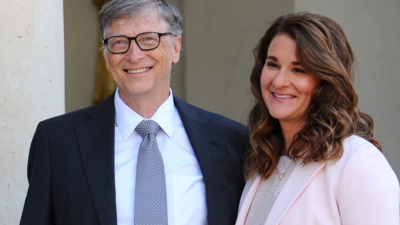
Bill Gates and Melinda French Gates
Most people picture a philanthropist as someone who signs huge checks, not someone who volunteers one evening a week or simply speaks for a cause they believe in. Melinda French Gates has spent years resisting this narrow image.
“Philanthropy to me means using your voice, your time, your skills, your money or your resources to change the world for the better,” she said, noting that money is almost an afterthought and not the point. For someone who co-chairs one of the world’s largest charities, that’s saying something worth paying attention to. He suggests that the biggest obstacle to doing some good was not actually a lack of money in the first place, but rather a much simpler and more common excuse: waiting until you feel you have enough to give.
Quote of the Day by Melinda French Gates
“Philanthropy to me means using your voice, your time, your skills, or your money and resources, to change the world for the better.”
Understand the meaning behind Melinda Gates’ quote
The quote expands what philanthropy actually means. Most people hear the word and immediately think of large donations. French Gates lists voice, time, skills, and money side by side instead, refusing to treat money as the only contribution that matters.Audio covers talk about justice, education, or health care, the kind of ordinary courage that has driven reform throughout history long before any money circulated.
Time is a resource that almost everyone has, whether that means mentoring, volunteering, or just showing up for someone. Skills are equally important.A teacher, a nurse, an engineer, they all have experience that helps people in ways that a donation alone cannot.Money comes last on her list, and this request is no coincidence. It reinforces the idea that generosity begins with will, not wealth. How much someone gives is much less than whether they are willing to give something at all.
How Melinda French Gates reshaped the conversation about giving
Public conversations about philanthropy have traditionally focused on total fundraising and major donations. During her decades of work in global health, education, and women’s empowerment, French Gates has met many people who have changed their lives without much money at all, the reach of community health workers in isolated villages, teachers who keep girls in school, and volunteers who run local literacy programs.Those experiences have shaped the way she talks about giving now. She described looking at your own time, your own expertise, and your voice as three separate categories worth activating on their own, not just waiting until you have spare money to donate. This framework turns a scary idea into a much simpler question: What can you actually contribute today with what you already have.
Why generosity starts long before you write a check
A common assumption is that meaningful giving only begins when a person becomes financially comfortable.
In practice, communities have always been held together by people who contributed long before they ever had much surplus money at all.Think of a teacher who stays an extra hour to help a student who has fallen behind, or a retired professional who brings decades of experience to someone just starting out. None of this depends on a large donation, and each individual can truly change the direction of someone else’s life. The same is true of almost every profession, the nurse who takes the time to properly reassure an anxious patient, the lawyer who offers free advice to someone who could never afford it.
None of them appear on the donation report, and most last for years.
Quiet actions often leave the deepest impact
History tends to remember dramatic gestures, record-breaking donations, and historic discoveries. Most real change comes from something quieter. A child who gets real encouragement from a teacher discovers confidence that he did not know he had. A young professional who receives proper guidance from a more experienced colleague finds the courage to take a real professional risk.None of this makes headlines, but this is exactly the kind of contribution French Gates is referring to. Communities where people actually know each other and show up for each other tend to hold together better under real stress, whether that stress comes from economic hardship or a public health crisis. Strong relationships are ultimately just as important as money in moments like these.
How can anyone become a philanthropist?
The word philanthropist usually conjures up someone whose name sits on a hospital ward.
French Gates offers a much more casual version of it. A parent who organizes a neighborhood cleanup is practicing philanthropy. A student volunteer who teaches children on the weekend practices charity work. A small business owner who offers apprenticeship training to a young person just starting out is doing the same thing, whether anyone calls him that or not.The important point is accessibility. No one needs to wait until they are rich to start contributing something real.
Some people offer creativity, others patience, and still others years of hard-earned practical knowledge. None of this shows up well on a balance sheet, but it’s life-changing all the same.
Other memorable quotes from Melinda French Gates
- “A woman with a voice is, by definition, a strong woman. But the search to find that voice can be very difficult.”
- “When you invest in women and girls, you invest in people who invest in everyone else.”
- “It is a sign of a backward society, or a society that is going backwards, when decisions about women are made by men.”
- “Poverty is the inability to protect your family.”
Why is this message more important than ever?
In the face of big problems like climate change or global poverty, it’s easy to feel like one person’s contribution barely matters. French Gates’ quote responds to this sentiment directly. Lasting progress is rarely the result of a single act of heroism.
This is usually the sum of a lot of ordinary people, one person donating what they can, another person sharing what they know, another person constantly showing up over time.This is really the last point behind her words. Changing something for the better rarely requires enormous wealth or global influence to begin with. It often starts with a skill being offered for free, giving her an hour without being asked, or simply wanting to talk when it would be easier to stay quiet.