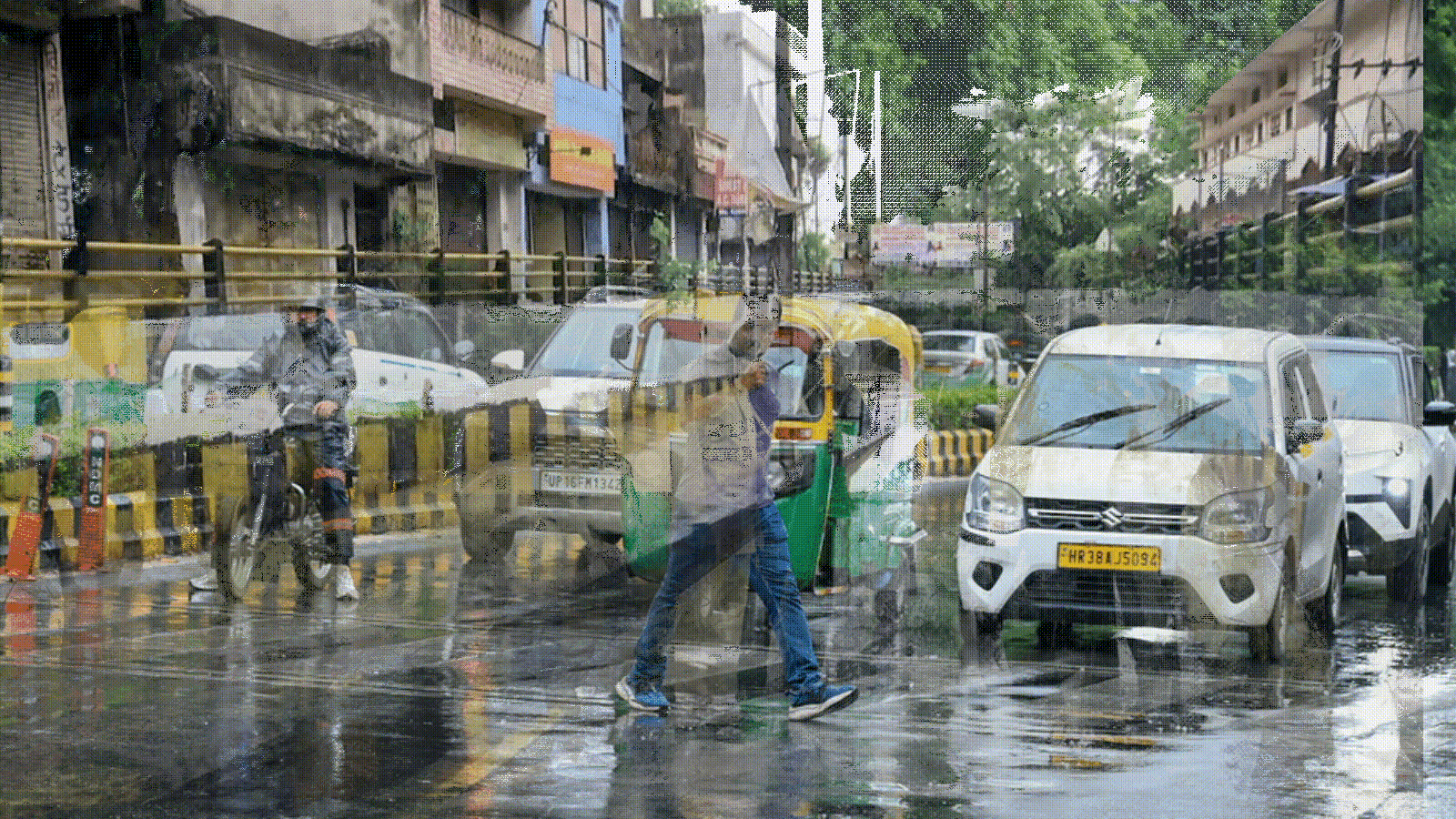
Heavy rains and thunderstorms hit parts of the country on Monday and caused landslides and flash floods in some areas, killing at least four people, causing widespread damage, submerging structures and affecting air, rail and road operations even as authorities in several states intensified emergency measures with more rain expected.

Maharashtra was one of the worst-hit states amid incessant rains on Monday, and reported three rain-related deaths in Pune, taking the death toll to 16.
The India Meteorological Department (IMD) has issued a red alert for Mumbai, Thane and Raigad, warning of further heavy to very heavy rain accompanied by strong winds.
Read also | Red Alert, WFH Warning, Hit Link Pune: Heavy rains disrupt daily life in Mumbai | The 10 most important developments
Roads were flooded and trees were uprooted in Mumbai
The rainfall brought the city of Mumbai and neighboring areas to a complete halt. Roads were flooded, trees were uprooted, and several incidents of walls and billboards collapsing were reported.
The newly opened ‘missing link’ section of the Mumbai-Pune Expressway failed its first major monsoon test after a concrete column fell on the road, forcing authorities to close the expressway and stretches of the old Mumbai-Pune Expressway in the wake of landslides and floods.
More than 40 Western Railway services were affected by waterlogging and landslides, with many trains cancelled, diverted or stopped for a short period. Five flights arriving to Mumbai were also diverted.
Chief Minister Devendra Fadnavis described the unprecedented rainfall as a case of “force majeure” and said disaster management agencies were on full mobilization.
Read also | Mumbai issues work-from-home advisory for private offices, half-day for government employees amid heavy rains
Flash floods in Himachal, landslide in Uttarakhand
A similar chaos devastated the northern states. In Himachal Pradesh, heavy rains overnight caused floods, landslides, closed roads, and claimed the life of a 14-year-old girl.
Flash floods closed the Chamba-Tissa road in Chamba district and disrupted traffic on the Largi-Singh road in Kullu. The IMD issued an orange warning on Tuesday. In Jammu and Kashmir, incessant rains caused flash floods that destroyed the Doda-Kishtwar highway, disrupted traffic and buried several vehicles near the under-construction 540 MW Kawar hydropower project in Kishtwar.
A landslide was also reported on the Gangotri Expressway in Uttarakhand, where rains caused rivers to overflow. The IMD has issued a yellow alert for Tuesday.
Read also | Weather Bee: How did IMD announce the start of monsoon in Delhi with minimal rain?
Rain in Chhattisgarh, Rajasthan
In central India, Chhattisgarh witnessed incessant rains, flooding in low-lying neighborhoods, and traffic disruption. The IMD warned of very heavy rainfall in the next 24 hours.
Several rivers, including the Shivnath and Kharun, were overflowing, prompting the state disaster response force to remain on high alert. Odisha remained on state alert as rain continued for the third consecutive day.
Rainfall and waterlogging were also reported in parts of Rajasthan, with monsoon activity being strongest over Udaipur, Kota and Bharatpur divisions, according to the IMD. Meteorologists expect the active wave to continue during the next five to six days due to the movement of the depression from the Bay of Bengal towards southern Jharkhand and northern Odisha.