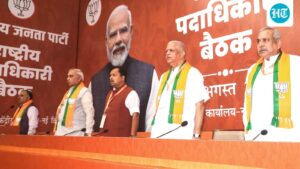
On June 25, the ruling Bharatiya Janata Party realigned its organization in the poll-bound state of Uttar Pradesh, seeking caste balance between non-Yadav backward groups and upper castes, including Brahmins, Rajputs, Baniyas, and Dalits. However, Brahmins remain disgruntled with the BJP over issues like amendments to the UGC equality regulations, which have remained pending since then.

The Bahujan Samaj Party reminded Brahmins of its 2007 promise of proportionate representation in power months before the Assembly elections in 2027. It sought to make the most of the possibility of Brahmins exploring other options, although the BJP remained their first choice.
The Samajwadi Party (SP), the BJP’s main rival, relies on the Progressive Democratic Party (PDA) or social coalition formula of the Peshdas (backward communities), Dalits and Bhasanghyaks (minorities). The Brahmins may eventually turn to the Congress Party, whose performance in the 2024 national elections, in alliance with the Socialist Party, has raised hopes of recovery from eventual decline.
The Congress-SP alliance outperformed the BJP in the 2024 polls. It won 43 of the 80 Lok Sabha seats in Uttar Pradesh and secured 43.52% of the votes. The Congress won six of the 17 seats it contested and secured 9.46% of the votes. The BJP’s seats fell from 62 in 2019 to 33, taking its total number of seats to fall below the majority mark in Parliament for the first time since 2014.
In the run-up to the 2024 elections, Uttar Pradesh state in-charge Avinash Pandey collaborated with Brahmins and religious leaders during a state-level cadre-building programme. Congress leaders attribute the party’s improved visibility to the programme, which was followed by appointment of booth level workers and office bearers.
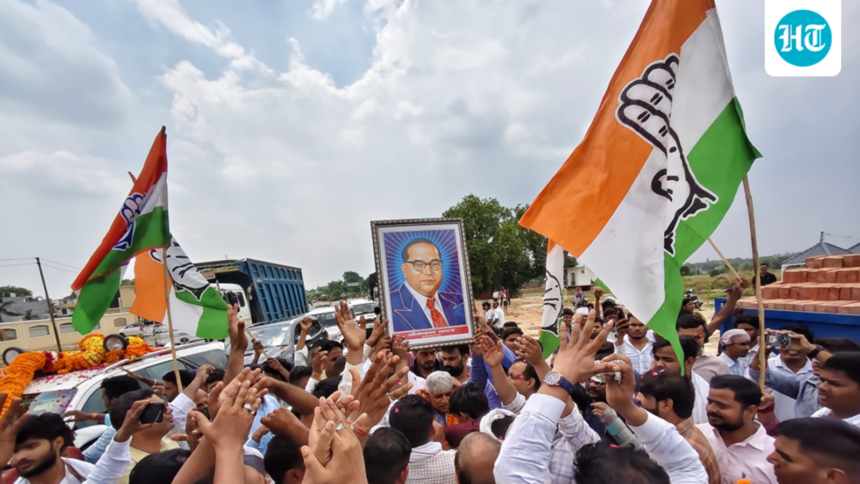
The Congress has replaced Pandey, a Brahmin, with a new participant, Rajendra Pal Gautam, a Dalit from the Jatav subcaste. The move is seen as part of an attempt to win over Dalits after supporting them in the 2024 general elections. The support was largely driven by fears and a narrative built around threats to the Constitution, for which Dalit icon Bhimrao Ambedkar was the chairman of the drafting committee.
Since 2024, the Rashtriya Swayamsevak Sangh, the ideological wellspring of the BJP, and its network of organisations, have been actively working among Dalits to regain their trust. The BJP is aware that Jatavs, who represent 10% of voters, will have veto power in 2027, a Dalit activist noted.
The BJP hopes to either secure Jatav votes or shift them towards the BJP and the Azad Samaj Party (Kanshi Ram). Against this backdrop, there is reason to doubt Gautam’s ability to retain Dalit support for the SP-Congress alliance. BSP leader Mayawati remains the first choice of Jatav and the pygmies Gautam for political status. This is among the reasons why the Congress failed to exploit the lack of confidence of Dalits towards the BJP.
Gautam’s appointment has also demoralized Congress loyalists, who resent the reward of newcomers. Gautam began his political career under the tutelage of BSP founder Kanshi Ram, who was distinguished by his anti-caste rhetoric. He joined the Congress after being removed from the Aam Aadmi Party government in Delhi after participating in a program in which about 10,000 Dalits converted to Buddhism.
Gautam was appointed Congress in-charge of Uttar Pradesh almost a month after he visited Mayawati’s residence in Lucknow without notice and was rebuffed. The BJP has consistently rejected Congress’s overtures, which has reinforced the perception that Mayawati is acting at the behest of the BJP.
Gautam tried to meet Mayawati ahead of Rahul Gandhi’s visit to Uttar Pradesh and amid calls for an alliance with the BSP. It was seen as a pressure tactic. The close friendship between Gandhi and SP chief Akhilesh Yadav continues, but seat sharing remains unresolved. Here Gautam’s role will be crucial. A Congressional poll has identified 158 winnable seats, and the party plans to demand them.
The number of seats will be less important than the type of seating. The Congress is also under the impression that Dalits supported the SP because of its alliance with the Congress and they will do so in 2027 as well. But the Congress may have also played into the BJP’s favour. Because of uncertainty over Dalit support, the BJP has been keen to secure the steady support of influential Brahmins, who number around 10% of the population but are seen as opinion makers. After Gautam’s appointment, the BJP truly believes that Brahmins have no other option.
Before the rise of the BJP, the Congress counted Muslims, Brahmins, and Dalits among its core supporters until the late 1980s, when the Congress was voted out of power in 1989. Brahmins switched to the BJP, Dalits to the BJP, and Muslims to the BJP. Congress’s dilemma continues. She believes she needs the support of one vote bank to win the other. The Congress appointed Gautam, perhaps because it believed it would be easier to win the support of the Jatavs, who stood by Mayawati even when their party hit rock bottom.