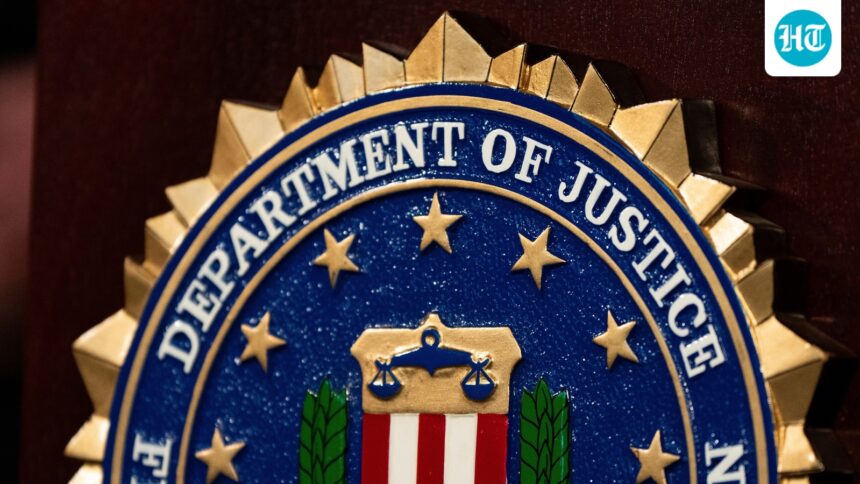
The US Justice Department vigorously defended its decision to abandon the criminal case against Indian billionaire Gautam Adani and seven others, telling a federal judge that the prosecution was legally flawed, diplomatically counterproductive and inconsistent with the Trump administration’s enforcement priorities.

In a strongly worded 10-page filing, the Justice Department said the case “should have been dropped a year ago — or never been filed in the first place,” arguing that the court had only a limited role in reviewing its decision to dismiss the charges with prejudice.
Read also| The US Department of Justice drops a criminal fraud case against billionaire Gautam Adani
The filing of the lawsuit came after US District Judge Nicholas Garaufis asked the department to explain why it was seeking to permanently dismiss the indictment, describing its previous motion as “brief, sweet, and decisive.”
The Department of Justice in 2024 under the Biden administration had indicted Adani and others for allegedly engaging in a scheme to bribe Indian government officials to the tune of US$250 million and lie to investors to receive billions more in investments from other entities — during which time Adani Green Energy Ltd.’s alleged scheme raised at least US$175 million from US investors.
The Justice Department said requiring prosecutors to publicly justify decisions to drop cases would discourage future dismissals, reveal privileged internal deliberations and violate the executive branch’s constitutional authority over charging decisions.
“Judicial searches into the grounds for dismissal would reveal privileged internal discussions,” wrote Principal Assistant Attorney General R. Trent McAutier, adding that such a request harms defendants by potentially undermining the department from seeking dismissal of criminal charges it determines are not in the interest of justice.
McCotter, who waived privilege in this case only, said he decided to drop the charges after months of meetings with defense attorneys, reviewing hundreds of pages of pleadings and conducting his own legal analysis. “The decision to seek dismissal was not a close one,” he wrote.
The department cited six broad reasons for dropping all charges, including that the alleged conduct was largely concentrated in India, Indian authorities investigated the allegations and found no actionable misconduct, investors suffered no financial losses, key evidence and witnesses were located abroad, the defendants were unlikely to stand trial in a U.S. court, and the prosecution faced significant evidentiary hurdles.
“This is a foreign issue,” McCotter wrote.
The indictment revolves around “several Indians (along with perhaps a European or two) trying to build bridges with other Indians by paying the Indian government through complex Indian rebate programs to obtain Indian contracts to provide Indian electricity to Indians in India.”
“The United States pretending to be the world’s police could cause diplomatic strife and waste resources that would be better spent on domestic concerns,” McCotter wrote. “India can manage its internal systems better than prosecutors in Brooklyn and Washington.”
The filing also argued that the criminal securities fraud charges against Gautam Adani, Sagar Adani and Cyril Cabanis lacked a sound legal basis because the alleged misconduct occurred almost entirely outside the United States and the securities transactions did not meet U.S. jurisdictional requirements.
The Justice Department said investors did not lose money because the securities in question were either paid in full or continued to provide service. It also questioned whether the statements cited in the indictment amounted to criminal fraud, describing them as largely institutional “flat-tack” and “puffiness” that sophisticated institutional investors were unlikely to rely on.
“Securities charges should never have been brought,” McCotter wrote, adding that the allegations at most require a civil, not criminal, resolution.
The department also said the FCPA charges are no longer consistent with Justice Department policy under Deputy Attorney General Todd Blanche’s June 2025 memo directing prosecutors to focus on cases involving U.S. national security, transnational criminal organizations, serious misconduct, or harm to U.S. companies.
“The alleged conduct did not involve criminal organizations, had no impact on US companies, did not in any way impact national security, was not egregious, and was the subject of investigations in India,” the filing said. “Under Blanche’s memorandum, the FCPA charges should have been dropped a year ago.”
McCotter also rejected media reports suggesting that the Justice Department sought the dismissal in exchange for promises of US investment by Adani Group, calling such allegations “false”.
“I would have asked for the securities charges to be dropped regardless of any mention of investments,” he wrote. “Mentioning potential investments cannot play any role.”
The department urged the judge to dismiss the case immediately, saying continued judicial scrutiny would only prolong uncertainty for defendants facing charges that the government itself no longer believes should proceed.
“In sum, there was nothing whatsoever improper in the department’s dismissal request,” McCotter wrote. “Defendants have been held in limbo on charges that should have been dropped a year ago — or were never filed in the first place.”