

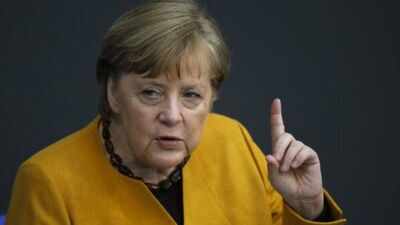
Angela Merkel said this a few months before she became Chancellor of Germany. In a July 2005 interview with Financial Times journalists Bertrand Benoit and Andrew Gowers, she explained her approach to politics in one sentence: “A good compromise is one in which everyone makes a contribution.
She went on to add that anyone in politics should avoid reliance on a single interest group, because that reliance is precisely what makes true compromise impossible. At the time, she was a candidate trying to convince voters that she could lead a country accustomed to messy, multi-party alliances rather than clean parliamentary majorities. Sixteen years later, when she resigned as chancellor in 2021, that line served as a description of how she actually governed, over four terms, three different coalition partners, and some different coalition partners. The most controversial debates in modern German politics.
A line from before Angela Merkel became Chancellor
Germany’s political system rarely gives one party complete control of parliament, meaning Merkel has spent her entire chancellorship building and managing coalitions. The Christian Democrats governed alongside the Social Democrats twice, and with the Free Democrats once, for four terms in office. Each of these arrangements requires ongoing negotiations with parties with which you disagree on real and substantive issues.
The interview with the Financial Times came at a time when Merkel was still campaigning to lead the country for the first time. She was explaining, in effect, the operating principle by which she intended to govern. What makes this quote worth revisiting is how closely it actually matches her sixteen years in power.
Meaning and interpretation of Angela Merkel’s quote
Merkel’s definition of compromise is narrower than the word usually suggests. Many people treat compromise as just meeting in the middle, where both parties give up something and neither is completely satisfied.
Merkel describes something more specific: a settlement is only good if every party involved puts something into it, not just concedes something.This distinction changes how negotiations are judged. An agreement in which one side makes all the concessions and the other simply accepts the outcome does not constitute a good settlement by Merkel’s standards, even if it technically ends the dispute. In its context, a true settlement requires the contribution of everyone at the table, not concessions from just one side.It also places responsibility on each party in the negotiation, not just the party that is typically perceived as more powerful or more stubborn. The weaker party that refuses to contribute anything is as much an obstacle to reaching a good settlement as the stronger party that refuses to concede. Merkel’s definition does not place blame on the basis of power. It is set based on whether each side has already put something into the score.
Sixteen years of coalition government put the idea into practice
Merkel’s coalition governments have produced some of the clearest tests of this idea.
Its coalition with the Social Democratic Party from 2005 to 2009, an alliance between Germany’s two largest and historically opposing parties, forced the two sides to build a truly common policy rather than simply make trade concessions. The same pattern was repeated in her subsequent coalitions, including decisions on the 2015 refugee crisis, where Merkel’s open-door stance required the approval of coalition partners who did not fully share her view.She was not always successful in putting these arrangements together. Her last coalition, formed in 2018, has been strained for years by disagreements within her bloc and its Social Democratic partners. However, the basic mechanism she described in 2005, requiring input rather than accepting a unilateral concession, has remained her default approach in almost every major decision she has made as chancellor.The eurozone debt crisis was another test. Merkel had to negotiate simultaneously with German voters fearful of other countries’ bailouts, and with European partners who felt German conditions were too harsh.
Neither side got exactly what they wanted. Both sides had to move. This, she said, is what made the final agreements enforceable rather than simply being imposed.
How to apply Angela Merkel’s quote in everyday life
Most people negotiate more often than they realize, whether it’s dividing responsibilities with a partner, agreeing on a plan with colleagues, or settling a disagreement with a friend. The Merkel criterion provides a simple test that can be applied in any of these situations: Did everyone actually contribute something to the outcome, or did one side simply give in to end the discussion too quickly?A compromise that leaves one person doing all the corrections tends to resurface as resentment later, even if it appears to be resolved in the moment.
Asking what each person contributes, not just what they give up, produces agreements that actually stick.Think of two colleagues sharing a project where one of them keeps absorbing additional tasks to avoid conflict. This arrangement may seem peaceful for a while. It rarely stays that way. Merkel’s version of compromise asks a blunter question before settling the arrangement: what does the other person actually offer, beyond simply agreeing to end the dispute?
Other famous quotes by Angela Merkel
- “Freedom does not mean being free from something, but rather being free to do something.”
- “When it comes to human dignity, we cannot compromise.”
- “It is better to talk to each other than to talk about each other.”
- “The question is not whether we can change, but whether we change fast enough.”