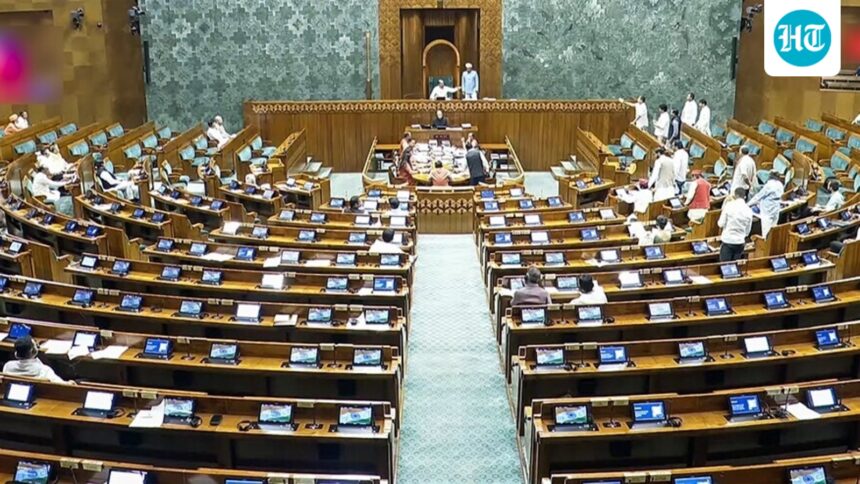
The Joint Parliamentary Committee (JPC) appears set to retain the controversial provision to remove any minister, prime minister and even the prime minister if the lawmaker is in police or judicial custody for 30 days, people familiar with the matter said.

The committee led by BJP MP Aparajita Sarangi met in Delhi on Wednesday and decided to adopt the report on July 17, the people said. The planned adoption also means that the bill could be passed in the next monsoon session, which begins in July.
But some lawmakers expressed serious reservations about the impeachment clause and pointed out that the law could come in handy for the ruling establishment as the Bhartiya Nyaya Sanhita clause allows for detention without trial for up to 90 days.
Read also: Maha extends her support for the Constitutional Amendment Bill No. 130
The controversial 130th Constitution Amendment Bill, introduced in 2025, and its two subsidiary legislations, provide for the automatic removal of the Prime Minister, Prime Minister and Union or State ministers from office if they are arrested and remain in judicial custody for 30 consecutive days in cases involving serious offences.
In a meeting on Wednesday, AIMIM leader Asaduddin Owaisi said the bill could be misused to remove three opposition chief ministers, DK Shivakumar, Revanth Reddy and Hemant Soren, who are out on bail.
While one participant suggested setting up a supervisory committee, Owaisi questioned the move and pointed out how the BNS and PMLA were being weaponized to allow prolonged detention. He said this could also become a tool for the government to manipulate opposition leaders.
Read also: What does Keir Starmer’s resignation as UK Prime Minister mean for European security?
At the meeting, another speaker referred to Keir Starmer’s resignation, but Al Owaisi and other MPs pointed out that Starmer resigned because of electoral losses and not because of any corruption accusations.
According to people familiar with the matter, “A committee meeting was held today and has been called again on July 17. The committee is unlikely to recommend dropping the controversial clause despite concerns raised by several stakeholders during the deliberations. However, the report is expected to include safeguards aimed at preventing misuse of this clause for political vendetta or motivated prosecutions.”