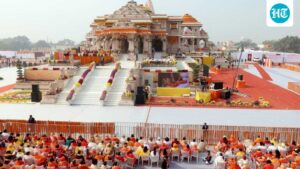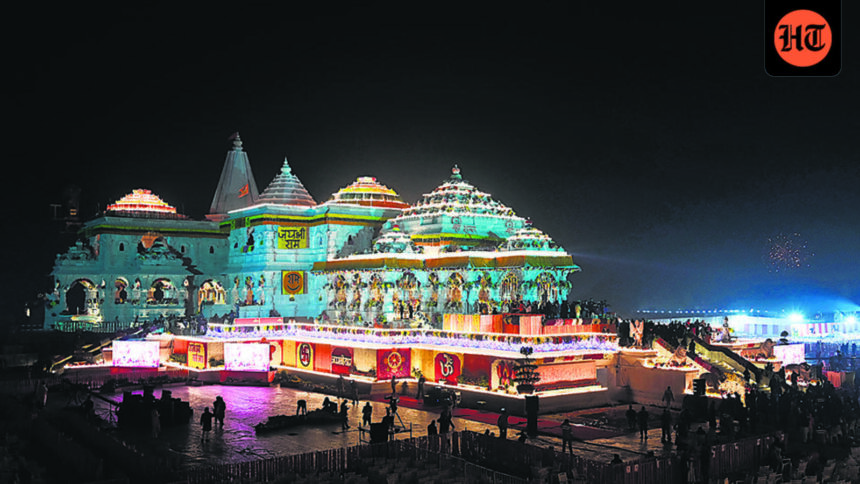
Alleged fundraising irregularities at the Ram temple have embarrassed the Rashtriya Swayamsevak Sangh (RSS) and its network of affiliated organizations, or Sangh Parivar, although its political fallout is difficult to predict.

A three-member special investigation team was formed to investigate the matter and all the eight accused mentioned in the first information report were arrested. The homes of the accused were raided and sums of money were confiscated.
Champat Rai, general secretary of the Shri Ram Janmabhoomi Tirth Kshetra Trust, which runs the temple, and Anil Mishra, the trustee, have tendered their resignations. Ram Shankar Yadav, also known as Tinu Yadav, who has been named as the alleged leader, worked as Rai’s driver. Two of Mishra’s relatives are also among the arrested accused.
Despite these measures, the government’s approach has raised doubts about its intentions. The construction of a grand Ram temple was a fundamental ideological issue of the Sangh Parivar, and its most important slogan “Jai Shri Ram” was associated with it.
This approach contrasts with Prime Minister Yogi Adityanath’s public image as a tough administrator. The government was seen moving slowly amid silence from the ruling Bharatiya Janata Party (BJP), its ideological source, the RSS, and the Vishva Hindu Parishad (VHP).
Worshipers are terrified. They have been visiting the temple in large numbers, with offerings ranging from silver, gold, diamonds and cash from $1 to Crore.
Controversies are not new to Ayodhya. The RSS-BJP leadership had previously come down strongly against them, calling the temple a matter of faith and not politics. Now, they face a severe test of credibility, also on a religious issue. There is impatience, but confidence in Prime Minister Narendra Modi and Adityanath remains. In Ayodhya and beyond, the common phrase is: “There is something holding Adityanath back, otherwise his bulldozers would have destroyed the homes of the accused by now.”
Concerns are growing within the Bharatiya Janata Party about the repercussions of this issue ahead of the Lok Sabha elections in Uttar Pradesh scheduled for next year. Samajwadi Party leader Akhilesh Yadav promised to restore the glory of Ayodhya if elected. Adityanath responded, reminding Yadav of the crackdown on the movement to build a Ram temple in place of the Babri Masjid that was demolished during the SP rule in the 1990s.
Rajneesh Singh, BJP spokesperson in Ayodhya, admitted that elections in all five states next year would be affected if Adityanath was prevented from taking any action. He said that Ram-loving Adityanath would not be disappointed without clarifying who is tying up the Prime Minister.
SP leader Tej Narayan Pandey wondered how the BJP governments, whether at the Center or the state, could shirk their responsibilities as the irregularities occurred before their eyes. He added that they formed a temple construction fund and selected members from the Sangh Parivar. Pandey said Adityanath visited Ayodhya at least twice a week. He added that the public gives credit to Akhilesh Yadav for exposing the violations.
LK Advani led the then nascent BJP when he made the Ram Temple a core issue, and the party’s seats jumped to 89 seats in the 1989 national elections from two in 1984. Advani campaigned 10,000 km from Somnath in Gujarat to Ayodhya to build the temple, helping the BJP’s message seep through the countryside. In the 1991 Lok Sabha elections, the BJP won 120 seats. In Uttar Pradesh, he won his first simple majority under temple movement supporter Kalyan Singh.
This case was not always successful. Even after building and inaugurating the temple in Ayodhya, the BJP lost the Ayodhya Lok Sabha seat in the 2024 elections. The BJP won eight Lok Sabha seats in Uttar Pradesh in the 1989 Lok Sabha polls. Their number rose to 51 seats in 1991, 57 in 1998, and 51 in 1996. The BJP won 32 seats in Lok Sabha seats in the state in 1999, and 10 seats in 2004 and 2009. The tide turned when the BJP won 71 of the 80 seats in 2014 and 62 seats in 2019.
The SP registered its best performance in the 2024 national elections, winning 37 Lok Sabha seats in Uttar Pradesh. The BJP’s seats in the state fell from 62 in 2019 to 33, as the party’s overall tally fell below the majority mark in Parliament, leaving it dependent on allies to retain power.
In the state assembly polls, the BJP’s growth began in 1989 when it won 57 seats. Their number rose to 221 in 1991, but decreased to 177 in 1996, 80 in 2002, 51 in 2007, and 47 in 2012.
The BJP won 312 of the 403 seats in 2017 and returned to power. But the number decreased to 255 in 2022 even as the foundation of the Ram Temple was laid in 2020.
The alleged irregularities in the bids could affect the BJP’s prospects if the government fails to take convincing action. The public wants the government to get the big fish. The government will have to act decisively. The clock is ticking and Ram’s devotees are watching.