Some stories refuse to stay on the page. “Hollywood Reporter”Our Beyond the Book column explores what happens when books make the leap to the screen and beyond—revealing what has changed, how it’s done, and why it matters to the creators who made it happen.
***
“I have trouble keeping my mouth shut,” Meg Cabot admits. Hollywood Reporter, Before the author revealed that she had actually seen scripts for Princess Diaries 3.
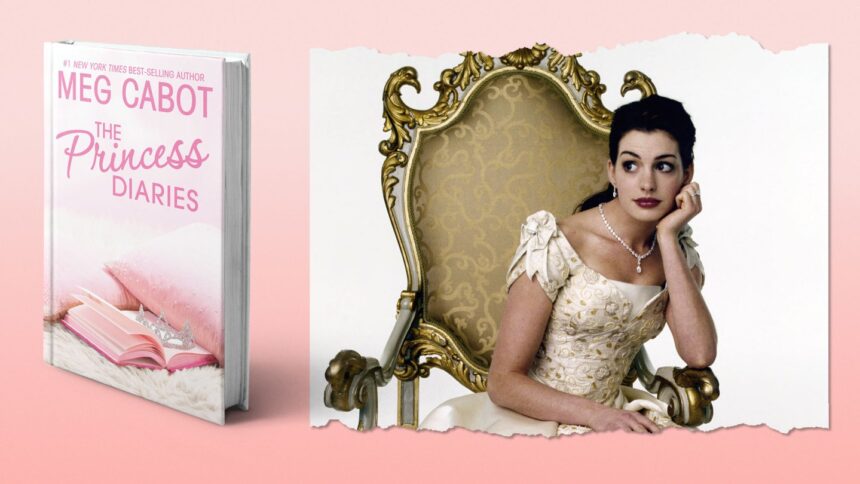
I’ve seen several different iterations, in fact, of the anticipated next installment in the series, in which Anne Hathaway will reprise her role as Mia Thermopolis, Queen of Genovia.
“I read the script, and it was amazing,” Capote joked. “I asked them not to send any more, because I love it so much.” “They don’t like it when you tell people what’s going to happen next. So I said, ‘You better not send me any more texts!’
For the third batch, Adele Lim (Crazy rich asians, Joy ride) will direct the feature. Debra Martin Chase, one of the producers of the original film, returns to the production. Lim’s producing partner, Naya Kokokov, is an executive producer, as is Melissa Stack.
“The fairy tale continues,” Hathaway wrote on her Instagram page when the third film was initially announced.
Discussions to return to Princess Diaries Capote says the universe never stopped THR. “The discussions have been going on for a really long time. There have been a lot of scripts, and I think this one that I read recently is my favorite. They promised that this was the script they were going to use, but it’s a really fun idea, and I support it 100 percent.”
Cabot declines to comment further about the film, but confirms that she is “very happy” with what she has read so far, and raises suspicions that there are “some things in the book that were in the last script.”
Despite having to remain tight-lipped about these three series, Cabot is happy to speak freely when it comes to her latest project, which revisits the first chapter of her iconic franchise more than 25 years after it was first published.
The author wrote 12 essential novels in Princess Diaries A book series that follows Mia Thermopolis, a “curly-haired new student,” whose world is turned upside down after she learns that her father is the prince of the fictional European country of Genovia, making her a real-life princess.
Originally published in 2000, Cabot lovingly revisits the character The Princess Diaries: The Graphic Novelwill hit shelves on June 30. The same story set in the 1990s is retold, but this time with accompanying art by Bethany Crandall.
“I’ve only seen the sketches. I haven’t seen the finished product. I haven’t held it in my hands,” Capote admits in her first interview for the upcoming novel. “I spent a few months editing the book, trying to get all the most important parts into the graphic novel,” she said. “I think readers who love books feel nostalgic for the past [and] Those who may have been alive in the 1990s will benefit greatly from this.
Below, Cabot discusses her experience attending DC to learn how to write a graphic novel, why the story was originally rejected by publishers, reflects on the beloved 2001 film and her take on today’s modern romance landscape.

At what point did you decide to turn your story into a graphic novel, and why would you explore it this way?
I did a graphic novel for DC Comics, Black canaryAdapted for middle grade readers. The editor at HarperCollins was like, “Hey, why don’t we do it for him Princess Diaries?” It never occurred to me that this would be something that anyone would want to do. And I was like, “Oh my God, yeah!” To write a graphic novel for DC, they actually sent me to a university to write graphic novels. They call it DC University. For two days, all these different writers learned how to write graphic novels. I had no idea that graphic novels are script-based, and then the artist draws pictures of what the writer says to do in the scripts. So I learned how to do that. I was like, “If I’m going to Princess Diaries“I have to turn the whole book into a screenplay, but it can’t be a movie script.” The two stories are different. They’re both really good in my opinion, but what we wanted to do was the book. I spent a few months trying to get all the most important parts of the book into the graphic novel. They tested a few illustrators, and Bethany had the best vision that was closest to how I envisioned the book in my head. So they hired her, sent her the script, and she started sketching.
How did you arrive at the way you wanted to design graphics?
Every painting you see in the book is a painting that I told you how it should look. What the character should wear, what they say. She made samples to make sure her vision was on par with ours. I really liked Mia, and Fat Louie was great, so we asked her to go ahead. Every week I would get drawings based on the text I read, and it was so fun to see them in visual form. The actual story takes place in New York. It’s not what Garry Marshall did [for the film] In San Francisco. In the story, her father is originally alive. He didn’t die. Disney kills [parent] Every time in their movies. That’s exactly what they do. They told me because they wanted to give the grandmother more lines, and Julie Andrews was going to play the grandmother, and I was like, “Oh my God, yeah, totally kill the father. I don’t care! I want more Julie Andrews!” But for this, we have to play with the father.

Are there any new things added to the story of the graphic novel version?
It’s the exact same story, so much so that it’s set in 1999. We thought [of] How can we update this for today’s readers, there’s no way this is the world Mia was born into. She lived in Greenwich Village in 1999 with a dial, and she really wanted an alarm! I think readers who love books feel nostalgic for the past [and those] Those who may have been alive in the 1990s will benefit greatly from this.
Do you envision turning the rest of the series into graphic novels?
Of course I will, but now I’m also doing a graphic novel series for Harper about a kid who solves crimes. The first book will be released in September, so if they want to do more Princess DiariesThey have to go along with it Detective Baby!
What do you remember most clearly about the process of writing this first book, which came out in 2000?
I wrote that on the specs for fun. I had the idea of a girl who is really upset because her mother is dating her teacher. It was happening to me at the time. I was 30, but I was still pretty upset about my mom dating one of my former teachers. (He laughs.) I started writing and nothing happened to the girl, so I knew I had to add more. I made her turn into a princess, as a joke between my mother and me. My agent said, “I think this is a children’s book,” and I said, “Really?” I’d like to tell you that she sent it in and it was picked up right away but it was rejected by every publisher in New York. Whitney Houston’s production company acquired it. Debra Martin Chase was the producer, and they loved the idea of it and wanted to turn it into a movie before it was released. So I remember we finally got HarperCollins, and the editor told us, “Good thing you bought this because they’re going to make a movie out of it.” “They do that with every book,” the editor said. “Don’t think they’ll actually make this. It doesn’t mean anything.” “Oh, okay,” I thought to myself, because I didn’t know any better. Then it happened, and I said, “Ha! I told you! Now let’s do 16 more.” (He laughs.)
The voice of the character Mia was very distinct to the youth genre of the time. What was it about the everyday narrative style that made it the best way to tell her story?
When I found out it was a children’s book, I said… [asked] A friend I used to know said, “What kind of books do you like?” I took her to the library, and every book she showed me was a memoir. I loved it Catherine, called BirdieWritten by Karen Cushman and Sharon Creech Totally normalthe Dear America Series… I was like, “Kids love memoir books. I love memoir books. So this will be easy.” Regarding the character of Mia, I was working with a thousand I was at NYU at the time, and I think Mia adopted a large part of their position. They’re young kids from New York who go to art schools, and they’re very dramatic in a beautiful way, and that’s how Mia was born.
She talked about how the book was originally rejected, and previously spoke about criticism that it was not suitable for children. What did you understand from that at the time?
There weren’t many children’s books that were pure entertainment. There were some, especially fantasy and science fiction. Tamora Pierce was very popular at the time, and obviously Judy Blume, but there was a feeling that children’s books should be educational and contain a moral lesson. I feel like my books are educational, that they have a moral lesson, but it’s buried under a lot of bitter, candy-coated sarcasm. Quite a few editors missed that part of it. It was immediately taken over in England, and thus Europe was able to catch up with it before America. Then we finally started getting some toys here in the States, and of course, Harry Potter Then he came on the scene and was proof that kids just wanted to read fun things, and so did their parents. This is what they want. It was something I was crazy about [about]Because I say, “Why do you think kids don’t want to be entertained?” Clearly they do. It’s a never-ending battle.
At what point did you see the conversation start to shift?
The first book didn’t get great reviews. I didn’t have much hope. Then I went to my first book signing — I’ll never forget it — and I walked in, and there were, I don’t know how many, 10-year-old girls dressed as princesses. I was like, “Oh my God!” It was just book signing after book signing, rooms packed with mostly girls – there were some boys – and lots of parents who were interested. That’s when people probably started to catch up.
The night before [movie] The premiere, producer Debra Martin Chase said, “Hey, let’s go see it in the theater before we see the premiere and see how the audience reacts.” So my husband and I went with her, and all the shows were sold out. We couldn’t get into the theatre. I just remember Debra was arguing with the people there, saying, ‘Can we come in and have a look?’ And they said, ‘No, you need to get a ticket. It’s a fire hazard.” It was hilarious! So we had more evidence that something was happening, and it then exploded. It was so much fun.

The film helped introduce some audiences to your books. Can you watch the movie with a separate lens? Although they are different, in what ways do you think the books and films complement each other?
I love the enthusiasm for Genovia, which is the country I created. I had never read the script, and I didn’t want to because I didn’t want to intrude on what Garry Marshall was doing. I completely trusted Gary and his vision, and I’m so glad I did. I could hear little things about what was happening. I knew he wanted to shoot in San Francisco because that’s where his young granddaughters who appear in the film live.
But when you’re at the first show, that guy in M stands up when he starts singing Genovia’s national anthem? I thought to myself: “Oh my God, did they write a national anthem for a country that I created?” This was an amazing feeling. They just took it and ran away with it. Many people think it is a real country. Kids try to write reports on it, and they’ll call me and say, “I can’t find the GNP for Genovia.” (He laughs.) It was great to see it all, and of course, it was a huge pleasure to meet Julie Andrews and Garry Marshall. I sound like a broken record, but the whole thing was so much fun, and everyone was so nice.
I’m very excited for there to be a third movie. I read the script, and it was amazing. I told them not to send anymore, because I like it too much. I have trouble keeping my mouth shut. They don’t like it when you tell people what’s coming up next, so I said, “You better not send me any more texts!”

They have their fair share of novels to draw inspiration from. I know there are differences, but is there anything from the novels that you think could work or be incorporated in some way into the new film?
I won’t say anything that would give too much away. (He laughs.) The answer is that I’m very happy with what I’ve read so far, but there are definitely some things in the book that were shared by the last text I read.
How do you think today’s readers might experience the series differently or similarly to first-generation fans?
You know, I don’t know. I can tell you some advanced reviews I’ve seen [of the graphic novel] Example: “I don’t think kids today would understand 90s technology.” I’m like, are you crazy? The technology of the 90s is like sticks and racks compared to what we have now. Children are often completely underestimated [with] How much can they understand? Children can understand the very complex magic that happens in it Harry PotterYet people worry that they won’t understand the phone call? Stop underestimating children’s intelligence [and] I know they have amazing imaginations. They can also ask their parents if something is not clear. I have full faith that kids today will understand it just as well as kids did in the 90s. Kids are really smart, and I think people don’t give them the benefit of the doubt.
It’s interesting that after all these years, there is still criticism when it comes to what kids like and don’t like, no matter how much generations have changed.
I totally agree. I think they’re fine, they’ll enjoy it. So, we’ll see. Obviously there will be some things they won’t understand. If they went back to reading the books, it would be really hard to figure out why Mia insisted on giving her crush for Christmas a VCR with a built-in TV. Now I can understand that kids don’t know why that was such a great gift in 1999. It was all I wanted.

What surprises you most Princess Diaries“Longevity, and what is it that you think still resonates with Mia so many decades later?
I think for a book about a girl who discovers she’s a princess, it’s very relatable. She’s a very relatable heroine. The problems you have, the kind of anxiety you get when you’re not sure, and you’re not very sure of yourself, is what we all felt when we were 14 years old. This is a universal thing, and people can relate to it. They sympathize with her because she really wants to do the right thing, but she doesn’t know how to do it sometimes. Everyone has been there, but this time it was a little on steroids, because it’s royalty. She can really mess things up if she makes a mistake! There are a lot of people who want to use it, and I think it also, in a way, speaks to our lives today with so many things online. I think a lot of kids measure their work by likes, and that’s terrifying. Although it wasn’t really any different when we were growing up, because people could still spread rumors about you.
What does it mean to you to hear from readers who grew up with this character and are now introducing the books to their children?
I’m very proud of my readers, because I have many who have gone on to write or go into medicine. [or] teaching. I also have some politicians, of whom I am very proud, who felt civic-minded enough after reading those books to go out and try to make a difference in their communities. It’s amazing how many readers have now gone on to do truly amazing things with their lives, and I’m so happy. If I have anything to do with it, I don’t know. But I got a little message from someone saying, “I work in a lab, and it’s because of Michael’s robotic surgical arms,” and I said, “Oh my God, this is so great!” I pay it forward to all my mentors and writers [who] I feel grateful for writing as a child.

Since you’ve written your fair share of novels… Mansa, I can imagine it would be interesting to see this increase in romance in books and on screen. Especially with YA romance. I don’t necessarily think it’s ever gone away, but there seems to be a different attitude toward it. Do you consider your books to be part of the foundation of modern young adult romance? Do you think you played a role in helping to expand the genre and get readers interested in it?
I can’t take credit for it because I know it existed before my books. No one talked about it because people were embarrassed. He was really looked down upon. The genre as a whole was looked down upon, which is misogynistic because it’s almost all women, and unfortunately, our society often looks down on the things that women love. There are romances everywhere. I read them when I was a teenager. I can find them in the library [and] In the library, but no one ever talked about it. If people saw me reading one, they would make fun of me. This has been an ongoing problem and fortunately it is starting to go away. Now a lot of people are willing to come out and say, “No, I like this!” And who are you to tell me – I think they call it “Don’t Bother Me, Delicious” – what good is. Bad books exist in every genre. I will not say anything about the types that men traditionally like [because] I write in those. [But] I really want to pay tribute to girls and women. I think we’re finally saying, look, this is what we read, this is what we like, and I think people are starting to realize the fact that the most important thing in the world is your emotional well-being, and who’s responsible for that. It will be the people who birthed you, the people who are your friends, and [who] Fall in love with. It’s a universal story.
What did you notice in today’s romantic scene? How have contemporary romance authors expanded or improved the genre?
One thing I like and am excited about is the resurgence of LGBTQ romance. Back in my day, if you want to find out [that]They had it, but you had to go to a specialty bookstore to find it. I had a friend whose favorite genre was reading, and she looked everywhere! It’s so great now that she no longer has any trouble finding exactly the books she wants. There’s something out there for everyone, which certainly didn’t exist much when I was a teenager. Or if it did, it was very difficult to find. I have to say that the Internet has made it easier for you to find what you like and people who like it too, so you have a community.
Are there any misconceptions about romance that you still notice today?
People look down on him. They think everything is written by artificial intelligence. In every genre out there, there will be some books that don’t engage you as a reader as much as others, but that’s no reason to put things down. I think it’s okay to leave out anything written by an AI. It contradicts what you and I have been taught. What people want to hear is your voice; The story is told in your own way, and that’s what AI steals from absolutely everyone. It just makes it nice.

***
The Princess Diaries: The Graphic Novel Releases on June 30.