July often brings warm evenings that make it easy to spend time outdoors after sunset. For skywatchers, those cozy nights also coincide with a calendar full of changing celestial views.
Some are short encounters lasting just a few hours, while others extend over several weeks, rewarding anyone willing to hunt after dark. Planetary positions change, the Moon moves past familiar stars, annual meteor showers return, and away from artificial lights, appreciating the center of our galaxy becomes much easier.According to EarthSky, the month offers a diverse mix of events for both experienced and novice astronomers.
Most require nothing more than clear skies and patience, while binoculars or a small telescope can reveal finer details. Here’s what to watch for during July.
July 2026 celestial calendar : The best times to see Saturn, Venus, Mars and the Moon Pak
The first main event arrives in the early hours of July 7th and 8th. If you’re ready to wake up before dawn, Saturn and the Moon in the third quarter will share the eastern sky in a close, easily recognizable conjunction.The two objects rise above the horizon after midnight and remain visible until daylight begins to brighten the sky.
Saturn’s constant golden glow stands out because, unlike many stars, it barely twinkles. According to EarthSky, Mars can also be seen nearby before sunrise, creating a morning sky with many bright features clustered in the same area.You don’t need a telescope to enjoy the view, although it will reveal Saturn’s famous rings if conditions are right. Even to the naked eye, the gentle contrast between the pale moon and the planet makes this one of the easiest celestial conjunctions of the month.
Discover the Moon, Mars and the Seven Sisters before dawn in July 2026
A few days later in the morning, attention turns slightly higher in the eastern sky. A delicate crescent moon moves close to Mars and the Pleiades, forming one of July’s most attractive arrangements before sunrise.The Pleiades, sometimes called the Seven Sisters, appear as a small cluster of sparkling blue stars. Most people can only identify a handful without visual aid, yet binoculars quickly reveal many more members gathered in the group.
EarthSky reveals that the trio is best seen about an hour and a half before sunrise while the eastern sky is still dark enough for comfortable viewing.This is also an excellent phase for observing the Moon itself. Along the line between day and night across its surface, craters and mountain ranges become more visible due to the lower angle of sunlight. Even modest binoculars reveal amazing details.
Watch the Milky Way shine after the new moon on July 14
Some of the best observations this month don’t focus on a bright object at all.
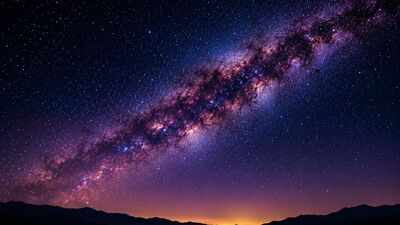
Instead, it depends on the absence of one. The new moon on July 14 removes almost all of the natural moonlight from the night sky, leaving conditions darker than usual. This makes it easier to search for faint galaxies, star clusters and nebulae, which are often hidden when the moon is bright.According to EarthSky, these moonless nights are among the best opportunities this month to admire the Milky Way stretching across the southern sky.
Once your eyes have spent about half an hour adjusting to the darkness, the brighter central region of the galaxy becomes much easier to distinguish, especially from rural or known dark-sky locations.One helpful clue is the familiar teapot pattern within Sagittarius. The brightest section of the Milky Way appears near this constellation, helping observers find the galactic center without specialized equipment.
How to see Venus and the crescent moon in the night sky in July 2026
Venus has been gradually climbing higher in the evening sky, and mid-July presents one of its most striking appearances.A small crescent moon passes close to the bright planet shortly after sunset, creating a conjunction that remains visible for only a short time before both sink below the western horizon. This conjunction is one of the easiest events for casual observers because Venus is unmistakably bright even from towns and cities.Look toward the unobstructed western horizon shortly after sunset rather than waiting until late evening. The sky still bears traces of twilight, making the thin crescent moon appear especially delicate next to Venus’ bright white glow.
Night sky of July 29: See the stunning Pac Moon after sunset
The full moon arrives towards the end of July, bringing with it the traditional name Pak Moon. The title comes from North American seasonal traditions, marking the period when male deer begin to grow new antlers.The moon reaches full illumination on July 29, although it appears full to most observers on both surrounding nights. Watching it rise shortly after sunset often produces the well-known “moon illusion,” in which the lunar disk appears unusually large while near the horizon.This full moon will dominate the evening sky, washing out many of the fainter stars but providing an impressive spectacle in its own right. The clear eastern horizon provides the best opportunity to watch it climb at night.