

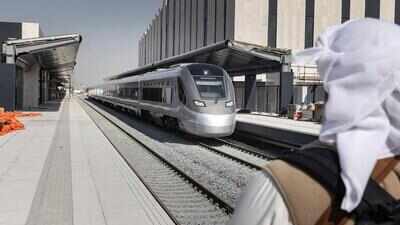
Etihad Rail passenger services finally launch on June 30 / Photo: @thenationalnews
After years of anticipation, the UAE’s national railway project is finally preparing to receive passengers.Etihad Rail has confirmed that the preliminary phase of passenger train service will begin on June 30, marking a major achievement for one of the country’s most ambitious transport projects.
The launch will begin a gradual rollout that is expected to reshape travel across the Emirates by offering a fast, convenient and congestion-free alternative to road trips.The commuter network is one of the largest infrastructure development projects in the UAE and forms part of a long-term vision to improve connectivity, support economic growth and provide more sustainable transport options for residents and visitors alike.
Etihad Rail launches on June 30
The launch on June 30 marks the start of a preliminary operational phase rather than the immediate opening of the full national network.Etihad Rail has repeatedly said that passenger operations will be introduced gradually to ensure safety, reliability and seamless integration with existing transport systems. The first operational route is expected to focus on key population centers linking Abu Dhabi, Dubai and Fujairah, three locations chosen due to strong demand and strategic importance.
The first stations expected to be operational include Mohammed bin Zayed City in Abu Dhabi, Jumeirah Golf Estates in Dubai, and Fujairah station.Officials say the phased approach follows international best practices and will allow the operator to expand services while maintaining the highest standards of passenger safety and operational performance.
Which cities will be connected?
Once fully developed, Etihad Rail’s passenger network will connect 11 cities and regions across the UAE, creating the country’s first fully integrated national railway system.The wider network will include stations in:
- Abu Dhabi
- Dubai
- Sharjah
- Fujairah
- Goods
- The guess
- The harbour
- Zayed City
- Maziraa
- Faya
- Al Dhaid
These stations will be operated in phases as the passenger network expands beyond the initial launch phase.Etihad Rail expects the completed network to significantly improve transportation between the emirates while supporting local tourism and economic activity.
How much will Etihad Rail cost?
One of the biggest questions ahead of the launch on June 30 is how much passengers will pay to travel on Etihad Train.So far, Etihad Rail has not officially announced ticket prices for passenger services. However, transport analysts expect fares to be priced between intercity bus services and private car travel, making rail an attractive option for daily commuters, business travelers and tourists.Industry estimates suggest that a trip between Abu Dhabi and Dubai could cost between 40 and 80 dirhams, although passengers will have to wait for official confirmation from Etihad Rail.The operator has indicated that passengers will be able to book tickets digitally, with a dedicated online platform and mobile app expected to be unveiled closer to the launch date. Integration with existing public transport systems and payment solutions can also be offered as the network expands.Officials previously confirmed that the stations will connect to wider transport networks, including metro services, buses, taxis and commuter options, helping passengers complete their journeys more easily.
Inside trains
Etihad Rail has already revealed many details about what passengers can expect once services begin.The trains have been designed with modern intercity travel in mind, and will feature Wi-Fi connectivity, individual power outlets, comfortable seating, dedicated family areas and guaranteed seating for passengers.Each train can carry up to 400 passengers and will operate using advanced railway technology designed to meet international safety and quality standards.Officials stressed that the service aims to provide a reliable alternative to long-distance driving, allowing travelers to move between the emirates without concerns about traffic congestion or long road trips.
Faster travel
One of the biggest attractions of the new rail network is the expected reduction in travel times.According to previously released estimates, flights between Abu Dhabi and Dubai are expected to take about one hour, while flights between Abu Dhabi and Fujairah may take about 90 minutes.The trains are expected to operate at speeds of up to 200 kilometers per hour, making it one of the fastest means of travel between many major destinations in the UAE.The passenger service is also expected to be integrated with wider transport networks, including metro, bus and taxi systems, creating a more seamless travel experience from departure to arrival.
Looking forward
The start of passenger operations represents much more than just the opening of a new train service.The project is expected to reduce dependence on land transportation, support sustainability goals, boost tourism, and strengthen ties between communities across the Emirates. Officials believe that railways will become the cornerstone of the UAE’s future transport network, just as the Dubai Metro transformed urban travel more than a decade ago.With freight services successfully running since 2023, the launch of passenger trains represents the next chapter in the UAE’s rail journey and one of the most important transport developments in the country’s history.