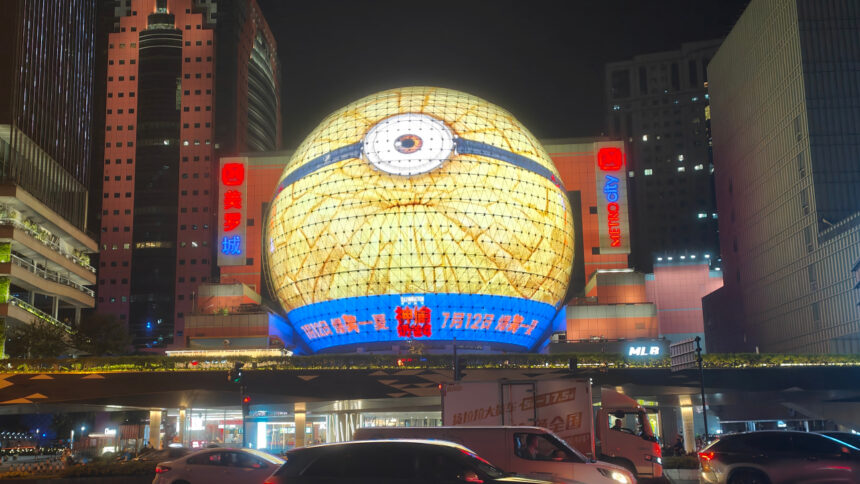
Step into Shanghai’s sprawling Xujiahui Metro City mall and you’ll find what was once a struggling cinema has been transformed into the spiritual home of Shanghai’s legion of anime fans.
There are clues to be found when we first meet, after riding the elevator to the fifth floor, two teenagers in costume perfecting their moves while filming a dance routine for Douyin. On the floor behind them are bags full of anime-themed collectibles – including some fun little furry toys from the hit Chinese anime no one – Purchased from dozens of toy stores spread throughout the complex.
Last year, the struggling Metro City Cinema was transformed into what is known as the city’s animation cinema — its programming now offering only that genre — and during the Shanghai International Film Festival, everything from the hit Indonesian film Jumbo To the 4K version of René Laloux’s classic Wonderful planet (1973) was packed, and the toy store staff outside were busy.
“Through clear locations, targeted objectives, well-designed atmospheres and themed events, our target audiences have steadily gathered,” Liu Yina, director of the Film Department of the Shanghai Municipal Film Administration, explained during a panel discussion at this year’s festival.
“Since its opening, the Animation Cinema has quickly become a landmark of ACG culture. It has hosted more than 30 large-scale events, attracting nearly 1.5 million visitors, and non-ticket revenues including themed merchandise and catering have risen sharply.”
It’s quite true that this home of some 30 million people likes to promote itself as China’s ‘Cinema City’, and its links with the industry go back to the country’s first studios, which were built here around 1909 after an enterprising American impresario named Benjamin Brodsky first brought cinema cameras to the city. China’s first feature-length animated film — 1941 Iron Princess fan – Filmed by Wan Guochan and Wan Liming in a studio tucked away in the French Concession area of Shanghai, only three kilometers from Metro City.
But tough times are hitting the industry everywhere — China’s box office is down about 41 percent below last year’s pace, according to Artisan Gateway — and that requires innovative thinking.
“Shanghai’s film industry witnessed two pivotal turning points in its development. The first came in 1908 with the opening of Shanghai’s Hongkou Grand Theater, China’s first cinema,” Liu said. “The second occurred in 2002, when Shanghai Gateway Yonghua Cineplex was launched, ushering the industry into the digital multiplex era. Today, we are leading a third transformation – transforming cinemas from mere exhibition venues into integrated spaces for culture, socialization and entertainment.”
Making headlines locally last week was the newly painted and eye-catching Minhang Huaxia Gumei Sports Theme Cinema – which opened to coincide with the kick-off of the 2026 FIFA World Cup across North America and is broadcasting live matches in brilliant 4K within its 500-seat main auditorium. The claim is that it is the first – and so far only – cinema about sports in China.
Special meals were introduced due to the often harsh show times; There were souvenirs – and Leo was delighted with the reaction among locals.
“We believe it will become a one-stop destination for movies, exhibitions and sports,” Liu said. “Looking to the future, we will develop cinemas centered around technology, art, traditional opera and more, and constantly create new cinematic landmarks for Shanghai as a film city.”