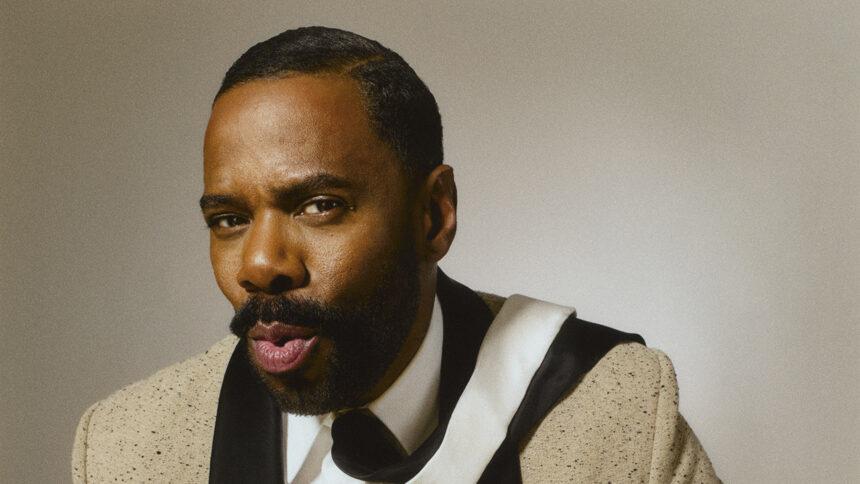
Colman Domingo has been directed by his fair share of legends, from Steven Spielberg and Ava DuVernay to George Wolfe and Steven Soderbergh. What I take away from the greats is that there needs to be an overall sense of trust – that talented individuals should be encouraged to do the job they are hired to do.
“This is what I want to do with the entire crew,” says Domingo, who is in the director’s chair for his Netflix series. The four seasonsfor the first time in the second season. “I want people to make choices and come up with ideas and decisions.”
Domingo became an actor by training, a director outside of circumstances. While pursuing a theatrical career that spanned decades, he often staged his own productions, finding himself in several key positions other than performer. “I had to figure out how to get into the room when I couldn’t be in the room, and when people wouldn’t let me in the room,” he says. “Otherwise I wouldn’t be a producer or director.”
His on-screen directing credits include episodes of the long-running AMC horror series Fear of the walking dead And an episode in the first season of The four seasons. And now he’s behind the camera The four seasonsSeason 2’s first episode, “Hiking”, sees the return of the Comedy Central ensemble of middle-aged friends: show creator Tina Fey, Will Forte, Marco Calvani, Kerry Kinney Silver and Domingo. The group is back together for the first time since the end of Season 1, with Erika Henningsen’s 30-year-old Jenny revealing that she is pregnant by Steve Carell’s recently deceased character, Nick, who was also Anne Kenney Silver’s soon-to-be ex-husband before his death. (The show is funnier than this dark synopsis suggests.)
The season opener is dedicated to the group of friends trying to scatter Nick’s ashes in upstate New York. (It’s funny, I swear!) At the beginning of the episode, the group sits down to eat at a hole-in-the-wall barbecue joint and the camera swings around the table in a sweeping circular motion, capturing everyone laughing, bonding, and sharing a meal. It brings the audience back to the center of the group of friends, and reintroduces viewers to the characters they fell in love with in the first season.
Inspired by shots like the intro Roseanne And dinner scenes in Hanan and her sistersDomingo says the show was purposeful and aimed to show “family — and family is what you always want to come back to, no matter what complicated things might happen.”
In running the group, Domingo made a point of involving as many people as possible in the creative process, making sure the players of the day were introduced to everyone in the morning, and was available to all departments. “He’s great with the whole crew. He really understands, having worked so long as an actor, how much each person on the set does,” says Fay.
Fey also sees Domingo’s acting background come through when he’s behind the camera, noting, “A lot of times in TV directing, you can’t really talk about the acting choices you make, because the days go by so quickly. But he’s always, in that way, the actor first, and he’s concerned with making sure everyone feels like they get enough shots.”

Domingo explains, “You have to be the captain of the ship. You have to inspire everyone to bring the best ideas into practice. I’m always the kind of person who says ‘Yes, and…’. I love that as an actor, but also as a director.” “I don’t like to hear the word ‘no’ a lot, because I feel like I’m very pragmatic when it comes to budgets and the scope, size and size of what can be achieved. I also want people to start with a ‘yes’ spirit before we get bogged down in the ‘no’ and what we can’t do,” he adds.
The four seasonsSeason 2 started off as another TV series for Domingo, trancehas come to an end. Over the course of three seasons, Ali Domingo was primarily present in the diner booth, doling out hard-earned wisdom on Zendaya’s street style, serving as her patron and the moral center of the show. In the final two episodes of the HBO drama, Ali takes center stage.
While he hints at his past throughout the series, the audience finally sees Ali’s former life as an addict. In flashbacks, he is shown cheating on his wife and having abusive tendencies towards his loved ones. This is revealed as Ali, in the present, tries to help Rue navigate her truly untenable position at the center of rival drug lords. Whether in the past or in the present, trance Ali is uprooted from the four comfortable walls of the restaurant.
“We wanted to uncover more about Ali and his survival mechanisms, and see how it actually works,” Coleman said. THR Back in April, just as the season was starting to air. “Instead of being philosophical and talking about it, he’ll actually be more actionable about it.”
After watching tranceSeries Conclusion “More doable” is an understatement. Ali, who was the series’ resident mentor, father figure, listening ear, voice of reason and confidant, turns into something of an action hero in a revenge plot. When Roo overdoses on fentanyl-laced pills, Ali tracks down the man behind the operation, Big Season resident, Alamo (Adewale Akinnuoye-Agbaje), and challenges him to an old-fashioned duel with a sawed-off shotgun, no less! In the end, it’s Ali Domingo who brings the final curtain down trance.

As the episodes began airing, HBO refused to confirm that the long-awaited third season would be the last. By the time the finale aired, the network and creator Sam Levinson acknowledged the show’s conclusion.
For his part, Domingo expressed his satisfaction. Every season, including two two-hour specials, Levinson told his team to treat it as if it were the end. In the end, Domingo says, “I know I did everything I could.”
This story first appeared in the June standalone issue of The Hollywood Reporter magazine. To obtain the magazine, click here to subscribe.