Watch the second episode of Him: Welcome to Derryyou’d be forgiven for assuming that Mother Thing, one of the HBO show’s many surreal, terrifying creations, mostly made it out of post-production. The parents of young Ronnie (Amanda Christine), who died in childbirth, appear in a hallucinatory scene as Ronnie hides under her blanket – finding herself trapped in a strange womb, with her mother taking the form of a bed. It’s sticky, scary, and completely fantastical.
However, much of this was filmed on set: the bed was designed to fit two actresses, one of whom plays the upper body, and several minute details of the scene were captured closely on camera. “We built and slimmed down the most disgusting-looking intestines I had access to,” reveals VFX supervisor Darryl Sawchuk. “Those things we shot were real — the curtains, the lighting, everything in the room had a solid foundation. We went in and melted the mother down and made it more of a corpse, with a dry mummified effect, but we had a great foundation to work off of.” They added some extra goo too.
And this was the way Welcome to Derry. Build off his two He – she Films, series co-developer Andy Muschietti shared a broad philosophy with the visual effects team when it came to developing the look of this prequel. “We’re big believers in shooting as practical as possible, and we try to get really good photography – he likes old practical prosthetics, makeup effects, goop and really visceral stuff,” Sawchuk says. “There’s sometimes a comfort factor when you can shoot something on blue screen and deal with it in the future, but that doesn’t always give the best results. Overall, there was a great partnership in terms of creative thinking and how we wanted to approach the show.”

Rewinding events about 25 years starting in 2017 He – she 1960s set film Welcome to Derry The film begins with the arrival of a new family in town, the disappearance of a young boy and the birth of a flying mutant baby, whose killing spree starts things off in a bloody way. In fact, the prosthetics team animated the birth sequence, creating an unusual way to film even the most bizarre sequences.
“You start seeing these first compilations, and it’s shocking and visceral, and you say to yourself, ‘Okay, sure there’s going to be notes from the studio that this won’t play out live as it does on camera — but of course it does, which makes for such a shocking entry into the series,'” Sawchuk says. “I thought we’d have to replace the baby with CG in the birth scene. But we ended up having to use it all practically.” Again, they added some goo at the end for the kicks.
Sawchuk credits the production’s ability to employ the style of “old-school horror movie work”—a style atypical for the modern television genre—with the show network. “Until the first episode of game of thrones“Where their main character gets killed off and you go, ‘Oh my God,’ it’s a shocking way to start the series. I think on any other platform or with any other studio, there probably would have been a lot more feedback and maybe a more conservative approach,” he says.

However, there was also the matter of having two highly regarded and successful films to achieve or exceed. “We put a lot of pressure on ourselves to make sure we kept up with the photography, production design, and amazing prop work,” says Sawchuk. He worked closely with Muschietti, who directed half of the eight-episode first season and brought “very crazy, extreme ideas” about how to push the designs further. They ended up having an unusual amount of time to devise outside-the-box strategies, with strikes and other delays ultimately taking VFX development on the show to two and a half years. You usually get less time on episodic TV shows than you do on feature shows. Here, they had more.
“Andy almost treated the film like an eight-hour feature film, where not a single shot was finished until it was ripped out of our hands,” says Sawchuk. “It just means we were able to do additional iterations, additional improvements and detailed passes.”
And sometimes, they still bump up against certain TV production standards and need to get creative: “A lot of what we do is we ask, ‘Okay, how many takes can we afford to shoot for this amount of money and this amount of time?’ And when things get a little crazy, you have to figure out how to make these things work.

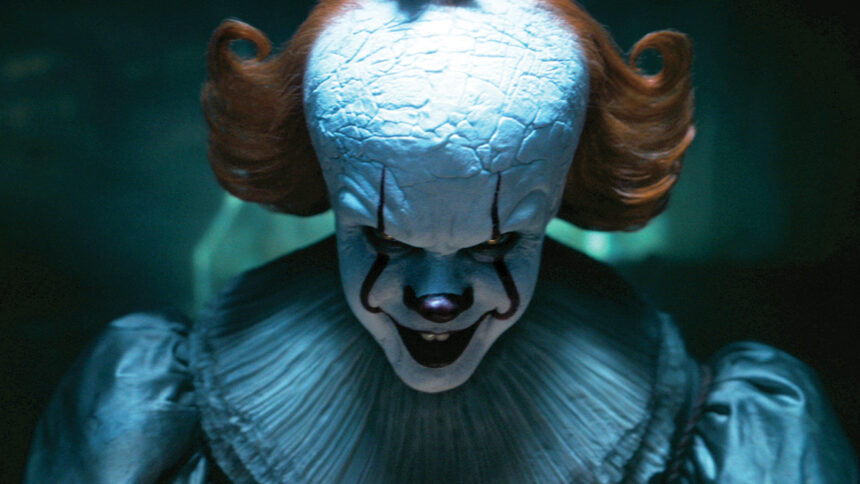
The main vendor the team worked with, Rodeo FX in Montreal, also worked on He – she films, so they join the process with an understanding of its starting points – and an understanding of how to take things to the next level. Take the central form of He – she Movies, Pennywise the Clown, who returns here and is portrayed by Bill Skarsgård once again. He’s still the iconic villain we know and love, but subtle changes in the way he’s conceived and portrayed have a noticeable impact.
“I thought we could do something a little more anatomical — we could really play into how the mouth stretches open, what the orbital bones do, and how that pushes and pulls the anatomical features under the face structurally,” says Sawchuk. “We spent a lot of time designing things as naturally as possible. As a result, Pennywise had a more aggressive look.”

Sawchuk points out one of the most memorable images of the season, when we see Pennywise nearly frozen in place in a bone-chilling tunnel sequence. His eyes are twitching. His physical weaknesses are exposed. It’s the same Pennywise – but like you’ve never seen it before.
“Andy said, ‘We’ve never been able to be this close to him and really appreciate the mucus and the saliva and all the details in the mouth and teeth,'” Sawchuk recalls. “We knew the basic shape of the creature, but we wanted to make sure we could kind of upgrade it and push it to its limits.” This means in a world Welcome to Derry: You can never have enough goop.
This story first appeared in the June standalone issue of The Hollywood Reporter magazine. To obtain the magazine, click here to subscribe.