

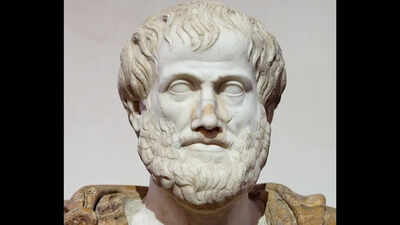
Aristotle (Image: Wikipedia)
Aristotle’s words here exist in a very ancient but still familiar space. Life does not move in straight lines. Things happen that no one plans. Losses, delays, sudden changes, small disappointments, bigger shocks.
The “accidents of life” he refers to are actually all those moments that come without asking for permission.The idea is not about avoiding them. It’s about how a person carries themselves when they arrive.dignity. beauty. Two simple words, but they carry so much weight.
Today’s quote by Aristotle
“The ideal man holds Life accidents with Dignity and grace “.
What does “ideal” really refer to?
Aristotle is not talking about perfection in the modern sense. He is not someone who is flawless or immune to problems. “Ideal” here sounds more like a standard to aim for, something shaped by personality rather than circumstances.So the focus shifts away from what happens to the person and toward how they respond.Some people collapse under pressure. Some react sharply. Some withdraw. Others adapt, even when things are uncomfortable or unfair.The proverb quietly places value on the latter group.Not because they suffer less, but because they endure it differently.
Accidents are not rare events
The word “accidents” in ancient philosophical writings often covers more than what we call accidents today.
It can include anything unexpected. Change in luck. Missed opportunity. The situation turned out differently than planned.This part looks very modern.Plans fail. Timetables change. People change. Systems are collapsing. None of this is unusual. It’s almost routine.The real question is what happens next, in that gap between expectations and reality.Aristotle’s suggestion is simple, but not easy: plant your feet.
Dignity and grace in practice
Dignity is not loud. It does not need to advertise itself. This appears in self-control, and in not allowing circumstances to strip one’s self-respect.Grace is a little different. It has a softer edge. It suggests moving through difficulty without becoming consumed by it. No denial. Don’t pretend that everything is fine. More like balance when things are out of balance.Taken together, the phrase describes a kind of constancy. Not emotional emptiness.
Not separating from life. You just need to control how much chaos is allowed to take over your inner world.
A simple idea that is difficult to live by
It seems almost obvious when written this way. But anyone who has experienced turmoil knows that it is far from simple.People interact. This is normal. Frustration comes first. Confusion too. Sometimes anger. Sometimes silence.The proverb does not deny this part. He points to what follows.At some point, a person either settles into the disorder or is completely shaped by it.
Aristotle seems to encourage the first option.Not resistance in the dramatic sense, but a kind of quiet adaptation. Continuing without completely losing his composure.
Why does this still seem relevant?
Modern life has not reduced uncertainty. If anything, he’s doubled down on it. Business changes faster. Plans are less stable. Expectations are constantly changing.In this kind of environment, the idea of bearing things with dignity and grace seems less like ancient philosophy and more like practical advice.It is not an ethical requirement. More like a way to keep oneself safe.People are still trying to do this in small ways. Respond calmly when things go wrong. Do not overreact to every setback. Give time to work out situations before deciding what they mean.None of it removes the difficulty. It only changes the amount of damage allowed to be dealt internally.
Final thought on the quote by Aristotle
Aristotle’s line is not about controlling life. This is not possible. It’s about controlling the situation within yourself.The phrase “The ideal man endures life’s mishaps with dignity and grace” sounds less like an instruction and more like a reminder that character often emerges in moments that were never planned.