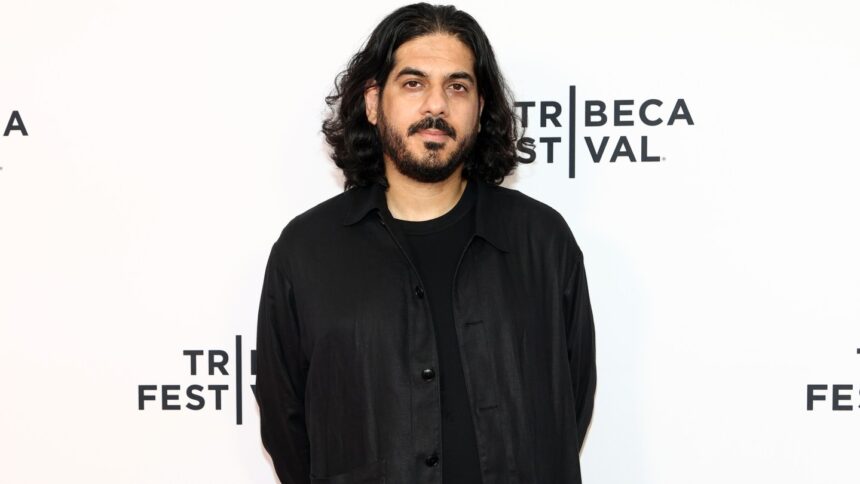
Over the course of many sleepless nights in the past few months, engineer and filmmaker Ash Kosha has had one thought: It’s not as easy as people think.
Kosha, a British-Iranian millennial with a serious streak, was about to make a film about the Iranian regime’s January 2026 crackdown on protesters, which claimed the lives of at least 7,000 people and likely many more. With no safe way to make a film in Iran, let alone a financier or producer to support the effort, Kosha decided to make it entirely using a combination of AI tools (primarily from Anthropic and Google).
But he found the process much easier said than done: crafting a meaningful story using only masters was a daunting task, requiring the director to be responsible for departments that no actual filmmaker could handle.
He said: “I was sleeping three hours a night, and I had a severe headache, and it was almost impossible.” Hollywood Reporter Tuesday evening from outside the AMC screening room near Union Square in Manhattan.
However, some things have proven to be a little easier using this method. “I finished the first 30 minutes and realized I didn’t like it. So I hit delete and started over,” he said.
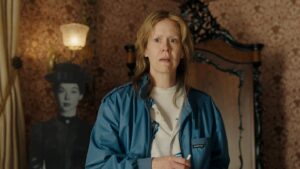
The strange fruits of Kosha’s process premiered Wednesday night at New York’s Tribeca Film Festival — a work that was just another independent film on the one hand but also a glimpse into the distorting mirror of film’s future on the other. violet dreams, As Kosha called his article, it is a 75-minute film that offers a look at modern Iran. Or perhaps more accurately, the dream diary of someone who knows the country but never set foot anywhere near it to make his film.
The industry was closely watching what Kosha and his producer Tom Rogers were doing—conjuring a movie from nothing without a single shred of actor, location, crew member, or camera. Had Kosha been successful, he would have changed the entire aesthetic presentation, not to mention the cost structure, of Hollywood itself. If it fails — and it’s impossible to ignore that a number of people in the city were hoping it would fail — it means the AI revolution has been overblown, and we can all go back to making movies the old-fashioned way.
“Tonight’s film has sparked a little bit of conversation, a little bit of controversy,” deadpanned Tribeca co-founder Jane Rosenthal in introducing the film.
In an interview before the show, Rogers, a longtime technology and media executive (he founded CNBC while running NBC Cable), offered that THR His own explanation for why this shouldn’t be offensive: A film about a stronghold like Iran could never have been made in a conventional way; An unknown filmmaker couldn’t get the budget; The whole process is more of an addition than a replacement.
“I understand the sensitivity that there will be disruption and some jobs will disappear,” said Rogers, who got to know Kosha when he hired him at his cloud computing company. “But this film simply would not have happened without artificial intelligence.”
Whatever you think of AI movies as a general movement, the anger may seem somewhat misplaced when applied to this little film and its maker, who in Wednesday’s light looked less like an ordinary person who got angry about injustice in his homeland (he grew up in Iran) and used his skills to do something about it. “This was not an artistic exercise,” Rosenthal said. “This is an artist finding a way to bear witness to that.”
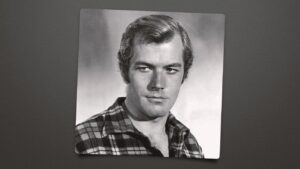
Violet dreams It can feel disjointed in places, but perhaps no more so than in any impressionistic crisis film. Koosha made a smart choice to lean into the form’s dream-like qualities, telling the story as if someone were remembering it through the fog of trauma rather than being bothered by straightforward narration. There are hints of emotion, violence, terror, and sometimes hope, but the whole thing can feel tattered, like postcards from a movie rather than the actual thing. A surgeon watches Iranian Revolutionary Guard soldiers storm the hospital and demand that he stay away from the protesting patient he is operating on. An elderly woman who remembers dancing with her husband is now gone. A sunny boy, in a wheelchair, watches the horrific regime-led violence from his window. All of these things collide on the streets of Tehran, but not always in our minds.
Kosha’s film isn’t exactly an anthology, but it’s hardly a juxtapositional narrative, it works best as a kind of send-up from a turbulent moment, giving us human snippets to make sense of what could otherwise be abstract violence.
The score he generates plays a role throughout much of the film, shifting the burden away from dialogue and long action scenes (none of which the AI does particularly well), if also annoying in its insistence.
It’s worth noting that there are also interruptions and some of those semi-unrealistic shots, although not as many as you’d think. And close-ups, lots of close-ups. (It’s a way to reduce interruption and hallucination problems.) One might expect that after a few minutes you’ll settle into the film and forget about the AI production — Rosenthal asked the audience to think about what the film is about rather than how it was produced — but the producer’s style can’t help but remind of the uniqueness of the process.
I also found it difficult to escape a philosophical question: for a docudrama to have an impact, how important is it that what we’re watching actually happened? This genre, by definition, requires re-enactment, and does gathering a group of actors and going to Tehran (or Morocco) give the project more credibility than having a computer do it? As I watched Violet dreams I found myself toggling between two answers: the artificial nature of the project made me feel less like I might have, but I also questioned all the other docudramas more. Why would any fact-based movie make sense if what we’re watching is essentially a deepfake?
Of course, models will soon improve what we see so much that we may eventually no longer be able to tell that something was made by AI, and so we will stop caring about such matters. We occupy a strange liminal space, where AI is good enough to make a movie but not so good that we can’t tell the difference between it and the human kind — or not so good that it doesn’t have its own uncanny valley aesthetic. in this regard Violet dreams It feels less like a precedent than a snapshot of a very specific moment that we might soon look back on with some curious and even amused detachment
Kosha is an unlikely conduit for the AI revolution. He believes that many films should be shot the old-fashioned way – “If you can shoot a movie in New York, why shoot it with an LLM?” -And he doesn’t like “80 percent of what AI does.” But he firmly believes that shooting film does not require picking up a camera, which is a dangerous shift from our current reality. He also finds it artistically liberating to do it this way. “You have a lot of Iranian directors who don’t want to go to prison. So everything in their films becomes metaphorical,” he said. “But if you don’t need to be in the country, you can just tell the story directly.”
Violet dreams This wasn’t the best or worst show at this year’s festival, but it was certainly the strangest. When the credits eventually rolled and showed Kosha’s name over and over again (and his brother, who worked in the mail business), it almost seemed like a parody of an indie movie where one person did all the work — so much so that some audience members laughed. I kept waiting for the credits list – for crew, cast, consultants – but nothing came, because no one else was working on this. Instead, I got some special thanks to the people who advised Kosha and Rodgers, and a shout-out to the brands that participated. (Kosha spent $2,000 to produce the film, most of it on subscription services for various AI models.)
But the overall reaction was positive, and the auditorium of several hundred — which appeared 80 percent full — was curious and largely respectful, applauding vigorously after it ended. Some of this was undoubtedly due to the subject matter – when you see a dedication For the victims of the IRGC’s crackdown, the last thing you want to do is boo – but it also seems like people really came to find out more. After the screening at the front of the theater and again outside, person after person came up to Kosha to talk about how the film was made, how he felt about the future of cinema, and how they were also working on an artificial intelligence project. Anyone who feels like he is ruining cinema should sit at home or calm down.
That doesn’t mean there isn’t plenty of backlash waiting. Rodgers said THR He showed the film to a distributor who liked it and wanted to buy it until he discovered it was made using artificial intelligence; Kosha said that a similar experience happened with one of the festival’s representatives. They said neither person had a problem, but were just concerned about the controversy. The film ended in Tribeca because Rodgers was sitting behind Rosenthal at a Knicks game earlier in the playoffs and talked about what he was working on. And you thought Anunoby’s tip was MSG’s most eye-catching action of the postseason.
Despite the great reception from distributors, the duo hasn’t given up, and still plans to purchase their film either from a streamer or a theatrical distributor.
They also plan to produce more films together. Kosha said he may have a few more seasoned department heads in the room next time to provide more feedback but otherwise he plans the same process, just in different genres.
“You could do something crazy like a movie set in outer space,” Kosha said. “They’ve never given an independent director the budget to do it. But wouldn’t it be great that with AI you don’t need one?”