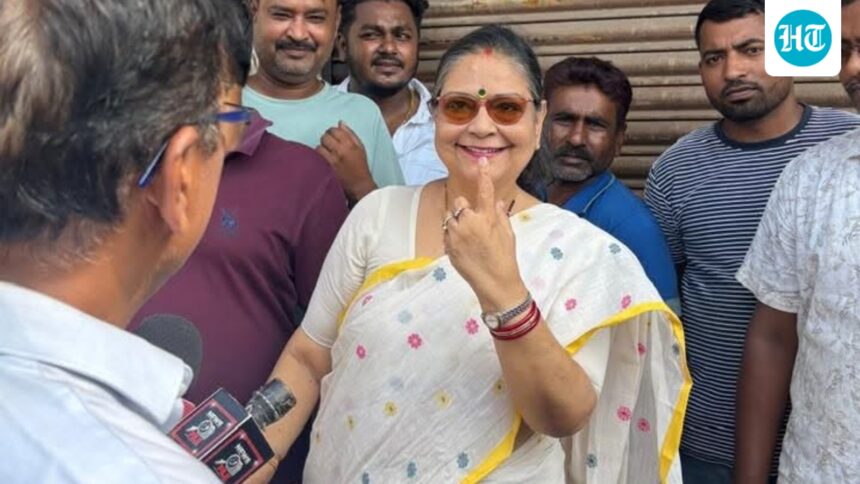
Kakoli Ghosh Dastidar, a four-time Lok Sabha MP from Barasat constituency in West Bengal, a doctor by profession, has emerged at the heart of the biggest parliamentary revolt the Trinamool Congress (TMC) has faced in recent years.

The senior parliamentarian leads a group of rebellious TMC MPs who have sought recognition as a separate bloc in Parliament, putting her on a collision course with party chief Mamata Banerjee.
Doctor turned politician
Born in Kolkata in 1959, Dastidar trained as a doctor and received her medical degree from R. J. Kar Medical College. She later underwent postgraduate training in obstetric ultrasound at King’s College London. Before entering national politics, she was involved in healthcare and social work initiatives in West Bengal.
Dastidar entered Parliament after winning the Barasat Lok Sabha seat in 2009 and retained the constituency in successive elections. Over the years, she has become one of TMC’s most prominent women leaders and has held many important parliamentary responsibilities, including serving as the party’s leader in the Lok Sabha and as a member of the Chairpersons’ Committee.
Once he was Mamata’s trusted lieutenant
For most of her political career, Kakoli Ghosh Dastidar was considered part of Mamata Banerjee’s inner circle. She steadily rose through the party’s ranks and became one of the TMC’s key voices in Parliament. Her husband, Sudarshan Ghosh Dastidar, is a former TMC leader and a former minister in the West Bengal government.
However, cracks within the party have become increasingly evident following the TMC’s defeat in the 2026 West Bengal Assembly elections. Internal criticism has intensified over the party’s performance, leadership style and electoral strategy, with several leaders publicly questioning the direction of the organisation.
Increasing disagreements with leadership
The fallout became public when Kakoli Ghosh Dastidar resigned from key organizational positions within the party. She cited concerns about alleged chaos, unemployment and corruption in West Bengal while also expressing dissatisfaction with the party’s internal functioning and treatment of women leaders.
Her differences with the leadership deepened following a public dispute involving senior TMC leader Kalyan Banerjee. Dastidar wrote to Lok Sabha Speaker Om Birla, alleging verbal abuse and misogynistic remarks by Banerjee, a development that exposed growing tensions within the party.
Leading the parliamentary rebellion
Dastidar now leads a splinter group that claims to support a large section of TMC MPs in the Lok Sabha.
Already a group of 13 people, the rebels are planning to submit a letter to Lok Sabha Speaker Om Birla seeking separate seating arrangements and recognition of the rebel faction. The group has signaled its readiness to support the BJP-led NDA in Parliament while saying its actions are motivated by concerns about governance and the future of West Bengal.
In public statements, Dastidar defended the move, saying she would not bow to political pressure, and said conditions in West Bengal were “going from bad to worse.” She stressed that the rebellion is motivated by what she describes as the interests of Bengal and the nation, not personal grievances.
Sunset for Mamata?
Unlike many recent dissidents, Kakoli Ghosh Dastidar is not a marginal figure within the TMC. She is a long-serving MP, former chief whip and one of the party’s most recognized female leaders.
Her role as the face of the parliamentary revolution has given credibility to the rebel camp and turned what could have been a minor defection after the election loss into a major challenge to Mamata Banerjee’s authority.