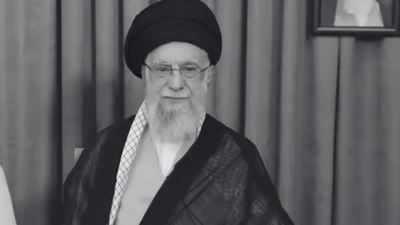
Iran’s longest-serving Supreme Leader, Ayatollah Ali Khamenei, has not been buried even 100 days after his death in a joint US-Israeli raid on Iran. The delay raised questions inside and outside the country, while his son Mujtaba assumed the position.While several senior military commanders and officials killed in the same conflict have already been buried, Iranian authorities have yet to hold the funeral they repeatedly promised for the man who led the Islamic Republic for more than three decades.Officials in Tehran spoke of plans to hold a large funeral procession in multiple cities before Khamenei’s eventual burial in the northeastern city of Mashhad.
However, no final timeline has been announced, and authorities have released little information about the condition of his remains.This delay is particularly notable because Shiite Islamic traditions generally encourage immediate burial of the deceased, except in exceptional circumstances.
What prevents Ali Khamenei’s funeral?
One factor behind the delay may be security concerns surrounding Iran’s new leadership, according to a report by Iran International.Khamenei’s successor, Mojtaba Khamenei, has not appeared in public since the attack that killed his father.
Iranian officials confirmed that he survived the raid with minor injuries, but speculation about his condition continued.The funeral of the Supreme Leader is usually a religious ceremony and a major political event intended to demonstrate continuity of leadership. Any public appearance by Mojtaba Khamenei at such a gathering would attract intense attention and could create security risks.The long delay has also raised speculation about the condition of Ali Khamenei’s remains. Iranian authorities did not reveal where the body was kept or whether damage sustained during the raid complicated preparations for the funeral.Reports of other officials killed in the same attack indicated that some bodies were recovered only weeks later, requiring DNA testing to identify them.
A funeral of political importance
Beyond religious aspects, funerals of senior Iranian leaders have historically been major political events.The Islamic Republic had previously turned the funeral of Revolutionary Guard Commander Qasem Soleimani into a national mobilization effort that would last for several days. Soleimani’s funeral procession traveled through multiple cities in Iraq and Iran before his burial in Kerman, with state media portraying the event as a show of national unity and support for the government.Local media reports claim that Iranian authorities may be seeking a similarly large turnout for Khamenei’s funeral.
However, organizing such an event after a major conflict presents logistical and security challenges.For now, Iran remains in an unusual situation. More than 100 days after Khamenei’s death, the country announced a successor, but has not yet presented him publicly. It promised a historic farewell to its former leader, but did not do so. Thus, the funeral and the transfer of power remain in a state of confusion.