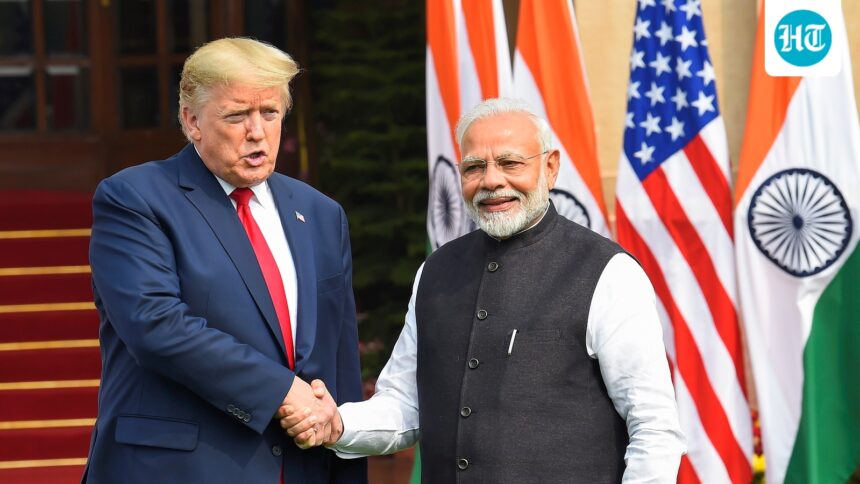
India and the United States on Thursday confirmed their commitment to reaching a trade agreement after the conclusion of the talks in New Delhi. The government said in a statement that the two countries approached an interim trade agreement after four days of talks during the visit of the US chief negotiator to India from June 1-4.

“A delegation from the Office of the United States Trade Representative (USTR), led by the Chief Negotiator, visited India from June 1 to 4, 2026 to enhance discussions on the trade agreement,” the statement read.
She added that during the talks, the two sides held “constructive and positive” discussions on issues such as trade in goods, non-tariff measures, customs and trade facilitation, economic security harmonization and other areas of mutual interest.
Read also: Citing “Strategy and Emotion”, CJP explains delay in seeking police approval for the June 6 protest
The government said: “The engagements were characterized by a spirit of cooperation and pragmatism, as both sides affirmed their commitment to concluding a mutually beneficial agreement that strengthens bilateral trade and economic relations.”
This comes amid the US threatening trade action against 60 countries, including India, after it was found to have failed to effectively impose and enforce a ban on the import of goods produced with forced labour.
In a statement issued Tuesday, the US Trade Representative said it had concluded under Section 301 of the US Trade Act of 1974 that the actions, policies and practices of the 60 economies “are unreasonable and constitute a burden or restriction on US trade,” making them enforceable under US trade law.
Read also: ‘Difficult cost environment’: IndiGo temporarily stops services to Hong Kong, Shanghai and 4 other countries
India is among 54 economies that, according to the US Trade Representative, have failed to effectively impose and enforce a ban on imports made using forced labor. The list also includes countries such as Australia, Bahrain, Bangladesh, China, Japan, Kuwait, Saudi Arabia, Singapore, the United Kingdom, and the United Arab Emirates.
“The failure of our most important trading partners to address the importation of goods made with forced labor is unacceptable. This creates a dynamic in which American workers are forced to compete globally on an unlevel playing field,” USTR Ambassador Jamison Greer said in the statement.