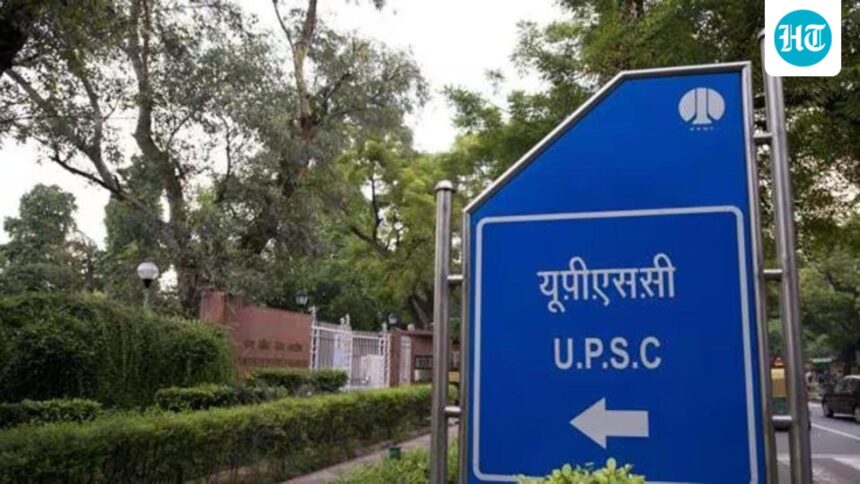
The Union Public Service Commission (UPSC) has successfully implemented real-time face authentication at all examination venues during the Civil Services and Indian Forest Service (Preliminary) examination this year, a government statement said on Thursday.

The face verification protocol ensures that the candidate who uploads a photo while submitting the application is the same person who appears for the examination with the admit card.
The system allows live verification of candidates at examination venues through a mobile phone-based application used by invigilators, which helps eliminate impersonation. Earlier this year, the commission had said: “All candidates appearing in the UPSC examination will undergo face authentication at the venue.”
The UPSC Civil Services exam is one of the most competitive exams in the country, attracting a large number of applicants every year. Last year, 937,876 candidates appeared for the examination, of which 576,793 actually appeared on May 25, 2025. A total of 14,161 candidates qualified for the written (main) examination, and 2,736 of them qualified for the personality test. Finally, only 958 candidates were selected for appointment in various departments.
According to a UPSC statement, the real-time facial authentication exercise was conducted at all 2,072 examination venues nationwide during this year’s Civil Services (Preliminary) examination on May 24. The application was developed and implemented by the committee with technical support from the National e-Governance Department (NeGD) of the Ministry of Electronics and Information Technology.
As part of the process, every candidate is required to undergo facial verification before being allowed into the examination hall, the commission’s statement said. UPSC has also developed detailed Standard Operating Procedures (SOP) for the exercise, which it has shared with states, districts and examination venues. Multiple training rounds were then conducted for the observers.
The committee said that the system does not require any specialized hardware and can work on any Android smartphone. Observers used their own mobile phones for the authentication process, reducing hardware costs and easing logistical requirements.
The application authenticates candidates within six to eight seconds on average, ensuring smooth entry and preventing queues at exam centres, the committee said. She added that more than 7,000 observers used the app simultaneously, and during peak access hours, about 12,000 authentications were processed every minute.
UPSC Chairman Ajay Kumar said the initiative aims to ensure impersonation-free examinations. “The entire technology was developed in-house with the help of NeGD. However, the challenge is also to deploy the solution at scale, leverage the existing surveillance workforce for facial authentication, train them, and get all this done within a short period of time,” he added.