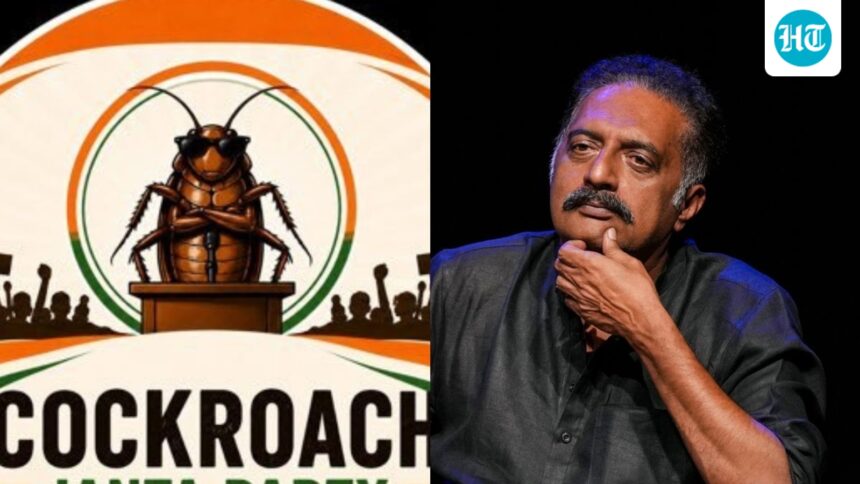
The Cockroach Janata Party (CJP), which has taken the Internet by storm, is now rapidly taking shape as a political front. On Wednesday, the party announced the three new spokespersons, who also addressed the media in Delhi during a press conference, and informed that the group is planning to protest in the national capital against failures in the education system.

The previous day, the group was joined by activist and teacher Sonam Wangchuk, who had earlier praised the CJP. Wangchuk said he decided to join after the party’s founder, Abhijit Debaki, assured him that the organization was not funded by foreign entities and was not supported by Western powers.
“If not us, who? If not now, then when? I will join the CJP party members in Delhi on June 6 if nothing changes by June 5. Any self-respecting minister should resign if things get this bad… not to mention the impact on the lives of millions of young people and, indeed, on the future of India,” Wangchuk wrote on his X.
Read also | Shashi Tharoor explains why having a prank party in India is not a joke, but should…
On Thursday, actor Prakash Raj, known as an outspoken critic of the Bharatiya Janata Party (BJP) and Prime Minister Narendra Modi, expressed his willingness to join the protest in Delhi on June 6. Sharing Wangchuk’s video on
CJP founder Abhijit Debaki welcomed the call in another post. Check here:
Why did Wangchuk join the CJP?
In a video message posted on Instagram, Wangchuk said he spoke with Debke and sought assurances that the movement reflects the voice of India’s youth and has not been influenced by “foreign powers.”
“After talking to him, I honestly felt that they don’t have any wrong intentions; they are very patriotic. In fact, they are making sacrifices for the betterment of the country,” Wangchuk said.
He said that while many supporters of the protest were rallying around issues such as the alleged NEET paper leak and concerns surrounding the CUET and CBSE exams, his support stemmed from broader concerns about the education system.
“For the past four decades, I have been striving and fighting for improvements in education,” Wangchuk said, referring to his work in public schools in remote areas.