Logo text
The screenwriter filed a lawsuit against the production company and the writer behind it John Wick For copyright infringement, he accused them of ripping up his script to make a revenge thriller.
In a lawsuit filed Monday in federal court in California, author J.R. Wicker says John Wick The second part has elements that are “strongly and strikingly similar” to the screenplay for his film “Blood for Escobar.” Both works follow a middle-aged, widowed ex-hitman who is reluctantly drawn into the criminal underworld and goes on an unstoppable killing spree while battling an international secret society of hitmen.
Wicker seeks to make profits from films of at least $10 million. He calls John Wick Producer Thunder Road Films, writer Derek Kolstad and distributor Lionsgate, who declined to comment, are in the complaint.
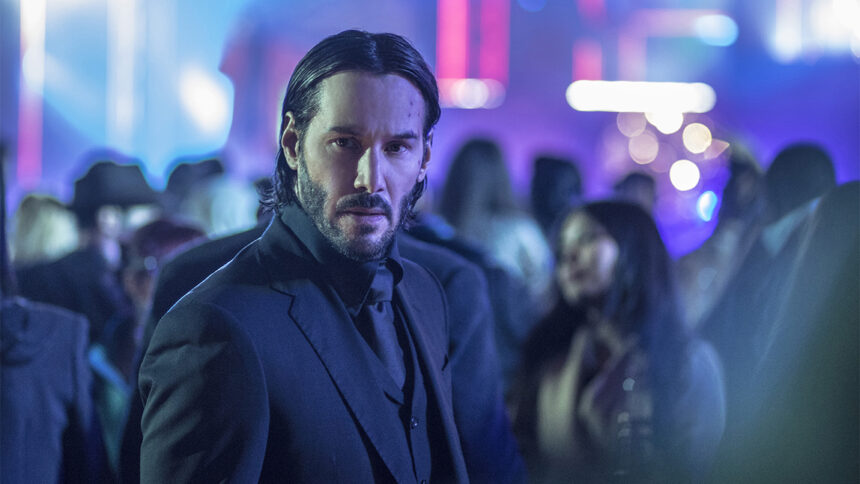
The lawsuit cites several alleged similarities between “Blood for Escobar” and Kolstad’s “Scorn,” the spec script that became John Wick. Like the film, Wicker’s screenplay begins with a home invasion of the protagonist, Alex, where his pet is murdered. Next, he recovers a hidden cache of weapons in his home, and sets up a pulsating action sequence in a nightclub where he confronts the antagonist.
Both works also feature a network of assassins run by a ritual and bureaucratic organisation. There’s an important distinction: In “Blood for Escobar,” the organization, called The Firm, arranges Kevorkian’s killings for clients who want their families to receive life insurance payments.
Kolstad “deliberately, blatantly, and without permission” copied Wicker’s screenplay, R. Terry Parker and Stephen Lowe, the writer’s attorneys, filed the complaint.
Other similarities: Dear silver screen era Ford Mustang; A supporting character who is tasked with killing the protagonist but later helps him; The organization of assassins turns against the exiled central character after he refuses to follow orders.
“In both actions, the antagonist escapes and ends up shot later in a different place, a place where guards are present, a public place, at night, drinking,” the lawsuit said.
Wicker alleges in the complaint that Kolstad reviewed a version of his screenplay through Abstract Entertainment founder Mike Goldberg, who was a judge in the screenwriting competition in which “Blood for Escobar” was submitted. Kolstad credited Goldberg with launching his career, according to the lawsuit.
Wicker, a writer of low-budget films Sick people and the patientalso claims that Kolstad may have obtained a copy of his script through UTA agent Charlie Ferraro, the architect of the deal that launched the film. John Wick privilege. He allegedly sent the agency copies of his scripts, including “Blood for Escobar.”
The filing of the lawsuit comes amid a shift in the examination of copyright lawsuits, which has encouraged creators to file a lawsuit. In recent years, federal appeals courts have cautioned lower courts against premature dismissal and from imposing their views on whether two actions are similar enough to justify allowing lawsuits to proceed. There have been at least three orders since 2020 overturning defense-friendly decisions in copyright cases.
However, the bar for convincing a jury that any alleged similarity between two works constitutes copyright infringement remains high. Copyright law does not protect general ideas or metaphors that are standard in the treatment of particular topics (think of a priest in a movie about possession) – only the private expression of those ideas. Last year, juries in idea theft cases related to the M. Night Shyamalan Servant and Moana Deny claims of copyright infringement.
Another hurdle may be the statute of limitations for filing copyright infringement claims, though Wicker says he’s only seen John Wick last year.