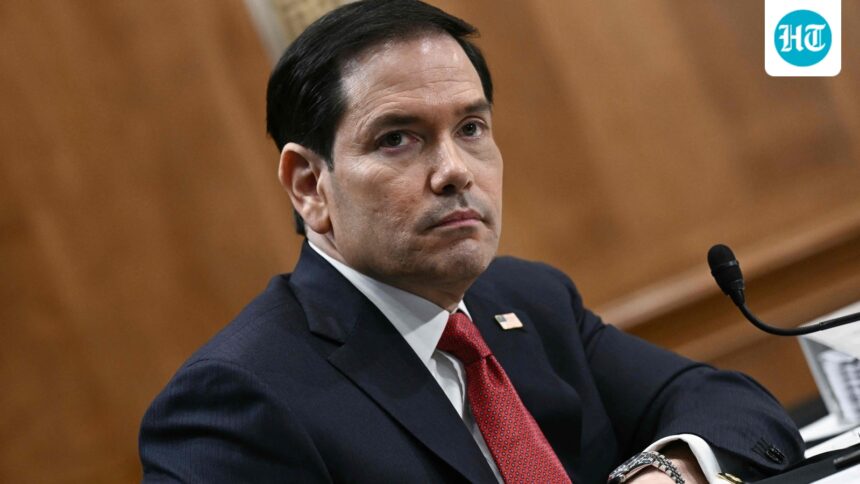
US Secretary of State Marco Rubio said on Tuesday that the United States is looking to end the waiver that allowed it to buy Russian oil.

India is among the main countries that benefited from the US exemption, as it allowed New Delhi to resume purchasing Russian oil.
Follow live updates on the US-Iran war
US looks to end ‘limited’ waiver
Rubio, who attended a US Congressional hearing, said the current Russian oil waiver is “time-limited” and was created in order to mitigate disruption caused by the blockade of the Strait of Hormuz amid the ongoing conflict between the US, Israel and Iran.
“We would like to end the matter as soon as possible because the basic policy of this country is to impose sanctions on its oil. These are time-limited waivers for the purpose of opening up more global supplies,” Rubio told the committee.
The United States first announced this waiver in March. Since then, the exemption has been extended twice, with the latest extension set to expire on June 17.
When asked by prominent Democratic member Jeanne Shaheen about the waiver, Rubio stated that the final decision to rescind it would be made by the Treasury Department.
Sahin also sought a commitment from Rubio on whether or not the waiver would be extended again, adding that it benefited Russia, despite the US claim.
When the exemption was first announced, the United States stated that sanctions on Russian oil, already transported by sea, would be lifted, adding that purchasing it would not be financially beneficial for Moscow.
However, with oil prices remaining volatile, Rubio stated that an exemption remains in place to mitigate the global impact of the increase.
“The problem we also have is that there is potential for contagion, which is that at some point we can hold strategic reserves, we can do some of the other things that we have done to ease global supplies, but at some point you have to make sure that that’s not too much for us,” he told the Senate Foreign Policy Committee.
India will be affected?
India was asked to stop buying Russian oil after US President Donald Trump added an additional 25% tariff, accusing the US ally of “fueling Putin’s war in Ukraine”.
On several occasions, Trump also claimed that Prime Minister Narendra Modi “assured him” that India would stop buying Russian oil. While there was no comment from the Indian leader, this commitment was later added to the bilateral trade agreement between New Delhi and Washington.
A fact sheet issued by the White House explained that India agreed to stop its purchases of crude oil from Russia.
The White House document stated, “President Trump agreed to remove the additional 25% tariff on imports from India in recognition of India’s commitment to stop purchasing Russian oil. Accordingly, the President signed an executive order last Friday to remove that additional 25% tariff.”
By distancing India from Russian oil, the United States has pushed towards Venezuela, especially since the US military raid that arrested President Nicolas Maduro.
However, with the outbreak of war between the United States, Israel and Iran on February 28, global oil and gas supplies were damaged when Tehran closed the Strait of Hormuz, a vital passage for about 20% of global oil and gas supplies and 40% for South Asia.
The US waiver of Russian oil allowed India to resume its purchases since its route in the Gulf was affected. However, the United States has continued to push for Venezuelan oil, and that is expected to be amplified with the visit of interim President Delcy Rodriguez this week.