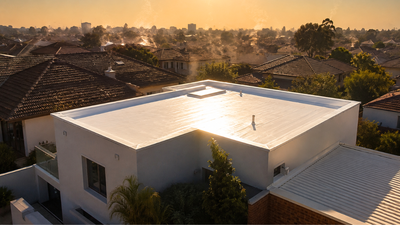
As heat waves become more frequent and frequent around the world, scientists are exploring new ways to keep buildings cool without increasing energy consumption. Researchers at the University of Sydney, in collaboration with startup Dewpoint Innovations, have developed a nano-engineered coating that reflects up to 97% of sunlight and remains significantly cooler than traditional surfaces.
The experimental “smart coating” is designed to reduce heat absorption, lower interior temperatures and potentially reduce reliance on air conditioning. It also has another unusual feature: the ability to capture moisture from the air and turn it into water droplets without using electricity.
How smart paint can reduce air conditioning use during heatwaves
The coating uses a specially designed polymer known as polyvinylidene fluoride-hexafluoropropene (PVDF-HFP), which contains microscopic pores that scatter sunlight and reduce heat absorption.Unlike traditional roofs that absorb solar energy and become hot during the day, paint reflects most of the incoming sunlight and radiates the heat away from the building. This process, known as passive daytime radiative cooling, allows surfaces to remain cooler even under direct sunlight.Many commercially available cool roof paints rely on reflective pigments to reduce heat absorption. The new coating uses a porous nanostructure that researchers say can achieve higher solar reflectivity.
Laboratory and field tests have shown that the coating can reflect up to 97% of sunlight. In some cases, painted surfaces have been found to be up to 25°C cooler than dark-coloured surfaces exposed to the same conditions.The researchers also reported that surfaces coated with this material can remain up to 6 degrees Celsius cooler than the surrounding air.This technology is designed to reduce the amount of heat entering buildings through roofs and walls.
Cooler roofs can help reduce interior temperatures, which may reduce demand for air conditioners and fans during hot weather.While the coating is not intended to completely replace air conditioners, researchers believe it could contribute to lower energy consumption and lower electricity costs, especially in areas that experience long periods of extreme heat.
Paint that can collect water from the air
One of the paint’s most unusual features is its ability to harvest water from atmospheric humidity.Because the surface remains cooler than the surrounding air, water vapor condenses into droplets that can be collected. This process does not require any external power source and works similarly to the formation of dew on a cold surface.During a six-month surface trial at the Sydney Nanoscience Centre, the coating was able to collect moisture for about a third of the year and produced up to 390 milliliters of water per square meter per day under favorable conditions.
What can technology be used for?
The researchers believe the coating could have applications beyond residential housing.Potential uses include commercial buildings, warehouses, agricultural facilities, remote communities and urban areas affected by the heat island effect. This technology may be particularly useful in areas facing higher temperatures and increased water stress.Countries like India, where severe heat and water shortages are becoming more common, can benefit from cooling technologies that also help trap atmospheric moisture.
Is the paint available yet?
not yet. The coating is still in the testing and development phase, with additional surface trials continuing in Australia.Dewpoint Innovations is working with industry partners to develop a commercial version that can be applied using standard rollers and spray equipment. Although the company is preparing to launch it in the market, an official launch date has not been announced.The researchers expect that more testing will be needed before the technology becomes widely available.
A potential tool for a hotter future
As cities around the world struggle with rising temperatures, innovations that reduce heat without increasing electricity use are attracting increasing attention. The new smart coating combines passive cooling with the collection of atmospheric water in a single layer, offering a glimpse into how future buildings will be designed to cope with a warming climate. While more testing is needed before it can be released commercially, early results suggest the technology could become a valuable tool in efforts to reduce energy consumption and improve resilience during extreme heat.