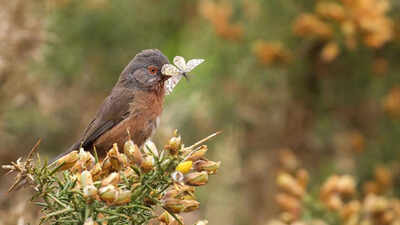
UK wildlife success story as Dartford Warbler numbers recover from near collapse / Image: File
Six decades ago, the future of one of Britain’s most distinctive birds looked bleak. A series of harsh winters have pushed the Dartford warbler to the brink of extinction, leaving conservationists fearing the species could disappear from the UK entirely.But today, the story couldn’t be more different.The Dartford warbler, a small long-tailed bird known for its reddish-brown plumage and noisy song, has made a remarkable recovery across Britain, new surveys show. Once reduced to a few breeding pairs, this species now thrives in many fallow habitats, making it one of the UK’s most notable wildlife conservation success stories.Experts say the recovery reflects decades of habitat restoration, targeted conservation work and climate changes that have helped the bird expand beyond some of its traditional strongholds.The return provides rare good news for British wildlife at a time when many other bird species are still facing significant pressures from habitat loss, development and environmental change.
How a rare British bird escaped extinction
The decline in Dartford birds became particularly severe after the harsh winter of 1962-63, one of the coldest recorded in modern British history.This species relies heavily on lowland heathland habitats dominated by gorse and heather.
Unlike many birds, Dartford warblers rarely migrate far from their breeding areas, making them particularly vulnerable to long periods of snow and freezing temperatures.After a harsh winter, the UK population declined dramatically, leaving only a few surviving pairs mainly concentrated in southern England.Conservation organizations, land managers, and environmental agencies later began extensive efforts to protect and restore the moorland landscape.
Areas that were once threatened by agriculture, forest expansion and development have gradually been brought under improved management.Over the following decades, the population slowly recovered. Recent surveys have shown that the bird is expanding into new areas, including areas where it previously disappeared.Researchers say warmer winters have also played a role in reducing the large-scale mortality events that have historically devastated populations.
The return of Britain’s great birds
Experts credit much of the recovery to the restoration of Britain’s heathlands, one of the country’s rarest and most vulnerable natural habitats.Organizations including the RSPB, Natural England and many local conservation groups have spent decades improving heathland management through regulated grazing, vegetation management and habitat protection.These efforts have not only benefited Dartford’s warblers, but also a range of other species including nightjars, woodlarks, reptiles and rare insects.Conservationists say the bird has become a powerful symbol of what environmental investment can achieve in the long term.Researchers involved in monitoring programs point out that recovery did not happen overnight. Instead, it reflects years of coordinated conservation planning, scientific monitoring, and public support.Many heathland sites across southern England now support healthy breeding populations, something that seemed unlikely during the species’ darkest period in the 1960s.
New risks to birds in Britain
While warmer winters have generally helped boost Dartford’s bird numbers, scientists warn that climate change presents both opportunities and challenges.Moderate weather may allow species to survive in areas that were previously too cold. At the same time, increasingly frequent droughts, wildfires and extreme weather events could create new pressures on fragile moorland ecosystems.Environmental experts warn that the success of environmental conservation should not lead to complacency.
Britain’s wildlife continues to face significant threats from habitat fragmentation, urbanization and changing land use patterns.However, the recovery of the Dartford bird provides a rare example of a species moving in the right direction at a time when many conservation reports focus on decline.For conservationists, the bird’s return proves that sustainable habitat protection, scientific management, and long-term commitment can reverse even the most dramatic wildlife losses.More than 60 years after it came perilously close to extinction from Britain, the Dartford warbler is once again a familiar sight across the moors it has called home for centuries.