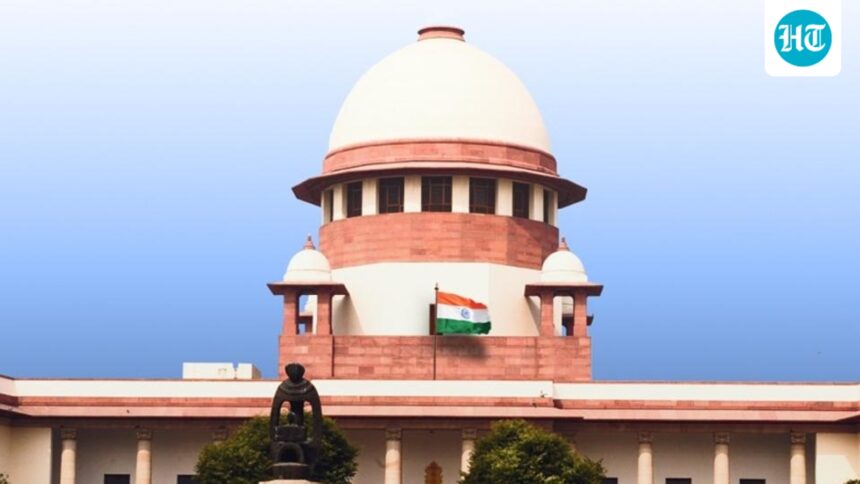
Hearing a batch of petitions on cancellation of NEET-UG medical entrance exam after paper leak, the Supreme Court on Friday observed that the National Testing Agency (NTA) could learn from the Union Public Service Commission (UPSC).

Justice BS Narasimha also orally asked how the failure could happen despite the formation of a high-level committee after a similar incident in 2024. “Either there is something wrong with the original recommendation or there is no proper implementation,” the judge commented, LiveLaw reported.
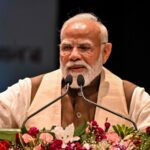
The government then informed the court that Prime Minister Narendra Modi was personally supervising the reconduct of NEET-UG. The submission was made by Solicitor General Tushar Mehta after the Supreme Court sought a response from the government in an affidavit detailing how and in what manner the operation will be conducted and the investigation into the leak concluded.
“The honorable Prime Minister is personally honourable,” Solicitor General Tushar Mehta told the court, according to LiveLaw.
A High Level Committee of Experts (HLCE) was constituted by the Union Education Ministry in June 2024, in the wake of the NEET-UG paper leak controversy that year. It was headed by former ISRO Chairman K Radhakrishnan, and held extensive consultations with state governments, police authorities, technology experts, student groups and global testing agencies, and also received over 37,000 responses through the MyGov portal.
The committee submitted its report in October 2024, making recommendations covering data security, NTA restructuring, mental health support, and technical safeguards. Key proposals included moving to online or hybrid testing, as well as reducing reliance on private vendors, and expanding permanent recruitment at the NTA. Despite this, the 2026 leak raised serious questions about implementation.
UPSC conducts the Civil Services Examination (CSE), a national-level recruitment examination for senior government posts, including the Indian Administrative Service (IAS), Indian Police Service (IPS), and Indian Foreign Service (IFS). Over 5.8 lakh candidates appeared for the UPSC preliminary examination to compete for around 1,000 vacancies, resulting in a pass rate of 0.17%.
As for NEET-UG, NTA data says that more than 22 lakh students competed for nearly 1.1 lakh MBBS and other medical seats.
Amidst this, former Army Chief General VK Singh recently said: “In the Army, paper leaks don’t happen.” The Army uses a system in which “one person checks just one question” on all answer sheets: “You can’t have a fairer system than that,” he said.
NTA is facing Supreme Court scrutiny after the NEET-UG exam was canceled on May 3, due to the ‘guess paper’ racket where more than 120 leaked questions overlapped with the actual booklet. The violation has led to a nationwide retest scheduled for June 21. The court expressed deep concern over the failure and suggested that the NTA model its security on the lines of the UPSC to prevent systemic collapses in the future.
NTA informed the court that it has undertaken extensive structural and security reforms in the wake of NEET-UG 2026 paper leak.
The matter relates to the demands made by the Federation of All India Medical Association (FAIMA) and the United Doctors Front (UDF), which sought a structural reform of the examining body over alleged irregularities in the conduct of NEET-UG 2026.
In the affidavit, NTA said that the High Level Steering Committee (HPSC), in a meeting held on April 17, 2026, reviewed the preparations for NEET-UG 2026 and recommended extensive preventive measures before, during and after the exam. These measures included mandatory CCTV checks and preservation of footage for at least 90 days, mock rehearsals at examination centres, weather-based contingency planning, checking of backup power systems and emergency medical facilities, and detailed inspections of centers in the week before the examination.
The committee also recommended conducting post-examination forensic analysis of CCTV footage to detect anomalies and erratic behavior that may not be recognizable in real time.
The affidavit also said that the HPSC will reconvene after the reconduct of NEET-UG 2026 to deliberate, in consultation with the Ministry of Health and Family Welfare, whether future NEET examinations should be conducted in Computer-Based Test (CBT) mode or continue in Pen-and-Paper Test (PPT) mode.
The NTA also informed that several recommendations of the High Level Committee of Experts (HLCE) have already been implemented or are at an advanced stage of implementation.
As part of the restructuring process, 16 new senior positions were created within NTA; An officer with the rank of secretary was also appointed director general of the National Tourism Authority in March 2026, the court said.
The agency also said that domain experts from institutions like IITs, UGC, CBSE, KVS and IGNOU have been involved in strengthening examination administration and security mechanisms.