Average global temperatures are likely to remain at or near record levels over the next five years, a new World Meteorological Organization (WMO) report, released by the Met Office, suggests.

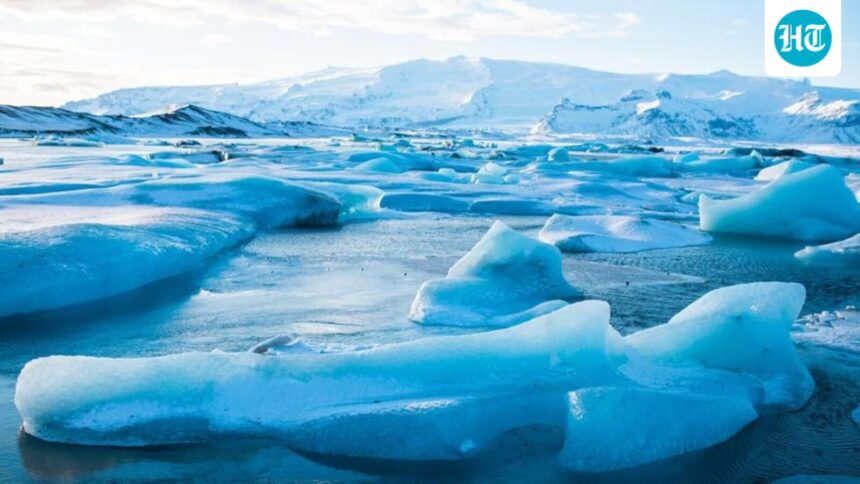
The report said Arctic temperatures over the next five extended winters in the Northern Hemisphere (November-March) are expected to be 2.8 degrees Celsius above the 1991-2020 average.
Annual global average near-surface temperatures over the period 2026-2030 are expected to range between 1.3°C and 1.9°C above the 1850-1900 average. It is likely (86%) that one year between 2026 and 2030 will surpass 2024 as the warmest year on record, according to the annual to decadal global update.
It is likely (75% probability) that the five-year average for 2026-2030 will exceed 1.5°C above the 1850-1900 average. It is also very likely (91% chance) that the global average near-surface temperature will temporarily exceed 1.5°C above the 1850-1900 average for at least one year between 2026 and 2030. This level was also temporarily exceeded in 2024, when the global average surface temperature would be about 1.55°C above the pre-industrial baseline.
However, it is exceptionally unlikely (less than 1%) that any single year will exceed 2°C above the 1850-1900 average in the next five years, the update forecasts.
The update also forecasts that the projected five-year average temperature in the central equatorial Pacific Ocean (El Niño 3.4 zone) indicates a trend toward El Niño conditions, especially in 2027 and 2028.
“There is an El Niño forecast at the end of 2026, which increases the chances that the following year, 2027, will be the next to break the record,” said Leon Hermansson, lead author of the report.
There is now more than a 90% chance that El Niño conditions will develop from June to August, according to the latest National Oceanic and Atmospheric Administration forecast.
In India, El Niño is associated with harsher summers and weaker monsoons.
The report explained that the levels of 1.5 degrees Celsius (and 2.0 degrees Celsius) specified in the Paris Agreement indicate a sustained long-term rise in temperatures over an extended period, usually assessed over a period of 20 years.
Individual years in which average annual global temperatures exceed these levels do not mean that the long-term temperature goals set by the Paris Agreement are out of reach.
Arctic temperatures over the next five extended Northern Hemisphere winters (November-March) are expected to be 2.8°C higher than the 1991-2020 average. Forecasts for Arctic sea ice from March 2026 to 2035 indicate a further decline in sea ice concentration in the Barents Sea, Bering Sea and Sea of Okhotsk.