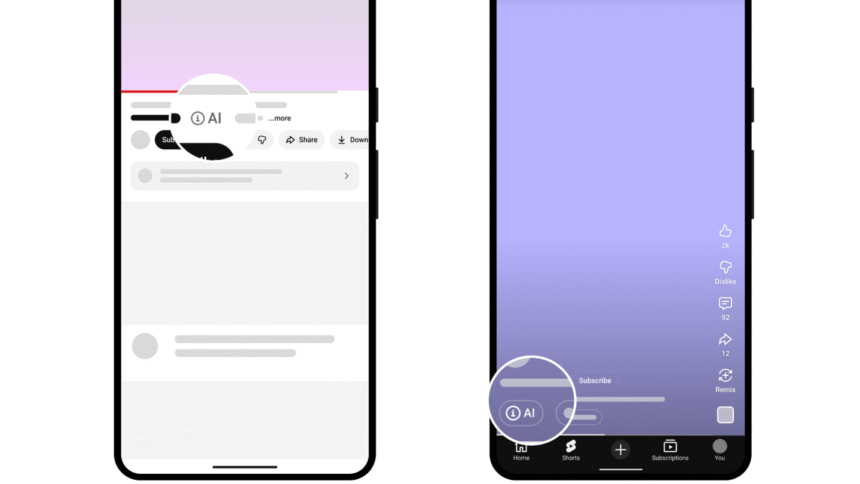
YouTube is making a major change to its user interface to make it clearer when a video used AI tools in its creation, especially for real-life or “meaningfully edited” content.
The Google-owned video platform said Wednesday that it will move its “AI” tag from video descriptions to more visible locations on both desktop and mobile, for long-form videos and short-forms.
On longer videos, the reveal will now appear above the description and directly below the video player, and on mobile, it will be an overlay on the video itself.
In a video explaining the move, YouTube content coordinator Rene Ritchie said the goal is to “make it more accessible for everyone.”
“The goal here is context at a glance. If it looks real but is made with AI, viewers will know that right away,” Ritchie added. “It’s just about giving viewers the right information at the right time.”
YouTube has had a rule requiring disclosure of AI-generated content since 2024. This requirement remains in place, but will now be supplemented by an automatic AI detection system that will flag a video if it thinks it contains realistic AI content.
“While you will still have to manually detect real-world use of AI, starting next May, YouTube will roll out internal signals to help if YouTube’s systems detect significant real-world AI,” Ritchie says. “If it doesn’t, we will now automatically apply that label.” “If you think the system is messed up, don’t worry, creators are still in control. As this technology continues to improve, if a rating is applied incorrectly, you can go into the studio and update the status yourself.
“The only exceptions where the label remains permanent are if you use YouTube’s AI tools, like Veo or Dream Screen, or if the file contains metadata proving it’s a full production,” he added. “Most importantly, for creators, these ratings alone do not impact how our videos are recommended or whether they can earn money.”
Naturally, YouTube has been bold in pursuing AI-related opportunities, even as it proactively tries to mitigate some of the risks associated with the technology. It has developed deepfake detection technology, which is now available to platform users over the age of 18 (although it will primarily be useful for Hollywood celebrities, political figures, and other public figures).
“If you think about public figures and celebrities, your image and reputation are paramount to your livelihood,” said Mary Ellen Kuo, YouTube’s chief business officer. Hollywood Reporter last month. “And the idea that this could be messed up in some way is a really important idea, because there have been instances of this that I think people have talked about; and it’s really important for them to have some semblance of control and ability to manage that.”
Earlier this month, the platform announced a slew of AI tools, including the ability to “remix” short videos from YouTube creators, or digitally insert yourself into their videos, as well as an AI-powered search function.
You can watch Richie’s video below, and read his blog post about the changes here.