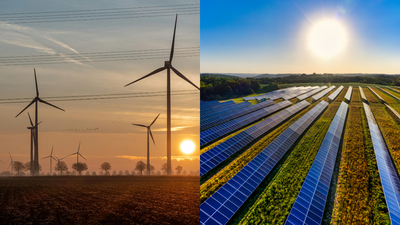
In what is said to be the largest renewable energy plan ever proposed by any country, China is making plans to develop its largest clean energy plant beyond its shores. From reports on this plan, it appears that China aims to develop 1,000 wind turbines as well as millions of solar panels, which will be built on an area located about 4,300 miles from mainland China.
This initiative comes after China’s increasing focus on renewable energy, marine solar systems, wind power generation, and long-range electrical power transmission. Considering that China is currently leading the production of solar panels and large-scale renewable energy projects, it seems that this renewable energy plant may revolutionize international energy cooperation.
How does China transfer its experience in the field of renewable energy abroad?
However, China’s efforts toward clean energy have extended far beyond its borders.
Over the past 10 years, Beijing has made significant investments in solar farms, offshore wind, and hybrid energy systems in other parts of Asia, Africa, and the Middle East.
This can be illustrated by an example of its achievements at home. In December 2025, China began operating the world’s largest solar power plant in Xinjiang province, which includes more than 5.26 million solar panels and generates billions of kilowatt-hours of energy annually.
According to PV International magazine, the construction of the Midong solar project involves large-scale infrastructure, such as transmission and distribution of electricity over large distances.This kind of experience gained in the past ten years is now being applied abroad. According to the plan, the new mega project will include large wind power plants and solar energy sources, allowing continuous production of electricity regardless of weather conditions.
Why is China investing in giant wind and solar projects?
The move toward renewable energy in China is largely due to considerations of energy security and economic planning. President Xi Jinping has already announced that China plans to significantly increase its wind and solar energy production as part of its emissions reduction strategy.Projects using renewable energy sources will help reduce dependence on fossil fuels imported to China. This would give China the ability to better control global infrastructure developments.According to industry specialists, the feasibility of combining wind turbines, solar panels and batteries has improved significantly over the past decade, due to the reduced costs involved. As a result, China has a clear competitive advantage when it comes to establishing such projects on a large scale. China produces most of the world’s solar panels and wind turbine parts.In an analysis conducted by the World Economic Forum, it was noted that China leads the world in investments in renewable energy, which represents the largest growth in global clean energy.
Marine solar energy Long distance energy transmission They change the industry
Another unique aspect of China’s renewable energy development is the enormous scale at which technology trials are being conducted. In late 2025, China launched what officials described as the world’s first gigawatt-sized offshore solar farm in Shandong province.Designed by China Energy Investment Corporation, the project combines offshore solar farms with energy storage capabilities and marine engineering. The plant, according to officials, was capable of producing approximately 1.78 billion kilowatt-hours annually.
In 2026, it will focus on stabilizing coal supplies and modernizing coal-fired power plants, with related investments accounting for about 30 percent of the total, according to a group spokesman.On another front, China continues to develop ultra-high voltage transmission lines capable of transmitting power for several thousand miles with low losses. This technology will be crucial to developing renewable energy in locations far from urban centers that require electricity.
A glimpse into the future of global energy
If offshore renewable energy facilities go ahead on a large scale, they will certainly qualify as one of the major infrastructure initiatives of the renewables era. Building a project with 1,000 turbines and millions of photovoltaic panels will be more than just a huge source of electrical power; This would be a testament to the international nature of renewables.For China, this project involves much more than just generating electricity. Instead, it meant that China was committed to becoming a leader in the transition to renewable energy around the world.