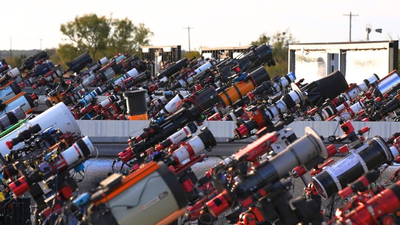
As the sun sets over the dry plains of rural Texas, something unusual begins to happen inside a series of tall metal buildings surrounded by empty land. One by one, the giant roofs slowly open up, revealing hundreds of telescopes pointed toward the night sky.
Some of them belong to amateurs in Europe. Others are controlled by astrophotographers in Asia or researchers in North America. None of them are physically there. Instead, telescopes are operated remotely over the Internet from thousands of kilometers away. What sounds like science fiction is part of a fast-growing industry known as the “telescope farm,” where astronomy, remote technology and some dark skies in America are creating a new way to explore the universe.
Inside a Texas telescope farm hidden under America’s dark skies
Telescope farms in Texas are remote observing centers where astronomers store expensive telescope systems under some of the darkest skies in America. These farms allow astronomers to store expensive telescope systems in very dark, rural locations far from city light pollution. Instead of mounting telescopes by hand each night, telescope owners ship their equipment to specialized observatories that provide permanent mounting systems, electricity, fiber Internet, and automated roofing systems.
Once installed, the telescopes can be controlled remotely from anywhere in the world through online software.This concept has become increasingly popular among astrophotographers and amateur astronomers because modern cities make serious sky observing difficult. Artificial light pollution from buildings, roads and urban development can wash out faint stars, galaxies and nebulae.By placing telescopes under dark rural skies, users can capture clearer, more detailed images of deep space.One of the most famous examples is the Starfront Observatories in Rockwood, Texas.The facility gained significant attention online after technology journalist Ashley Vance featured it in videos and reports describing the site as one of the largest telescope farms in the world.Starfront operates in the Bortle 1 to Bortle 2 dark-sky zone, a scientific scale used to measure light pollution. The lower Bortle numbers represent darker skies and better visibility for astronomical observation.
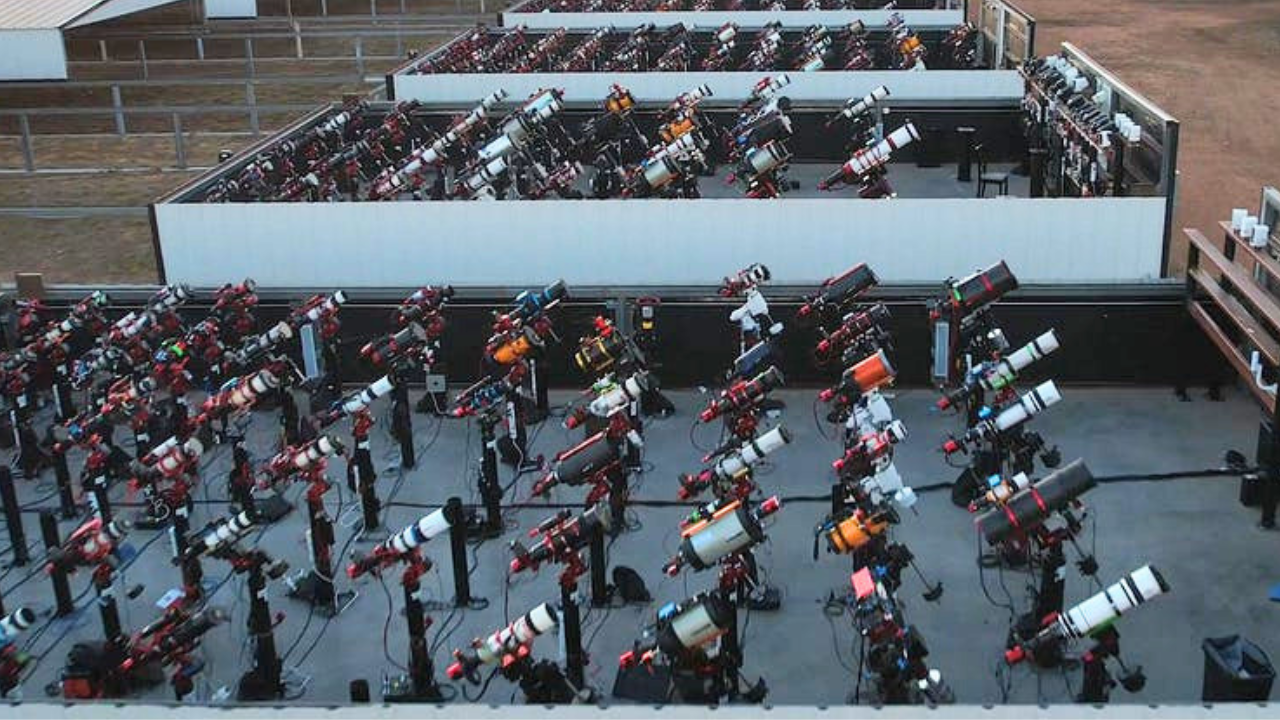
In comparison, most major cities are located in highly light-polluted Portal Zones 7 to 9.The observatory houses more than 550 telescope systems spread across warehouse-style structures designed specifically for remote astronomy.Each telescope is located on a permanent concrete base connected to high-speed Internet, automated control systems, and weather monitoring systems. After sunset, the roofs automatically open and telescopes begin working under some of the clearest skies available in the United States.
Why do people spend thousands on distant telescopes?
Many telescope systems stored at facilities like Starfront are worth more than $10,000, with some advanced setups costing much more.Astrophotography equipment often includes high-powered telescopes, automated tracking systems, sensitive space imaging cameras, automated focusing systems, and advanced computer software.For serious astronomy enthusiasts, the dark sky is as important as the equipment itself.Instead of frequently traveling to remote locations, telescope owners can permanently place their systems in ideal viewing environments and operate them remotely from home. Some owners never actually visit the observatory after installation.Telescopes can image galaxies, nebulae, star clusters, planets, and other deep space objects with much greater clarity than in most urban backyard settings.
The role of remote technology
Modern telescope farms have become possible because astronomy has become increasingly automated and Internet-based.Many telescope systems today use motorized mounts that automatically track celestial objects as the Earth rotates. Owners can remotely control camera exposure, focus, telescope positioning, and image collection entirely online.Some systems even use weather sensors and automated safety software that can close observatory roofs during rain or high winds without human intervention.The combination of fiber Internet, remote control software, and cheap rural infrastructure has helped telescope farms grow rapidly over the past few years.In many ways, these facilities operate less like traditional observatories and more like cloud infrastructure for astronomy.
Why Texas is the perfect location
Rural Texas offers several advantages that made the telescope ranch model viable.Large tracts of sparsely populated land provide exceptionally dark skies with minimal light pollution. The state also offers relatively stable climate conditions, wide-open landscapes, and affordable land compared to many other dark-sky regions.Fiber Internet access has become another critical factor. Remote astronomy relies heavily on stable, high-speed communications capable of transmitting large astronomical image files over long distances.The combination of dark skies, connectivity, and relatively low operating costs has helped facilities like Starfront expand beyond what many expected.
A growing transformation in modern astronomy
The rise of telescope farms reflects a broader transformation taking place in astronomy itself.Professional observatories have long relied on remote operations and robotic telescopes. Now similar technologies are becoming increasingly available to private users and hobbyists.For many astronomers, remote observatories solve a growing problem caused by urbanization and worsening global light pollution. Dark skies are becoming harder to find near major population centers.At the same time, modern astrophotography has become increasingly digital, automated, and Internet-based.
Users can now collect images of distant galaxies while sitting thousands of kilometers away with nothing more than a laptop and an Internet connection.
Why the Internet became fascinated with telescope farms
Part of the fascination comes from how surreal the facilities appear.Videos from Starfront show giant warehouse roofs sliding across an empty lot in Texas while rows of telescopes quietly point toward the stars like futuristic machines from a sci-fi movie.But beyond the images, telescope farms also represent something bigger. They show how remote technology is reshaping even deeply physical hobbies like astronomy, allowing people to explore the universe from almost anywhere on Earth without touching the telescope itself.