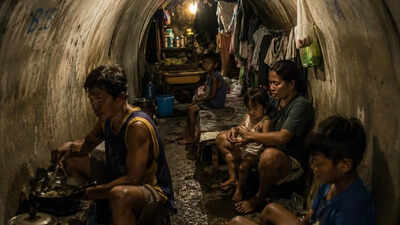
In parts of northern Manila, the sound of traffic never stops completely. Beneath the elevated highways, where thousands of vehicles pass every day, there are narrow settlements built in the shadows of concrete pillars and sewerage channels.
Families cook meals there, children sleep there, laundry hangs next to cracked support beams, and daily life goes on just meters away from the constant movement in the sky.Some residents have spent years living under parts of Manila’s highway infrastructure because formal housing remains financially out of reach. What appears temporary from the outside has gradually transformed into something more stable. There are complete routines under the roads.
Inside Manila’s Hidden Highway Settlement, Filipino
The settlement is located in spaces that most people would normally pass by without noticing. Concrete columns divide small spaces into temporary homes assembled from plywood, corrugated metal sheets, tarpaulins and salvaged timber. Some structures are low enough that adults have to crouch slightly to enter. Others lean directly against retaining walls streaked with exhaust fumes and rainwater stains.According to a YouTube video by Drew Pinsky, the people living there have adapted to conditions that would normally be considered unlivable.
The mattresses are raised on wooden platforms to avoid wet ground during floods. Electrical wires are stretched between homes through improvised connections. Plastic containers collect water in places where it is inaccessible to the public. The highway itself shapes daily life. Conversations pause as heavy trucks pass overhead.
Dust settles constantly. During the hottest afternoons, the concrete traps under the road heat up and the air becomes still.
However, the settlement continues to function like any densely populated neighbourhood. People know each other’s routines, sometimes share food, and keep an eye on nearby children.
Daily life under Manila’s highways revolves around food, work and survival
Dining is organized according to what residents can afford that day. According to The Sun reports, many adults rely on informal work, including street vending, collecting recyclables, construction work or small repair work. Some leave before sunrise and return late at night, carrying only enough money to buy basic meals.
Cooking is usually done outside the shelters themselves because the interior space is limited and ventilation is poor.
Small charcoal stoves and portable gas stoves are located next to paths where people move carefully to avoid spilling water or getting caught in sewage runoff. Rice remains pivotal because it extends beyond most alternatives. Dried fish, instant noodles and cheap vegetables appear frequently.Washing clothes becomes difficult during periods of rain. Water quickly collects under sections of the road, turning walkways muddy and pushing trash into living areas. In a YouTube video, residents show dry clothes tied with ropes between poles or hanging on exposed metal bars above their heads. Children are still preparing to go to school in these surrounding areas. Uniforms are carefully washed and reused. Some families keep mirrors hung on cracked walls or wood panels next to sleeping areas, creating a small routine of normalcy in cramped conditions.
Challenges faced by families under the highways in Manila
There is also the ongoing uncertainty surrounding the evacuation. Many residents do not legally own the land below the highway. Some have lived there for years without official recognition, while others arrived after losing their previous homes elsewhere in the city. People repair and rebuild structures frequently because materials deteriorate quickly under exposure to rain, heat, and pollution. Safety concerns extend beyond weather and sanitation.
The traffic noise never completely goes away, and the roads above remain active day and night. Children play in spaces surrounded by debris, exposed wires and uneven concrete. However, families continue to organize their lives around these risks because alternatives remain limited.
Why do families continue to live under Manila’s highways despite the hardships?
For many residents, location is as important as the shelter itself. Settlements below the highway are located near markets, transport routes and areas where informal work can be found.
Going further could mean missing out on daily income opportunities altogether. According to the YouTube video, some families arrived after being displaced from other informal communities that had been cleared for development projects or infrastructure expansion.
Others migrated to Manila in search of work and found few affordable housing options near the city center. Renting even a small formal room in parts of Metro Manila can cost more than what many workers earn on a steady basis.
Living under the highway eliminates the monthly rent for some families, albeit with various hardships. The trade-off is tough but practical from their point of view. People have also built social connections there over time. Neighbors share electricity connections, take care of children, provide cooking supplies, and warn each other during floods or inspections. These relationships make the settlement seem less temporary than outsiders might assume.
Small moments of happiness still live under the highways of Manila
Reports only show settlement with difficulty. Daily life still contains ordinary moments similar to any busy urban neighborhood. Children laugh while playing impromptu games between support columns. Teenagers gather around cell phones and watch videos together. Convenience stores sell snacks and cigarettes on wooden tables grouped alongside the road.As shown in YouTube footage, residents decorate small spaces with family photos, curtains, religious objects and potted plants despite the difficult surroundings.
Some people talk casually and relaxed about neighbors they have known for years. Others smile while cooking or talking about their children’s education. Happiness there doesn’t seem great or exciting. It comes through routine, familiarity, and small bits of stability within an unstable environment.
Families continue to celebrate birthdays, share meals and maintain daily customs in the constant rush of traffic. The highway hides much of that life from passing drivers. From above, most people only see concrete walkways and moving vehicles. Below, the entire community continues quietly out of sight.