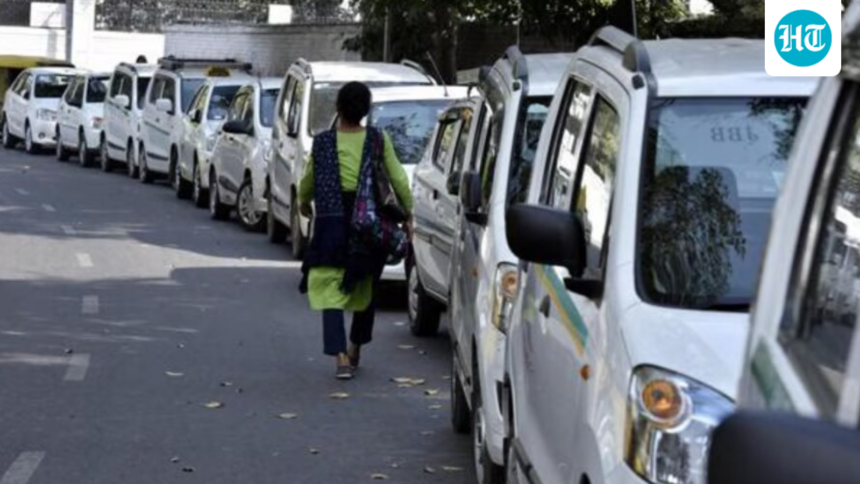
Commuters across Delhi and National Capital Region (NCR) are likely to face disruptions over the next three days as commercial vehicle unions began a strike on Thursday demanding a price review amid rising fuel prices and increasing operating costs. The protest, which began on May 21, is expected to affect app-based taxis, rickshaws and commercial taxi services across the region.

Over 68 transport unions under the banner of All India Motor Transport Congress (AIMTC) and United Front of All Transport Associations (UFTA) are participating in the ‘Shakka Jam’ protest which will continue till May 23.
path Live updates on Delhi taxi strike here
Why are drivers protesting?
The striking unions say taxi and auto fares in Delhi and the NCR have not been revised for nearly 15 years despite repeated hikes in prices of petrol, diesel and CNG. Drivers argue that rising fuel costs, expenses on vehicle maintenance, insurance, permits and EMIs on loans have pushed them into dire financial straits.
$98.64 per litre”>Petrol cost in Delhi now $98.64 per liter diesel $91.58 per liter and CNG $80.09 per kilogram after multiple increases over the past week.
“We are working in twelve- or ten-hour shifts, and yet we cannot make ends meet,” said Anuj Kumar Rathore, vice-president of Chalak Shakti Union, while supporting the strike.
Several drivers told HT that despite long working hours, their earnings have declined sharply due to rising fuel costs and commissions charged by app-based cab aggregators like Ola, Uber and Rapido.
How much have fuel prices increased in India?
Fuel prices in India have risen twice in a week. Oil marketing companies initially raised gasoline and diesel prices by about 100%. $3 per liter on May 15, followed by another increase of about 90 paise per liter on May 20. In general, gasoline and diesel prices increased by approx $4 per liter over the past few days.
CNG prices in Delhi also increased by $3 per kg after two walks in 48 hours earlier this week.
Why are fuel prices rising?
The recent increases in fuel prices came as a result of rising global crude oil prices amid escalating tensions in West Asia, particularly the conflict involving Iran and unrest around the Strait of Hormuz – a crucial global shipping route for oil.
Crude oil prices rose above $120 a barrel earlier this month before stabilizing around the $100-105 range, leading to a sharp increase in costs for Indian oil marketing companies.
The government had previously reduced customs duties by a percentage $10 per liter on petrol and diesel in March to protect consumers and help oil companies absorb losses resulting from rising global crude oil prices. However, despite these measures, oil companies reportedly continued to face significant recovery shortfalls due to high import and supply costs.
What do unions demand?
The unions demanded:
- Instant review of taxi and car prices
- Roll back the increase in Environmental Compensation Charge (ECC) on commercial vehicles
- Reconsider proposed ban on BS-4 and older commercial vehicles entering Delhi-NCR from November 2026
- Stronger organization of application-based cab pools
- Alleviating high operating costs and fuel prices
Transport companies have also objected to the recent increase in freight toll rates, under which the charges for light commercial vehicles and trucks entering Delhi have been increased sharply.
What services could be affected?
The strike is expected to affect:
- App-based taxi services like Uber, Ola and Rapido
- Auto rickshaw operations across Delhi-NCR
- Commercial taxi services
- Last mile connectivity on rush hour and local transit
Commuters may face longer waiting times, fewer vehicles on the roads, and higher prices during peak hours if a large number of drivers participate in the protest. However, Delhi Metro and DTC bus services are operating normally.