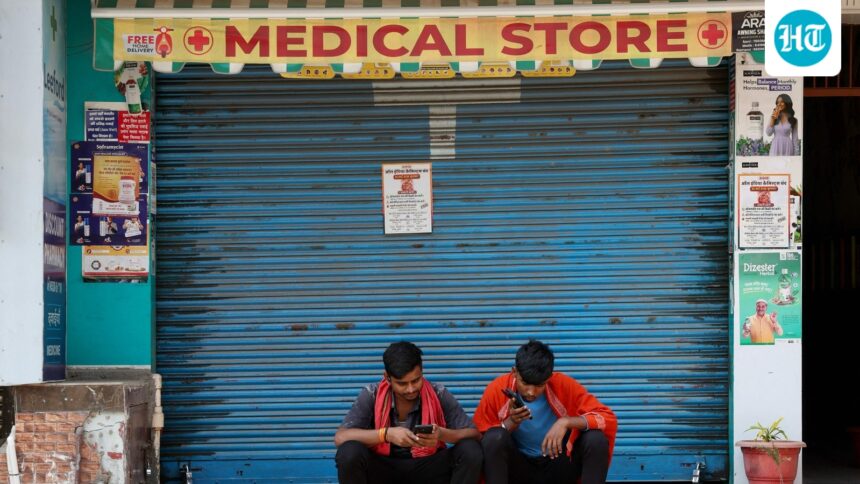
Thousands of medical shops on Wednesday across the country remained shut following the lockdown call issued by the All India Organization of Chemists and Druggists (AIOCD). Medical store owners are protesting against unregulated practices and heavy discounts by online players.

The strike call received mixed reactions even as the body demanded full support from its members.
Read also: Hottest regions in India shut down at 10am as mercury crosses 48°C mark
AIOCD demands action against ‘illegal’ operations of online pharmacies. “All medical shops are closed… We are receiving comments from all branches of our state that everyone is participating in this strike. We have not stressed the nursing home pharmacies that are working there inside the hospitals,” AIOCD Secretary General Rajeev Singhal was quoted as saying by news agency PTI.
The AIOCD has around 12.4 lakh members and around 7 to 8 pharmacies across the country are likely to remain closed during the strike.
The strike call was supported by the Delhi Retail Distribution Chemists’ Alliance (RDCA), according to the Indian Express.
What are the demands of the protesting chemical bodies?
AIOCD national president G S Shinde described the current online sale of medicines in the country as “absolutely illegal and illegal”.
“Online sale of medicines has started recently. However, the online sales being done currently are illegal and completely illegal. This is because the government had previously issued a notification regarding the matter, specifically GSR 817,” Shinde was quoted as saying by ANI.
Read also: The surprise visit of two Congress leaders to Mayawati’s residence is creating a stir in the UP alliance
He also said that the organization opposed online drug sales during policy discussions with the government, arguing that such systems could “ultimately fall into the hands of the mafia” if not properly regulated.
“We emphasized that selling medicines online, when viewed in a global context, is not a beneficial practice; it tends to fall into the hands of the mafia. We saw that creating such a system would necessitate the development of a strong IT infrastructure,” he said.
The AIOCD’s three main demands include scrapping the GSR 817 notification and formulating a new framework for drug sales, withdrawing the GSR 220 notification introduced during the Covid-19 pandemic, and taking action against deep discounts offered by online medicine platforms.
Read also: Delhi is under 5-day IMD warning as heatwave causes oven feeling
The 24-hour strike began on May 20 and will continue until May 21. Emergency medical services will not be affected by the strike, according to reports.
The impact of the 24-hour strike
The impact of the strike was widely seen in states like Punjab, Tamil Nadu, Andhra Pradesh, Telangana, Karnataka and parts of Gujarat.
Gujarat: Several medical stores and pharmacies remained closed in Gujarat’s Rajkot on Wednesday in view of the strike call. Medical shops in Rajkot showed that they remained closed, news agency ANI reported.
Punjab: The strike witnessed a major escalation as the Punjab Chemists’ Association threatened a state-wide shutdown.
Association president Surender Duggal announced that if their grievances were not addressed, all 27,000 chemists in the district would hand over the keys of their shops to the state government in protest.
“If our demands are not met, all 27,000 chemists (in Amritsar) will hand over the keys of our shops to the state government,” Duggal told ANI.
Haryana: Similar scenes were reported from Haryana where chemists at several places participated in the one-day strike with the Haryana State Chemists and Pharmacists Association (HSCDA) demanding full support from its members to call a nationwide strike.
Pharmacies remained closed in most places in the state, including Ambala and Hisar, PTI reported.
In Kurukshetra, Ashok Singla, general secretary of the association, said the entire district observed the strike. He said that pharmacies inside hospitals and private clinics, as well as government hospitals in Kurukshetra and elsewhere, have been exempted from the strike for the convenience of patients.
Andhra Pradesh: Local pharmacy owners in Vijayawada protested against the growing trend of selling medicines online and delivering medicines at the doorstep and took to the streets on Wednesday, ANI reported.
Organized under the banner of NTR Chemists and Pharmacists Association, the protesters carried placards opposing online drug sales and doorstep delivery of medicines.
The demonstrators held banners with slogans such as “Support local chemists, support safe health care” and “Protect chemists, protect public health,” and demanded strict action against illegal online distribution of medicines.
Tamil Nadu: Nearly 40,000 medical shops remained closed in Tamil Nadu on Wednesday, Press Ti reported, citing sources.
However, hospital chain pharmacies, including Apollo, MedPlus, Tulasi Pharmacy and Muthu Pharmacy, as well as state-owned retail outlets such as Chief Minister Pharmacies, Tamil Nadu Cooperative Society Pharmacies and Chief Minister Jan Aushadhi Kendras, did not participate in the strike, the Tamil Nadu Director Drug Control Office said.
Karnataka: More than 20,000 chemists across the state have joined the AIOCD strike call. In Karnataka, nearly 26,000 chemists, including about 6,500 retailers in Bengaluru, are expected to participate in the strike, Karnataka Chemists and Pharmacists Association (KCDA) president R Raghunatha Reddy said.
He said the strike had become inevitable due to repeated violations of the Drugs and Cosmetics Law by online pharmacies.