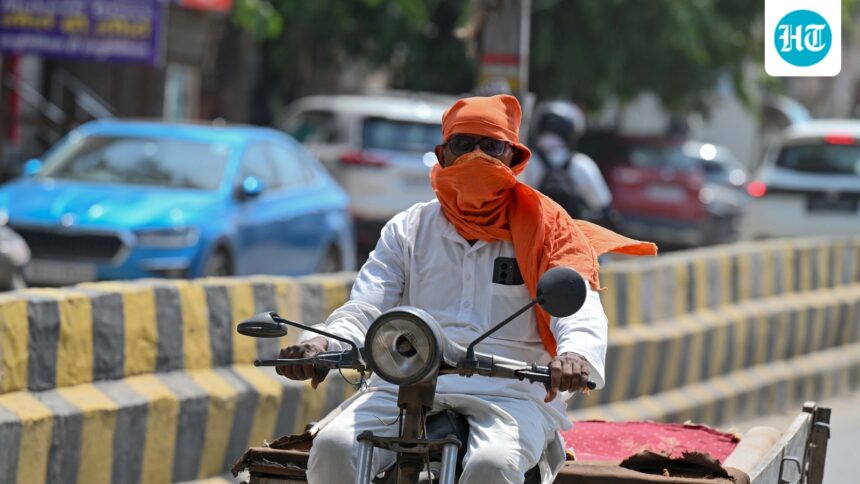
Parts of Delhi-NCR have been witnessing extreme heatwave conditions over the past few days, prompting the India Meteorological Department (IMD) to upgrade its warning level for the national capital from ‘yellow’ alert to ‘orange’ alert on Wednesday.

Temperatures in Delhi are expected to reach 46 degrees Celsius on Wednesday. The heatwave is expected to continue into an extreme heatwave over the next couple of days, with the heatwave likely to continue after that as well.
Read also | Delhi thaws on the hottest day of the season at 43.4°C; There is no relief in sight in the coming days
The Meteorological Office also expects that there will be no significant change in maximum and minimum temperatures during the next seven days, according to the IMD.
Delhi is on orange alert for 5 days
The Meteorological Department put Delhi under orange alert for the next five days on Wednesday, saying daytime temperatures this week were unlikely to drop below 43 degrees Celsius. The Meteorological Department declares a heat wave when the maximum temperature exceeds 40 degrees Celsius and remains above normal by at least 4.5 degrees Celsius.
Read also | Temperature in Delhi may reach 46 degrees Celsius today; The city is likely to get hotter this week
Meteorologists attributed the high temperatures to the absence of active weather systems. Mahesh Palawat, Vice President, Skymet Weather, said that there are currently no western disturbances or cyclonic circulations affecting the region, while hot and dry winds from the western and northwestern regions continue to sweep Delhi, HT reported earlier.
What does IMD orange alert mean?
The orange warning issued by the IMD indicates an alert to be prepared to take necessary measures, indicating the possibility of worsening weather conditions that may affect daily life.
The alert indicates a high risk of heat-related illness, especially for children, the elderly and those with medical conditions.
Measures proposed by IMD for heat wave
- Moderate temperature, acceptable temperature for the general public but moderate health concern for vulnerable people. Infants and the elderly who suffer from chronic diseases.
- Avoid exposure to heat, wear lightweight, light-colored, and loose cotton clothing, cover your head, and use a cloth, hat, or umbrella.
- Drink as much water as possible, even if you don’t feel thirsty.
- Keep fire extinguishers in your home and in your vehicles.
Electricity demand in Delhi also reached its highest level this summer amid rising temperatures. According to the government’s Load Dispatch Center, peak power demand reached 7,776 megawatts at 3:30 pm on Tuesday, surpassing Monday’s peak of 7,600 megawatts.