


By March 2026, with the war between the United States and Iran, Russian oil flows to India had reached levels not seen for a few years. (Amnesty International image)
Missiles, mines, attacks on ships, a US blockade, an Iranian blockade – the Strait of Hormuz has been de facto closed since the beginning of the conflict in the Middle East since late February. After several weeks, India – an economy that depends on the world for 90% of its crude oil needs – has managed its oil supply situation better than most people expected.
With no significant strategic oil reserves to boast compared to economies like the US, China and Japan, India has leveraged its crude diversification strategy and strong ties with Russia to weather one of its worst crude supply shocks in several years.This does not mean that everything is fine when it comes to power supplies. The Strait of Hormuz passes through a fifth of the world’s crude oil trade. But it is no less important for India’s LPG and LNG supplies, which have been hit by a supply crunch.Read also | PM Modi’s visit to UAE: Explain how India will benefit from agreements related to Strategic Petroleum Reserves and LPGHowever, in all of this, the availability of crude oil is resilient. According to the government, India has about 60 days of oil supplies in various forms including strategic reserves. But if 20% of the world’s crude oil supply remains idle throughout two and a half months of war, where does India get its oil?
Crude oil purchasing strategy in India
According to Sumit Ritolia, Director, Modeling and Refining at Kpler, India’s crude oil import strategy has changed significantly since March 2026 as Strait of Hormuz disruptions have tightened Middle East flows and increased shipping and logistics risks.
At the same time, Indian refiners have aggressively diversified their production sources towards the Atlantic Basin and oil sources not linked to the Strait of Hormuz, which has led to increased purchases from the United States, Brazil, West Africa and Venezuela to compensate for weak Iraqi and Gulf flows.
“This shift was not a direct replacement of Middle Eastern barrels from a single source, but rather a broader re-optimization of the crude oil portfolio based on availability, refinery compatibility, shipping economics, and exposure to sanctions.
Refiners have been buying more aggressively into Russian and opportunistic Atlantic Basin barrels, along with bypassing Saudi and UAE crude where available.As a result, India has increasingly relied on Russian and Atlantic Basin supplies to reduce reliance on barrels directly connected to the Strait of Hormuz while maintaining refinery productivity and export economics.
Russian oil forms the backbone of oil supplies
Russia has dominated India’s crude oil imports since the war with Ukraine in 2022. Sanctions imposed by the Donald Trump administration reduced supplies from December 2025 to February 2026, but Russian crude still represents the top item in India’s crude oil import basket.By March 2026, with the US and Iran at war, Russian oil flows to India had reached levels last seen a few years ago when the latter was bottling crude oil at deep discounts. But this time, Russian crude is being bought at a premium, as global crude oil prices remain high. The Trump administration’s decision to temporarily waive sanctions on Russian crude at sea to stabilize global crude oil prices contributed to the increase in volumes.
The waiver, which was first granted in March, has been reviewed twice since then.
India, for its part, has emphasized that its decision to purchase crude oil is governed by energy security needs and oil economics – to concede or not to concede. However, it cannot be denied that the waiver makes it economically viable to source Russian crude from all major oil companies including Rosneft and Lukoil which are part of the sanctions list.Thus, in the face of the closure of the Strait of Hormuz, the dominance of Russian crude oil has increased.According to Sumit Retulia, Director, Modeling and Refining at Kpler, Russian crude remained the backbone of India’s import list, with flows recovering back towards 1.9-2.0 million bpd in March after declining earlier in the year. May imports are around 1.9 million barrels per day so far and are expected to total around 1.8-1.9 million barrels per day. Estimates based on Kepler data indicate that Russia has supplied India with more than 140 million barrels of crude oil since the beginning of the US-Iran war.Crucially, Russian crude oil via the Baltic, Black Sea or Pacific routes remains completely outside the scope of Hormuz risks.
Middle East supplies through alternative routes
With the Strait of Hormuz effectively closed amid conflict in West Asia, India’s crude oil imports fell in April to about 4.4 million bpd (from about 5.2 million bpd), as nearly 50% of its supplies (about 2.5 million bpd) normally pass through the strait. Iraqi imports have fallen to almost zero and Gulf flows have fallen sharply, says Sourav Mitra, oil and gas partner at Grant Thornton Bharat.
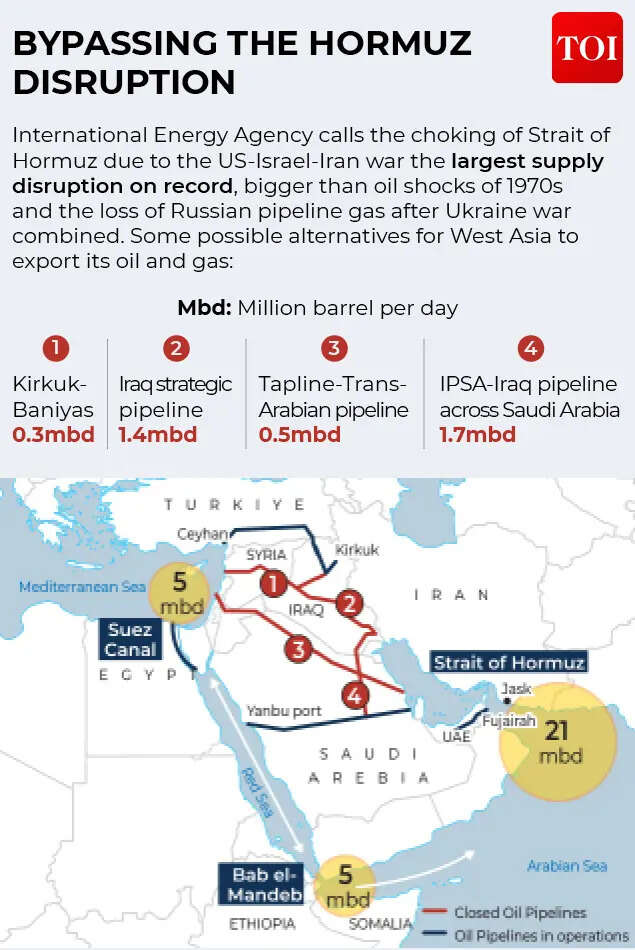
“In response, Indian refiners have focused on a diversified mix, led by Russia (about 30-37% or 1.5-1.7 million bpd), along with Saudi Arabia (which was 0.65-0.70 million bpd) and the UAE (0.60-0.62 million bpd), with additional barrels arriving from Venezuela and Brazil and minimal Iranian shipments.”But if Hormuz is closed, through which route will supplies from Middle Eastern countries like the UAE and Saudi Arabia reach India? “Middle East supplies are rerouted via the Saudi Middle East Pipeline to Yanbu (Red Sea) and the UAE Habshan-Fujairah Pipeline, which together provide significant bypass capacity, enabling flow via Yanbu to India and Fujairah to India while non-Gulf crude oil continues on open ocean routes,” explains Mitra.
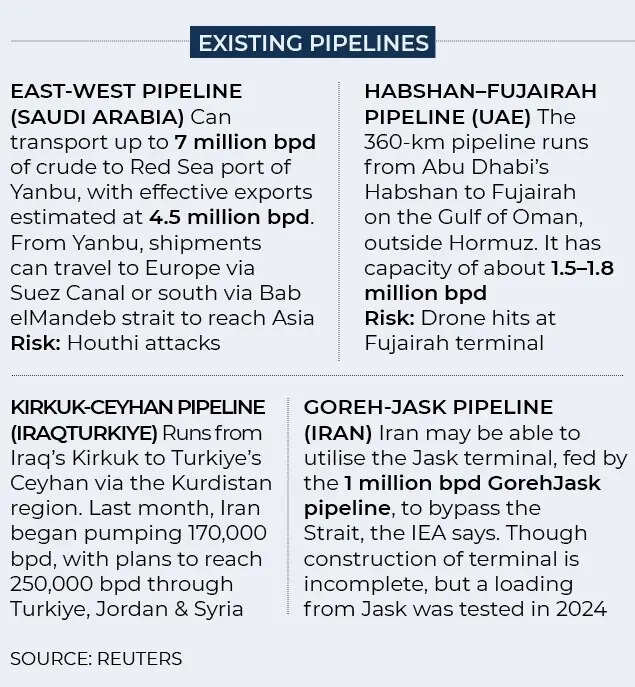
“However, these reroutings add about 4 to 10 days via the Red Sea Route and other longer global transfers. This increases shipping costs, even as India sustains supplies through diversification,” he adds.
Venezuela is back in the mix
Venezuelan crude has also made a notable return to India in recent months, and this has partly helped offset declines in Gulf-related supplies. India had stopped buying crude from Venezuela after US sanctions.
However, with the Trump administration’s moves in Venezuela, it is now back in India’s import basket.
Imports of Venezuelan crude oil to India have risen sharply in recent months, reaching their highest levels since Several years. In fact, as is clear from the chart above, despite only supplying oil to India in April and May so far, Venezuela has made its way into the top 5 suppliers of crude oil to India since the start of the US-Iran war.“This increase was driven by the opening up of Venezuela’s oil sector, increased availability, favorable prices, and refiners seeking to replace heavier replacement barrels amid the ongoing disruptions in the Strait of Hormuz. Venezuelan grades have become particularly attractive to complex Indian refiners as they help offset the growing share of light crude in the import list while supporting secondary unit utilization and middle distillate revenues,” says Sumit Retulia.
Global supply crunch: India’s crude oil imports decline
But even as it maintains adequate crude oil stocks in an unstable global environment, India’s overall crude oil imports have declined in recent months. According to Kpler data, these supplies are approximately 700 to 800 thousand barrels per day below typical import levels, as a lack of global crude availability and ongoing unrest in the Strait of Hormuz have restricted flows to Asia. “While refineries have aggressively diversified into Russian, Venezuelan, US and Atlantic Basin barrels, the market remains structurally tight, and replacement volumes are not fully compensating for lost availability in the Middle East,” warns Kpler’s Retulia.Looking to the future, the Kepler expert does not see any clear vision yet regarding the complete normalization of Strait of Hormuz flows. “India’s crude oil import mix is likely to remain broadly similar to current patterns. Russian barrels are expected to remain the backbone of the import list, supported by higher Atlantic Basin and Venezuelan crude consumption as refiners continue to prioritize security of supply, refinery optimization, and shipping economics over traditional sourcing patterns,” he concludes.Even as India looks to secure supplies amid global turmoil, it is also indirectly looking to curb demand through higher petrol and diesel prices. While oil marketing companies partly help offset their losses when crude oil prices exceed $100, recent increases in gasoline and diesel prices also serve to discourage non-essential consumption, thereby controlling demand. Petrol and diesel prices recently rose by Rs 3.90 per liter after four years of no review.
The government also imposed a tax on windfall profits to discourage refiners from exporting gasoline and diesel products to secure supplies for domestic needs.Read also | Petrol and diesel prices rise: How India’s fuel price rise compares to the US, China, Pakistan, UAE and other economies