In December 2025, the esteemed Indian Chamber of Commerce celebrated its centenary, marking 100 years of representing the interests of Indian industry and commerce before the government. Founded in 1925 in Calcutta by 31-year-old Calcutta businessman Ghanshyam Das Birla under the supervision of Mahatma Gandhi, ICC played an integral role in the freedom struggle, as the first organized non-governmental body to act as a voice for indigenous Indian industry.

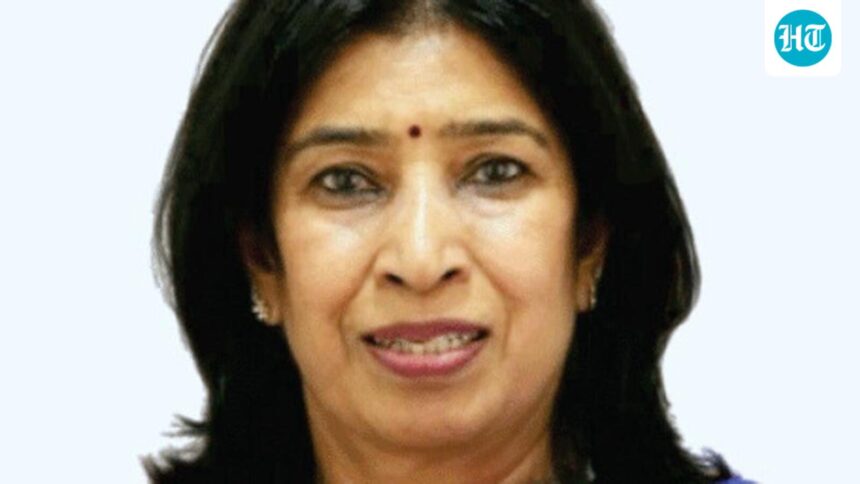
In 2027, the Federation of Indian Chambers of Commerce and Industry (FICCI), which was also co-founded by GD Birla and is currently India’s largest business organisation, will celebrate its centenary. On the other hand, and closer to home, a similar but older body – the Federation of Karnataka Chambers of Commerce and Industry – quietly celebrated its 110th anniversary last week. This year’s celebrations were a watershed event; They were headed by a woman – the first president of FKCCI, Uma Reddy.
The idea of a representative body to defend business interests is an old one – the Marseille Chamber of Commerce in France was founded in 1599. Surprisingly, it was only in 1783 that the Glasgow Chamber of Commerce, the oldest in Britain, emerged, founded in the wake of American independence by panicked Glasgow merchants whose prosperity, built on the Virginia tobacco trade, was in jeopardy. One of the most important priorities of the GCC countries was to strongly oppose the East India Company’s monopoly on trade with India.
India’s first merchant associations appeared in its thriving coastal cities. The Bombay Chamber of Commerce and Industry (BCCI) was the first in September 1836; Its counterpart in Madras opened for business a week later. The BCCI’s sustained pressure was largely responsible for the construction of the country’s first railway (the Bombay-Thane Line) and the passage of the Indian Post Office Act of 1854, which unified all regional postal systems into a centralized national network.
The Bengal Chamber of Commerce came next in 1853, and Cochin got its own chamber in 1857. The first of the four chambers to have an Indian president was the Bahrain Chamber of Commerce and Industry in 1959!
The country’s fifth chamber, the first in a princely state, was established in Bangalore on May 8, 1916, by the visionary Diwan of Mysore, Sir M. Visvesvaraya, with the full support of Maharaja Krishnaraja Wadiyar IV. The raison d’être of the Mysore Chambers (in 1973, renamed FKCCI) was not to represent Indian commercial interests against British interests, but to create an advisory body that would help guide the country’s policy towards building a strong industrial economy. Its first president was W. C. Rose, an Englishman who had previously served as the first director of the (State) Bank of Mysore (established 1913). After Rose stepped down in 1920, the Mysore Chambers had only Indian presidents.
Today, FKCCI has approximately 5,000 direct members, drawn from the trade, manufacturing and services sectors across a variety of sectors; And 140 trade associations representing different specialist groups – the Electronic City Industries Association, for example – apart from the chambers of each district in Karnataka. Each member comes with their own unique challenges and needs – training programmes, improved communication, improved infrastructure, review of the minimum wage; They should all be well represented by the FKCCI.
It is a difficult task, but President Uma Reddy is unfazed. An electrical engineer who struck out on her own right after graduating from Visvesvaraya University’s College of Engineering in 1984, in an era when women entrepreneurs were almost unheard of, she has served on the FKCCI’s managing committee for several years now, and she understands the brief. In addition, her time at the Prime Minister’s Council for Micro, Small and Medium Enterprises (MSMEs) has given her insights into a sector she is particularly interested in supporting. “It is a great honor to lead an organization founded by Sir MV,” she says. “I will do whatever it takes to live up to it.”
(Rupa Pai is a writer who has had a long-lasting love affair with her hometown of Bengaluru)