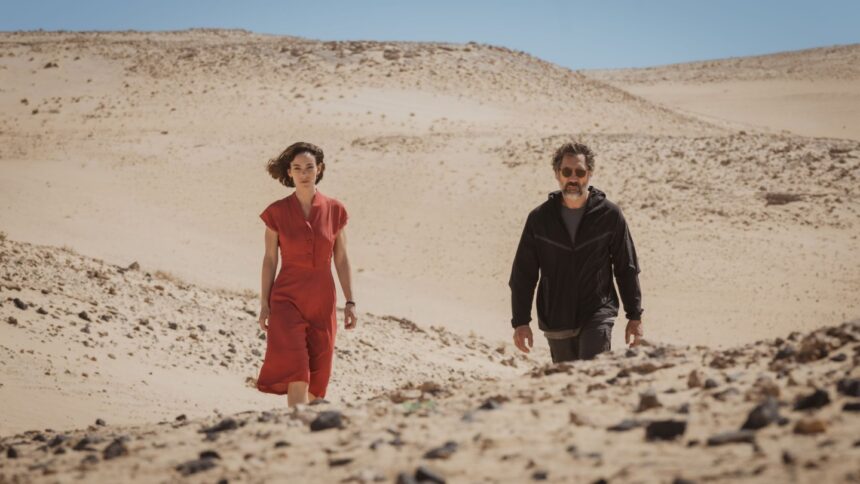
Spaniards may not throng the streets in the tens of thousands to celebrate their auteurs the way they do soccer, but there was a palpable sense of energy in the industry this spring around a historic moment for Spanish cinema.
“I wish we could live it like this!” Director Rodrigo Sorogoyen joked on the radio about the football analogy, after announcing April 9 that his new film, Beloved (Sir Querido), will join Pedro Almodóvar Bitter Christmas (Amarga Navidad), Javier Calvo and Javier Ambrosi La Pola Negra In an unprecedented representation of three films from Spain in this year’s official competition at the Cannes Film Festival.
“There is a certain movement in Spanish cinema,” festival director Thierry Frémaux emphasized at the announcement, also pointing to the French release the day before of the film by Spanish director Carla Simón. RomeriaCannes 2025 title. “This country has continued to produce amazing artists.”
Spanish productions and co-productions can also be found at Un Concern Regard, Cannes Première, Special Screenings, Critics’ Week and Cannes Selection. The Croisette will be well-stocked with the country’s most internationally recognized talent: Javier Bardem’s superstars Beloved; Penelope Cruz and Glenn Close appear in the film La Pola Negra; Rising actress Victoria Luengo co-stars in both Beloved and Bitter Christmasthe latter alongside Barbara Linni, Leonardo Sparaglia, Aitana Sánchez Gijón and Melina Smit.
“It speaks to the great moment that Spanish cinema is experiencing,” Almodovar said following the April announcement, and he should know. He had a hand in launching many of these talents, and his production house El Deseo was involved in the production La Pola Negra In addition to the winner of the Jury Prize at Cannes last year and a two-time Oscar nominee Sirat.
“It’s historic,” agrees Guillermo Vari, head of original films and Spanish cinema at Movistar Plus+, which co-produced it. Beloved, La Pola Negra and Sirat And supported too Bitter Christmas. He points out that while Almodóvar has ensured the presence of Spanish cinema at Cannes at least every few years, this year’s three competition titles represent three different generations of filmmakers – evidence, he says, that “Spanish cinema is in a very exceptional position at the moment.”

Spain is “in vogue,” stresses Elisa Carbonell, executive director of the Spanish Foreign Trade Institute ICEX, pointing to the country’s growing presence at international festivals, markets and award shows. “We are able to combine craftsmanship, which I think is a luxury now, with innovation.” Spain has proven its creativity, originality and reliability. “We are so successful because there is industry and there is talent.”
“Where talent ignites.”
That broader moment is captured in the new Where Talent Ignites campaign powered by the ICEX audiovisual initiative from Spain, which premiered in Cannes. Rather than making claims about Spain’s creative industries, the campaign lets three new short films do the talking – each featuring established and emerging talent in different sectors.
“We wanted to make pieces that demonstrate what our industries are capable of,” says Carbonell. “The audiovisual space is the common language we use to talk about other industries, which are also key parts of the audiovisual sector.”
The first is short, Flamencowas unveiled in Rotterdam. The film is directed by Simone – who also chairs the Short Film and La Cinef jury at Cannes – and features flamenco artists including Rocío Molina, Carmela Greco, Nino de Elche and Ángeles Toledano. the second, No tararaturning its attention to the fashion sector in Spain. The film is directed by veteran music video director Nicolas Mendes, and stars Ingrid Garcia-Johnson, Lenny, Rossy De Palma, Aaron Piper, and Eugenia Silva. the third, No llamaan animated short film from the duo known as TURBO (Pau Lopez and Gerardo del Hierro), highlights contemporary designers including Jaime Hayon. All three will be available from May 17 on Spainwheretalentignites.com.
“I think it’s a really beautiful initiative, to export the idea of existing talent, through stories – especially through short films, where we can empathize with the characters, get involved, and then reflect on what’s happening or what Spain is like,” Simon says. to Flamencowanted to explore “the tension that exists between tradition and contemporaneity” through a story revolving around mother and daughter flamenco artists — a theme that also feeds into her flamenco-focused feature film, which is currently in early development. “It seemed like a good opportunity to start working with people in that world and trying things out,” she says. “It was a tremendous learning experience…I felt like a conductor.”

Signs of good health
This is the second and expanded edition of Where Talents Burn, following the first short in 2024 which has been viewed over 19,000 times. Carbonell points out that business results are measurable in “international co-productions, financing agreements, increased visibility among international buyers and producers… and international platforms, which are already increasing their investments in Spain due to quality.”
It can also be measured in the sector exceeding the government’s target when it launched the well-funded audiovisual center in 2021: a 30 percent increase in production by 2025. Spain produced 289 feature films (376 when including co-productions) in 2024 – an increase of 6.6 percent year-on-year and the highest volume in the period 2013-2024, according to the center’s latest annual report.
Spain also topped Europe in terms of live streaming commissions, accounting for 17% of the total, and was among the biggest beneficiaries of investment in live streaming in the region between 2015 and 2024, according to the European Audiovisual Observatory. “Competition in Spain is very, very strong, especially with American broadcasters,” says Vari. “The competition begins with talent.”
The return of local audiences to cinemas is another indicator of health. Box office revenues nearly doubled between 2021 and 2024, reaching €484.6 million ($568.5 million) in 2024. Cinema attendance ranks fifth in Europe in terms of revenue and fourth in terms of audience numbers, with a steady 760 cinemas and 3,562 screens.
“Spain is experiencing a great moment, where new and established talent are intersecting and all genres are being explored,” says Antonio Saura, managing director of sales house Latido Films. Homegrown comedies remain the dominant force at the Spanish box office – led by Santiago Segura’s Parenting series Father there is only one 5 – But the local drama is also doing well, with Alejandro Amenabar The prisoner And Alauda Ruiz de Azua Sundays Among the following highest earners. “The Spanish box office for Spanish films is another matter entirely,” Saura adds. “It has also improved, but as in other countries, this is largely thanks to local comedies.”

The Spanish Federation of Cinemas reported an 8 percent drop in total moviegoers last year, but Spanish cinema maintained a healthy 19 percent market share.
Bump festival and prizes
Auteur cinema in Spain is clearly doing well, but Saura is frank that “the market is very complicated” for films without strong auteurs or marketing hooks. “In this sense, supporting a well-defined festival or genre is essential.” He points out that interest in Cannes is often fueled by French sales agents and co-producers associated with Spanish films.
The impact of the festival is real. Ruiz de Azua says Sundays It benefited significantly from its Golden Shell win in San Sebastian. After taking home five major Goya Awards in February, it was expanded to more theaters and saw a significant rise at the box office even after it became available on Movistar Plus+. “As an independent production company, we have fewer tools to give the film a clear vision,” she says. “Awards and festivals benefit all types of films, but specifically films that have fewer channels and fewer resources.”
Maria Martinez Bayona makes her film debut The end of it At Cannes I – A science fiction story set in a future where aging and death are optional, in which a 250-year-old former artist decides she wants to die. This ambitious €8 million ($9.3 million) multi-country co-production, starring Rebecca Hall, Naomi Rapace and Gael García Bernal, took years to put together. “It was a big shock. After finishing the film, they called us and told us we were going to Cannes.”
For Farey, “Cannes has become the place to be if you want to turn a film release into a cultural event.” Sirat This is his example: instead of being released directly on the Movistar platform, the film was given space to build an international career first. “We need films to have a space to connect with audiences and become relevant.” Sorogoyen Monsters It offers another example: After its premiere at Cannes, Goyas swept the 2023 César Award for Best Foreign Language Film.
“European envy”
While the seed money for the audiovisual center has closed in 2025, Carbonell says the money has been spent “smartly,” citing an estimated return of €9 for every euro invested. It points to the new investment fund of the Spanish Society for Technological Transformation (SETT) as the next means of mobilizing capital and attracting foreign and private investment.

“Spain is the envy of Europe,” says Adria Monis, CEO of Fasten Films, which co-produced three films by female directors at Cannes this year. The end of it; The story of Leila Marrakchi, an immigrant, takes place in Spain La mas dulce In “Un Certain Regard”; Iranian director Pegah Ahanjarani Exercises For a revolution in special offers. Monis points to incentives, subsidies, investments in platforms, film school talent and strong technical crews in Spain as pillars of what he calls “an ideal ecosystem, not very fragile despite all its problems.” He acknowledges that things could change with changes in political support, but says the foundation is solid. “We attract a lot of international productions to Spain, it is a very fertile ground for training young people. It is a fabric and a basis for growth.”
Carbonell agrees: “The audiovisual sector in Spain has transformed itself. Institutions realize that this is a key sector… I think we have laid the foundation for something that will expand, and we are very happy.”