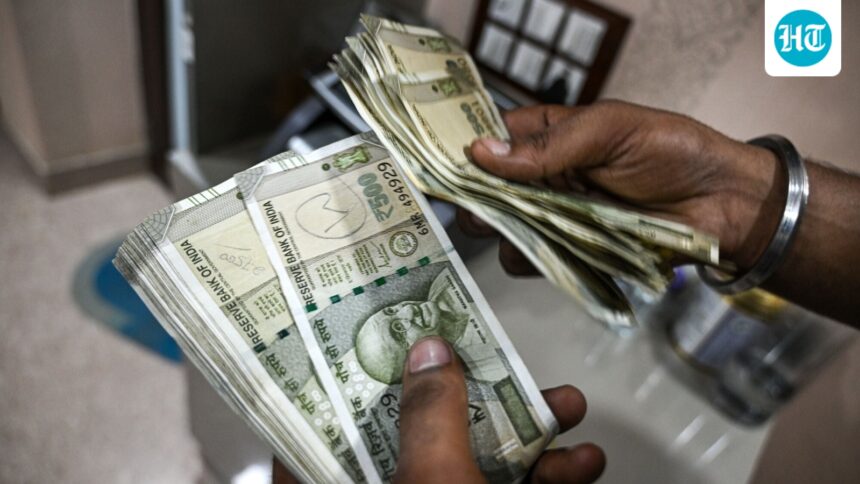
The Indian rupee fell to an all-time low on Friday, with oil prices approaching $110 a barrel, intensifying economic challenges for the world’s third-largest crude importer, with major indices showing pressure.

The rupee fell 0.4 percent to 96.1350 per US dollar, surpassing its previous all-time low of 95.9575 reached in the previous session.
Read also | Wholesale inflation in India rises to 8.3% due to oil shock and weak rupee
The rupee ended the session at 95.9650, down 1.5% on a weekly basis.
The currency has fallen more than 6% year to date, and is the worst-performing currency in Asia, hurt by continued capital outflows and concerns about balance of payments pressures as the Iran war keeps energy prices boiling.
Brent crude futures rose more than 3% to $109 a barrel on Friday, raising concerns about global inflation and pushing bond yields higher as expectations grow for interest rate hikes this year.
“The longer the conflict lasts, the more pronounced the effects will be in the form of higher inflation, weaker economic growth, and deteriorating external balances especially for large net energy importers,” Khun Goh, head of Asia research at ANZ Bank, said in a note.
“Central banks in the region may have to tighten policy in response to the inflation shock as well as to stabilize exchange rates,” the note said.
Asian currencies fell between 0.3% and 0.8%, while regional stocks fell more than 2%.
Read also | Why did India raise customs duties on gold, silver and other precious metals?
Data signal strain
India’s merchandise trade deficit widened to $28.38 billion in April, data showed on Friday, as conflict in the Middle East hampered shipments and disrupted energy imports, making them more expensive. India imports more than 80% of its crude oil needs and 60% of cooking gas.
The trade data came on the heels of figures showing that wholesale inflation in India accelerated to its highest level in three-and-a-half years in April.
After a modest rise in retail fuel prices on Friday, economists at Goldman Sachs expect consumer inflation in India to average around 4% in May and expect interest rates to rise by 25 basis points in October and December.
The yield on India’s 10-year bond rose to its highest level in more than five weeks at 7.07%, up 9 basis points this week, while the benchmark stock index Nifty 50 fell more than 2% on a weekly basis.