Diego Luna had personal motives and more global motives that led him to do this ashhis fifth film as director.
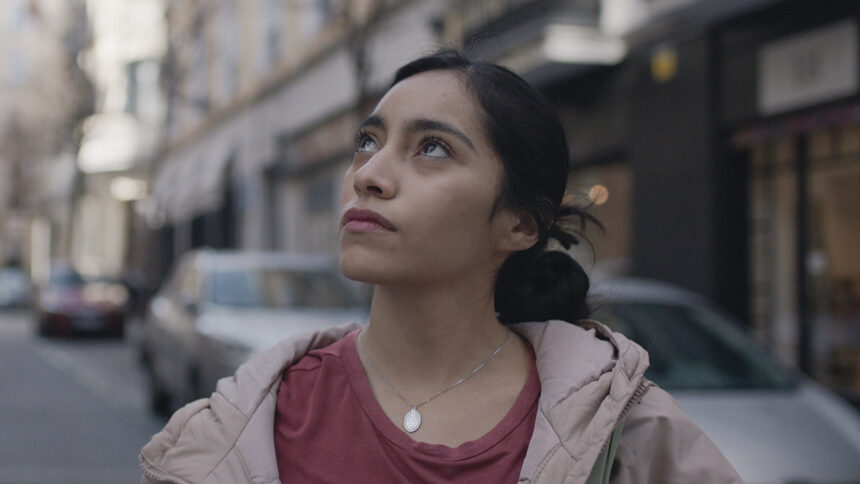
While Luna continues to tackle a host of high-profile films in front of the camera – starring opposite Jennifer Lopez last year Spider Woman Kissleads the Emmy Award winner star wars series Andor And get a role in a live-action Disney movie tangled – He continues to tell more intimate stories through his work in filmmaking. Adapted from the novel by Brenda Navarro Ceniza en la Bocahis latest effort focuses on Ana Diaz as Lucila, a 21-year-old woman who leaves Mexico for Madrid in search of a better life where she meets her mother (Adriana Paz), who moved there years ago.
before ash “It is being shown for the first time during the special screening section at Cannes,” says Luna. Hollywood Reporter About the film resonates with him not only because of the current polarizing debate over immigration but also because of his family history. Additionally, he is considering directing a 2014 biopic Cesar Chavez In light of the recent abuse allegations against the labor leader who died in 1993.
What novel attracted you to this project?
It was a very powerful read for me. My son was 14 when I read it, and I thought it was a very interesting story to deal with immigration from an angle that we don’t see very often, especially living in Mexico with such close proximity to such a huge border between such a powerful country. [as the U.S.] Our scenario, and such a complex scenario these days. For me, the book resonated deeply because of this young woman’s journey. If you read it, you’ll understand that I took part of this book to write this story and decided to focus it all on Lucilla. Distance in crucial years for people whose parents aren’t there – that’s something that’s really important to me. My mother died when I was two years old. I grew up with my father, and he devoted his life to theater. In a way, what Spain represents in this film for me is theater. It was the thing that kept my father away from me.
How did you decide that Ana Diaz and Adriana Paz were right to play the mother-daughter duo?
With Adriana, I’ve known her for a long time. We played a couple together in a movie called Rudo and Corsi Which we did many years ago, and I know its strengths. With Ana, it was very interesting because as soon as the casting director in Mexico read the script, he said to me: “What about Ana? Have you seen?” [her in the 2024 movie] La cocinaI said: Yes, I saw La cocina! Obviously I thought of her, but we should see a lot more actresses. We have seen hundreds of options of great actresses from Mexico. Finally, I said to Anna, “Would you mind coming and working with me for a good hour, and we’ll do a little scene together?” We had a session — me, Adriana, Anna, a few producers and the casting director — and everyone was sobbing. When they did that scene, I said, “That’s it. It’s them.”
Over a decade ago, I directed a film about Cesar Chavez starring Michael Peña. The civil rights leader has been in the news with labor activist Dolores Huerta, portrayed by Rosario Dawson in your film, after she accused him of sexual assault. Have you thought about how you might approach film differently today?
Completely. I was devastated, extremely confused, extremely anxious, sad and conflicted with the whole thing and, most importantly, what the movement meant. It was very, very, very difficult to understand and believe. I’m shocked, there’s not much you can say. I have met many people whose lives depended on what the movement achieved and what the community was able to do. It was horrific and painful to read what we all read.
This year marks the 25th anniversary of Way to Mama Tampinwhich still provides such an effect. How has the independent filmmaking process changed since then?
The cinema I still enjoy the most is the one that celebrates someone’s point of view and has an independently motivated point of view. This can be done small or large. It’s not about the volume of production; It’s about what actually drives the project. I work with people who make me feel this way. Basically, in every project I’ve done over the last 10 years, I’ve had that kind of feeling — no matter what it is, whether it’s animation, a big production, or a very small one. I look for those projects and try to celebrate this cinema as much as possible. It’s urgent and needed, and nothing is more powerful for me as an audience, so I want to champion those spaces.
for you star wars series, Andoris also popular, so I found a balance between huge projects and small projects.
That independent drive was there. We were working on a project written by Tony Gilroy, and there was a very clear vision. This autonomous drive can occur in large or very small productions. It’s about what drives the project.
I have to ask you about Michael Jackson, since you played a version of him [Harmony Korine’s 2008 movie] Mr. Lonelyand now a new biopic Michael It sparked controversy over what he said or didn’t say. How was your experience with your film?
I didn’t see[[Michael]Just because of all the research I had to do and all the beautiful work you did with the amazing Harmony Korine. Mr. Lonely. It was an amazing experience, getting inside Harmony’s head and trying to serve him and becoming a vehicle for his story. I remember it as a wonderful trip. I’ve learned a lot [from Korine]. His method is different from anyone else’s. It’s unbelievable. But I didn’t see [new] film. Maybe I’ll go and watch it myself soon.
What excites you most ash Premiere soon?
I can’t wait to see it in that cinema in Cannes and find the first audience. The fear and the ignorance and the hate that we see around immigration, this is the way to fight that – thinking about it, telling the stories, and trying to bring you closer to understanding the story of just one person who can’t live where they belong, and what that means? We don’t stop enough to think about it. This would make the experience and world different these days.
Have you started thinking about future directing projects?
Once I finished directing, I said to myself: “I need to write this Another thing and this Something else.” Suddenly, directing allowed me to remember how much I loved the process and also how willing I was to speak up. As an actor, I’m always ready to be called upon to help others tell their stories, but today, I have stories to tell, and I want to do that again.