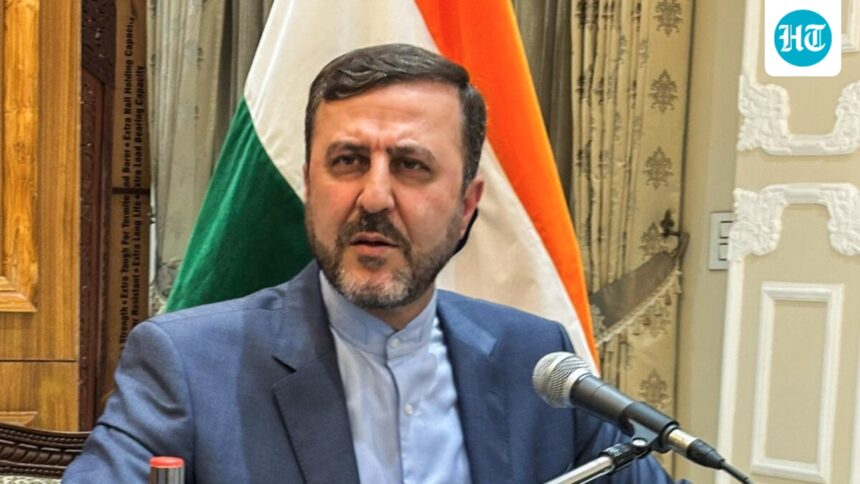
NEW DELHI: Iran will welcome any Indian initiative to end the war in West Asia and ensure security and stability, even though one of the BRICS member states is obstructing consensus within the group in finalizing a joint declaration, Iranian Deputy Foreign Minister Kazem Gharibabadi said on Wednesday ahead of a key meeting of the bloc.

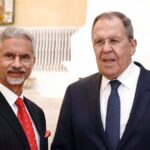
Gharibabadi, a member of the Iranian team conducting negotiations with the United States, spoke to a small group of journalists hours before Iranian Foreign Minister Seyed Abbas Araqchi arrived in New Delhi to participate in the BRICS foreign ministers’ meeting scheduled for May 14-15. Araqchi will also hold bilateral meetings with External Affairs Minister S Jaishankar and Russian Foreign Minister Sergei Lavrov.
With nearly a dozen Indian-flagged ships west of the Strait of Hormuz, which Iran has effectively closed since the conflict in West Asia began on February 28, Gharibabadi said Tehran is finalizing protocols and arrangements for “tolls” that every ship using the waterway will have to pay. He insisted that this was not a toll, and said that the fees would be based on the services provided by the coastal countries of Iran and Oman.
While Iran is fully prepared for either negotiations with the United States that lead to “an end to the war” or the resumption of hostilities, Gharibabadi said his country would welcome any initiative from the “great nation of India” that brings peace, security and stability to the region. He said India and other developing countries should “make every effort to prevent the resumption of war.”
He added: “For Iran and the rest of the world, insecurity, instability and war will have negative consequences.” He denied the impression that this was a war between Iran, Israel and the United States, and said that this conflict had “global consequences and impacts.” He added: “It is the responsibility of development [and] Independent nations like India, aspiring to peace, stability and security, [to help end the war]”.
Gharibabadi, who met Minister (West) Sibi George at the Ministry of External Affairs on Wednesday, said he asked the Indian side to come up with an initiative to end the conflict in West Asia. “India is big [and] “An important country, if India comes with an initiative, we will welcome it.”
Gharibabadi said that one of the BRICS member states is obstructing consensus in finalizing a joint declaration for the group’s summit to be held in September by insisting on including text condemning Iran. Although he did not mention the country directly, it was clear that he was referring to the United Arab Emirates. Disagreements between Iran and the UAE disrupted the joint statements at the recent BRICS meetings.
Gharibabadi said: “We are in favor of getting the final announcement because first, this is happening during India’s presidency and we want to have a successful meeting. Second, it is not good to signal to the world that the BRICS are divided.” When asked if he was referring to the United Arab Emirates, he replied that only one of Iran’s neighbors is a member of BRICS, and he expressed his hope that this country would show flexibility in finalizing the joint declaration.
The UAE joined BRICS when the group was expanded in 2024. While Saudi Arabia has also been invited to join, it has yet to gain full membership in the bloc.
There is a country neighboring Iran that insists [on condemning] Gharibabadi said: “Iran is in the final announcement. We did not attack our neighboring countries… We targeted the military bases of the United States in neighboring countries.”
He added that Iran documented thousands of attacks launched by American fighter jets and missiles launched from the territory of its neighbors. He said that it is unacceptable to condemn Iran in the joint declaration without any condemnation of the actions of Israel and the United States.
In response to a question from Hizb ut-Tahrir about media reports about the UAE and Saudi Arabia carrying out attacks on Iran, Gharibabadi said: “Yes, this is true.”
He added that Iran documented direct attacks from two neighboring countries and also criticized and warned them. “We sent them documents stating that they were directly involved [in attacks]He added: “We had this new information that was published in the Western media before.”
Gharibabadi explained that all ships using the Strait of Hormuz will from now on have to pay fees or fees for navigation and rescue services provided by Iran and the Sultanate of Oman. “Iran and Oman, as coastal countries, provide some services… We have not shipped ships in the past decades, but now we have come to the conclusion that it is time to ship ships,” he said.
“It is not a toll. We are not a member of the 1982 UN Convention on the Law of the Sea, so we have no international obligation,” he said, adding that the protocol and arrangements being finalized will be non-discriminatory, in accordance with international law and transparent.