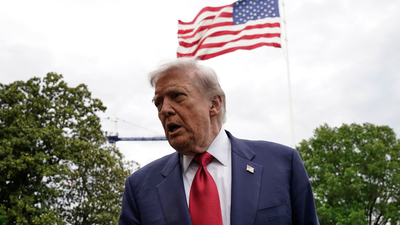
US President Donald Trump rejected Iran’s draft ceasefire proposal. (AP photo)
Iran’s latest response to a US-backed ceasefire proposal demanded sweeping political, military and economic concessions from Washington – including sanctions relief, compensation for war damage, withdrawal of US forces from the region, and recognition of Tehran’s authority over the Strait of Hormuz – conditions that President Donald Trump quickly rejected.According to reports from Iranian state-linked media outlets and Al Jazeera, Tehran’s response came after Washington put forward a 14-point proposal aimed at ending the 10-week-old conflict that has disrupted global oil supplies and increased tensions across the Middle East.While neither side has released the full text of the proposals publicly, the major disagreements have revealed deep divisions over Iran’s nuclear program, regional influence, and control of vital shipping routes.The Iranian proposal reportedly calls for the United States to lift sanctions, end the naval blockade of Iranian ports, and remove restrictions on Iranian oil exports as part of any ceasefire arrangement.
Compensation for damages
Tehran also demanded the release of nearly $20 billion in Iranian assets and requested compensation estimated at $270 billion for damage caused by US and Israeli attacks during the conflict.
Control of the Strait of Hormuz
A major sticking point has emerged over the Strait of Hormuz, the narrow waterway through which nearly a fifth of the world’s oil supplies passed before the conflict escalated.
Iran has reportedly sought official recognition of its control over shipping through the Strait, including the right to impose transit fees, while demanding an end to the US blockade of Iranian ports.But Washington insisted that the blockade would remain in place until a broader agreement was reached.
Nuclear control
Another major point of contention relates to the Iranian nuclear program. The US proposal reportedly requires Tehran to completely halt its nuclear activities and hand over its stockpile of approximately 400 kilograms of highly enriched uranium to US custody.Iran rejected both requests, arguing that any restrictions on its nuclear program could only be temporary, and refused to hand over its uranium stockpile.
Withdrawal of American forces
The Iranian response also linked any ceasefire to broader regional issues. Tehran has reportedly demanded the withdrawal of US forces from the region and the cessation of all hostilities, including the Israeli military campaign against Hezbollah in Lebanon.At the same time, the United States has sought to curb Iran’s support for its regional allies such as Hezbollah and Hamas, while also pushing for restrictions on Tehran’s ballistic missile program.
Trump describes the proposal as unacceptable
Within hours of the Iranian response becoming public, Trump rejected it outright.I have just read the response of the so-called “representatives” of Iran. I don’t like it – totally unacceptable! Thank you for your attention to this matter,” Trump wrote on the Truth Social website, without clarifying which parts of the proposal Washington found unacceptable.
The rejection immediately rocked global energy markets, with oil prices jumping by nearly $3 a barrel amid fears that the stalemate could prolong unrest in the Strait of Hormuz.The ongoing tensions have also revealed growing international concern about the economic repercussions of the conflict. NATO allies have reportedly resisted US calls to send naval forces to reopen the strait without a comprehensive peace agreement and an internationally mandated mission.Trump is expected to discuss the Iranian file with Chinese President Xi Jinping during his next visit to Beijing, as Washington seeks Beijing’s help in pressuring Tehran to reach an agreement.Israeli Prime Minister Benjamin Netanyahu said the war was not over and insisted that more work remained to dismantle Iran’s enrichment capabilities, ballistic missile program and regional proxy network.Iranian President Masoud Pezeshkian responded by saying that Iran “will never bow to the enemy” and will continue to defend its national interests “by force.”Despite diplomatic efforts, tensions remain high across the region. The United Arab Emirates said it intercepted two drones launched from Iran on Sunday, while Qatar condemned a drone attack on a cargo ship in its waters. Kuwait also reported that enemy drones had entered its airspace.Meanwhile, clashes between Israel and Iran-backed Hezbollah continued in southern Lebanon despite a previous US-brokered ceasefire.